On this page
Direct answer
Yes—but only indirectly. An inspection can document facts used to evaluate a roof, but it does not by itself change actual cash value (ACV) coverage into replacement cost value (RCV), or vice versa.
The policy in force on the loss date, including roof endorsements and applicable state requirements, controls the valuation method. Inspection findings can affect the documented damage, condition, age, repair scope, and depreciation inputs used under those terms.
Why an inspection can still matter
ACV and RCV describe different ways of valuing covered property damage. The National Association of Insurance Commissioners explains that ACV considers age and wear through depreciation. RCV generally uses the cost of like-kind-and-quality repair or replacement.
A post-loss inspection may record storm-related damage, prior deterioration, installation defects, material type, approximate age, and whether limited repair appears feasible. Those observations may affect the accepted scope of covered work or the depreciation calculation. They can also help distinguish visible damage from conditions the policy excludes.
That influence has limits. A report cannot establish that a cause is covered, waive a deductible, override a roof-payment schedule, or guarantee release of replacement-cost benefits. Some RCV claims also begin with an ACV payment; Texas Department of Insurance guidance says the remainder may follow after repairs begin and proof is provided.
What visual findings can—and cannot—confirm
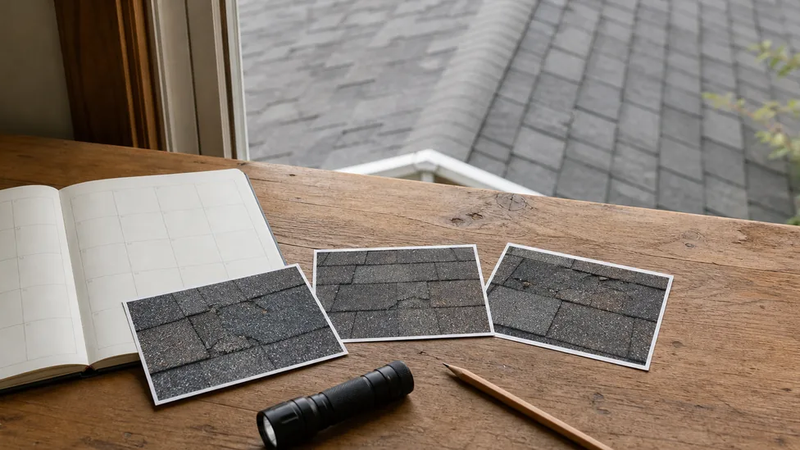
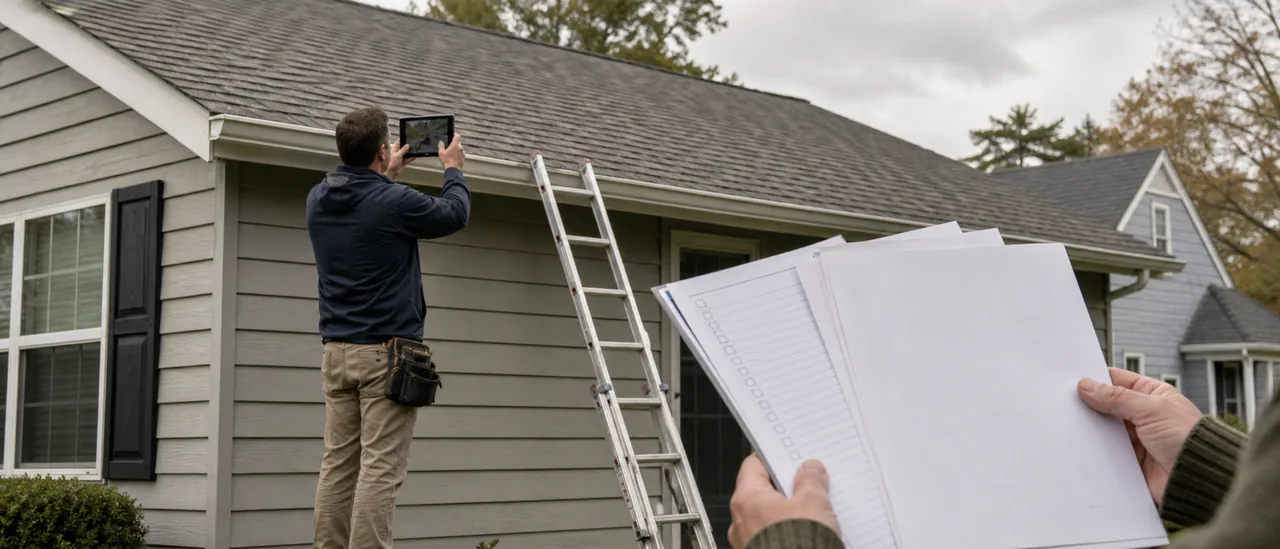
A visual inspection can document observable conditions with photographs, locations, and measurements. It may identify missing or creased shingles, exposed underlayment, surface wear, flashing conditions, or interior moisture staining.
It cannot reliably date every mark, prove the cause of hidden damage, see beneath intact materials, or interpret the full insurance contract. Access and safety limits matter too. The American Society of Home Inspectors’ standard, for example, limits its scope to readily accessible, visually observable components; another roof inspection may use a different written scope.
Before a policy renewal, an underwriting inspection may influence future eligibility or roof terms. It generally does not retroactively rewrite the coverage that applied on an earlier loss date. Because roof coverage can change at renewal, review the declarations and endorsements each year rather than assuming the prior terms still apply.
Practical bottom line
Separate two questions: What did the inspection establish about the roof? and What does the policy say those facts are worth? Review the declarations, endorsements, loss-settlement clause, deductible, exclusions, repair requirements, and claim correspondence. When those documents or the inspection scope are unclear, a qualified insurance professional or inspection professional can explain their own area without treating the inspection as the coverage decision.