On this page
Temporary protection is generally allowed
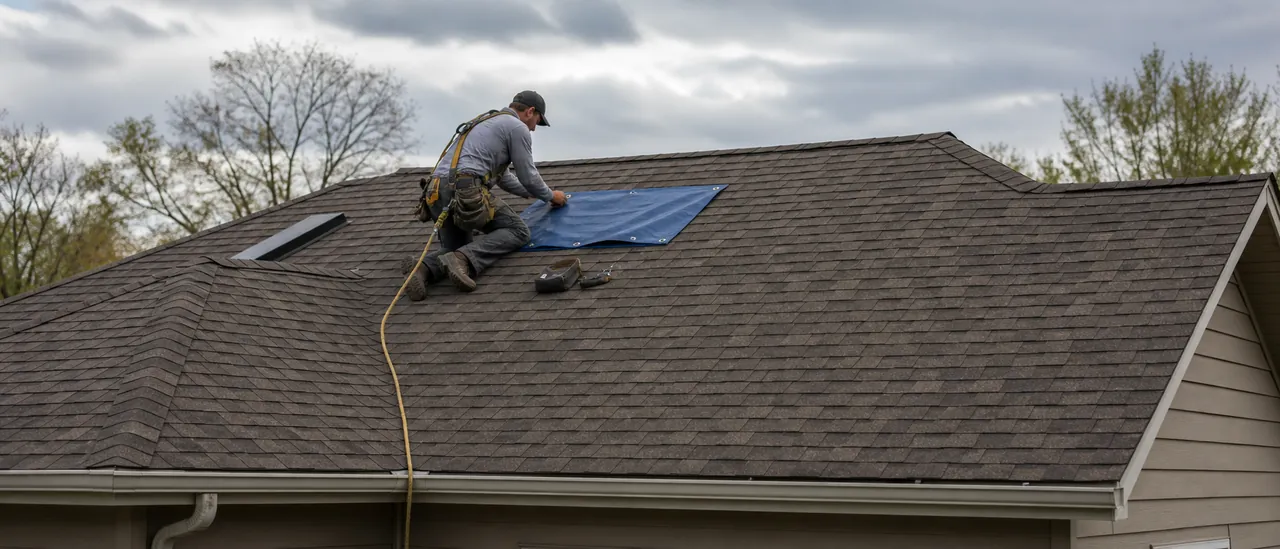
Before an insurance inspection, emergency roof work should normally be limited to reasonable, necessary measures that prevent additional damage. Common examples are placing a tarp over an opening, temporarily sealing a small exposed area, or boarding an opening connected to the roof damage.
That does not create one nationwide list of automatically approved repairs. The policy, insurer instructions, loss conditions, and applicable local requirements control. Report the loss promptly and ask how the insurer wants emergency work documented whenever time and safety allow.
Do not trade safety for documentation
Stay off a wet, unstable, steep, or structurally suspect roof. Use ground-level photos when safe, and leave roof access or temporary covering to qualified workers when the conditions require it.
What to do before anything is covered
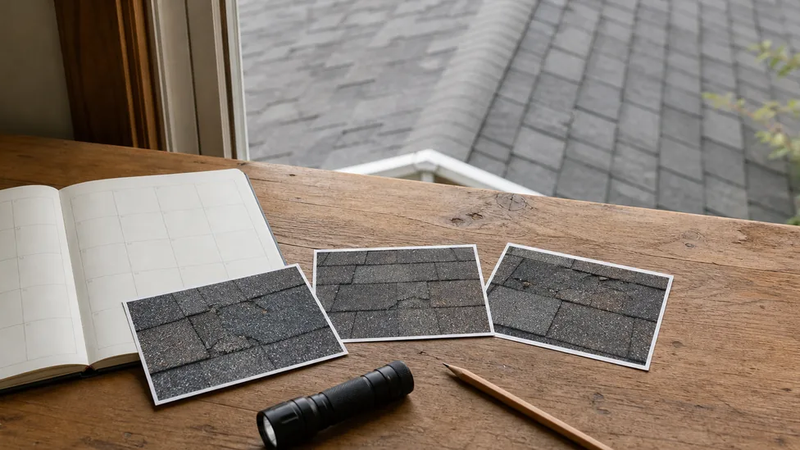
Photograph or record the roof and interior damage before work begins, if this can be done safely. Capture wide views and close details from accessible locations. Then document the temporary work as it progresses and keep itemized receipts for labor and materials.
The Texas Department of Insurance says homeowners policies may require reasonable temporary repairs to prevent further damage. Its guidance also says to take pictures or video first when possible, retain receipts, and keep damaged property for the adjuster.
A useful emergency-work record includes:
- the date and reason immediate protection was needed;
- before-and-after images from safe viewpoints;
- the location and dimensions of the covered area;
- an itemized invoice describing temporary materials and labor; and
- removed material retained for inspection, when safe and practical.
Work that should usually wait
Avoid replacing a roof, removing broad sections of roofing, rebuilding decking, or completing other extensive permanent work before the adjuster can assess the loss. California’s current residential claims guide advises temporary repairs to prevent further damage but says extensive permanent repairs should wait until the adjuster has assessed the property.
If delaying work would create an urgent safety problem or allow serious additional exposure, contact the insurer for instructions as quickly as circumstances permit. Document why the work could not wait and preserve removed material when safe. Emergency necessity does not guarantee that every cost will be covered; coverage and reimbursement remain policy-specific.
What an inspection can still establish
After temporary work, an adjuster can visually examine accessible, exposed conditions, the limits of the repair, surrounding roof surfaces, and supporting records. A tarp or patch may conceal the original opening, while removed roofing can eliminate details that were never photographed or retained.
Therefore, an inspection can describe what remains visible and compare it with the documentation. It cannot visually confirm a discarded component’s prior condition or determine hidden damage solely from the finished temporary repair. The practical rule is simple: stop further damage with the smallest safe temporary measure, preserve evidence, and postpone permanent reconstruction unless waiting is unsafe or the insurer directs otherwise.