On this page
Start wide, then move close
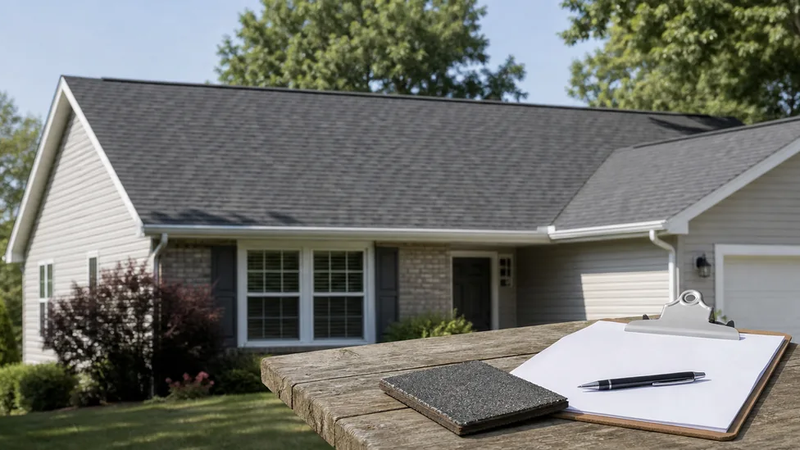
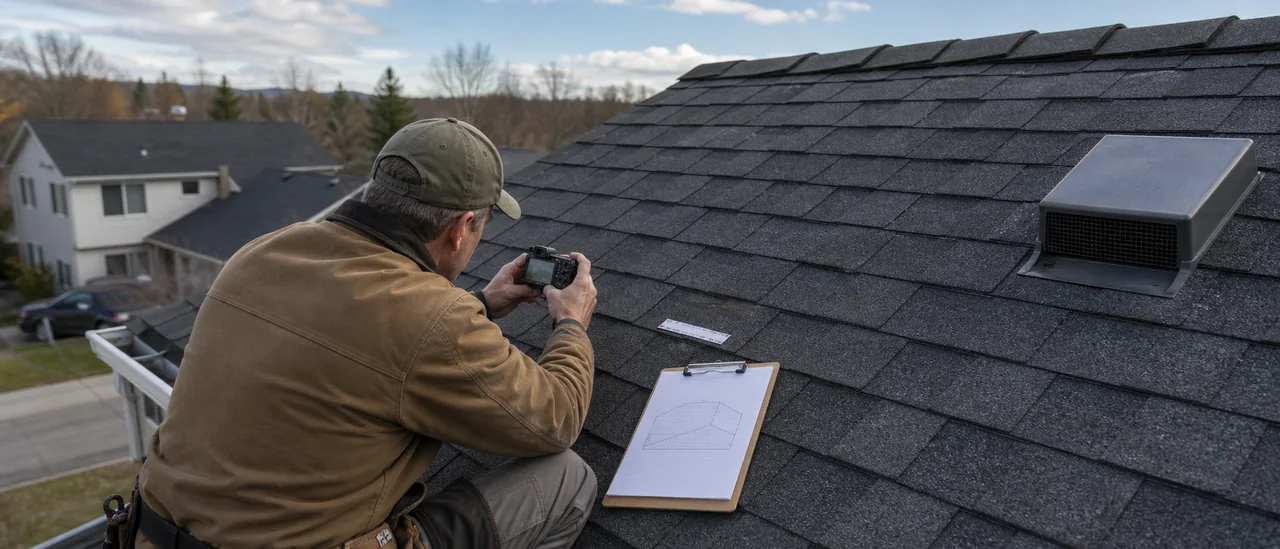
A storm-damage roof report should include a logical photo sequence: property and roof overviews, each roof slope, the location of every reported condition, close-up details with scale, relevant roof components, and any related interior moisture signs. Captions should identify where each image was taken, what it shows, and any access limitation.
An isolated close-up can show texture without showing where it is or whether it represents a broader pattern. IBHS roof-survey guidance calls for an overall roof view, photographs with corresponding notes, and a small ruler or scale for photographs.
The core photo set
A useful report normally contains:
- Property and roof overviews: the address or identifiable property context, all visible elevations, and wide views of each roof plane.
- Location views: medium-distance images connecting a reported condition to a slope, edge, ridge, valley, or nearby component.
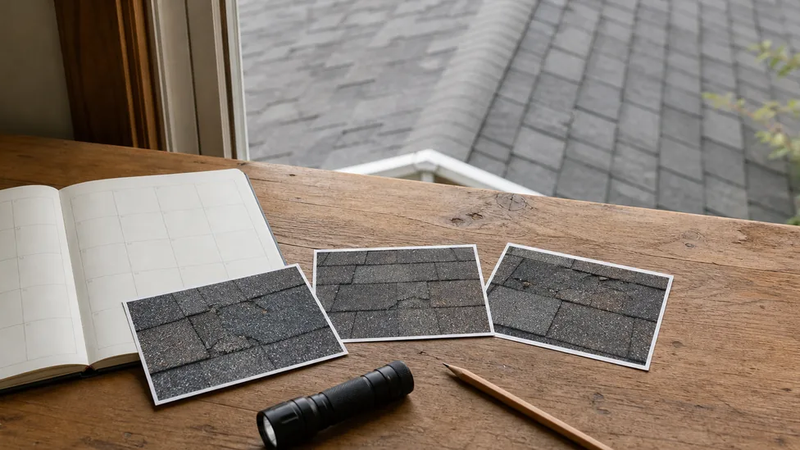
- Detail views: sharp close-ups of each distinct condition, plus a ruler or another clearly identified scale reference when size matters.
- Roof-system context: representative covering material and visible flashings, penetrations, chimneys, skylights, valleys, ridges, gutters, and drainage areas.
- Related evidence: visible marks on accessible vents, gutters, downspouts, or other exterior surfaces, without assuming those marks establish roof damage.
- Interior conditions: accessible stains, damp materials, or other moisture indicators, along with a wider room or attic view that establishes location.
Repeated images of one mark add less value than coverage explaining distribution. Photos should show the observation behind any recommendation whenever possible.
A photograph documents an observation—not its cause
A photo may clearly record a bruise, fracture, displaced shingle, stain, or dent. Determining whether wind, hail, wear, installation, traffic, or another cause produced it requires inspection context and professional judgment. Weather data can add storm history, but it does not prove damage at one property.
What captions and limitations should explain
Each photo should have a unique number and a caption naming the roof area, viewing direction when useful, material or component, and observed condition. A roof diagram keyed to photo numbers makes the sequence easier to follow. The report should also state the inspection date, weather, inspection method, and whether measurements or test areas were used.
Missing coverage should be explicit. Snow, debris, steep or fragile roofing, solar panels, height, or unsafe access can prevent observation. Maryland’s home-inspection rules illustrate this distinction: inspectors examine accessible roof coverings, drainage, flashings, and penetrations, but need not walk where access would be unsafe or damaging. Those rules also separate visual inspection from determining the presence or absence of hail damage.
Practical bottom line
The best report lets a reader move from building, to slope, to exact location, to close detail without guessing. It should document representative unaffected areas as well as reported conditions and state what was not visible. If photos are blurry, unlocated, missing scale, or limited to close-ups, ask for clarification or a qualified evaluation of the areas the report could not establish.