On this page
Yes—but “free” does not mean independent
Yes, free roof inspections can be legitimate, but their value depends on who performs the inspection, what is examined, and whether the inspector benefits from recommending work.
A roofing contractor may inspect at no charge because the visit could lead to a repair estimate. That business model is not automatically deceptive. It does mean the inspection and a neutral, fee-based evaluation serve different purposes. Ask whether the visit is a condition assessment, a sales estimate, or both.
Price alone cannot establish legitimacy. Clear identification, a defined scope, documented observations, and freedom from pressure are better signals.
How to check the offer
Before granting roof access, confirm the business name, physical contact information, insurance, and any license required where you live. Verify credentials with the issuing government agency rather than relying on a badge, truck decal, or link supplied at the door.
Ask these questions before the inspection begins:
- Which roof surfaces and components will be examined, and by what access method?
- Will inaccessible or unobserved areas be identified in writing?
- Will the report separate observed conditions from recommended work?
- Is any signature, deposit, financing application, or repair authorization expected?
The Federal Trade Commission identifies unsolicited “in the area” pitches, pressure for an immediate decision, and demands for full payment upfront or cash as scam warning signs. It also advises checking licensing and insurance and obtaining multiple written estimates.
A useful report draws boundaries
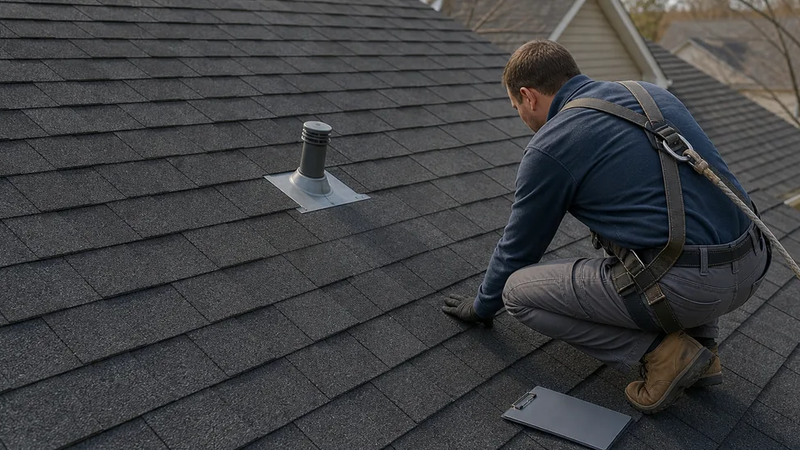
Photographs should identify their location and the condition observed. The report should also state the inspection method, excluded areas, and any limitation caused by height, slope, weather, roof fragility, or blocked access. A photo without context is not a complete diagnosis.
What a visual inspection can confirm
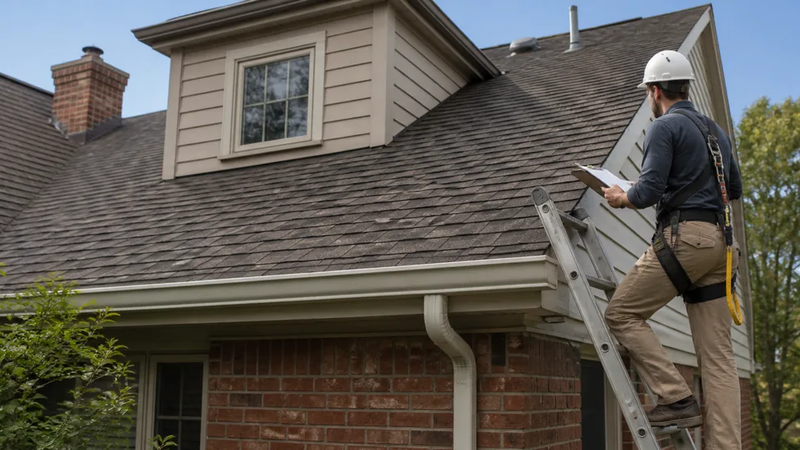
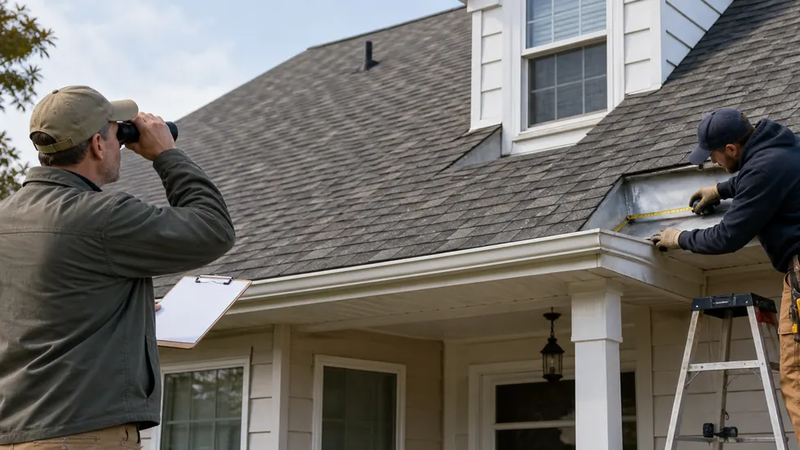
A visual inspection can document readily observable roofing materials, drainage components, flashing, skylights, chimneys, and penetrations. It may identify missing or displaced materials, visible deterioration, debris, or suspect details that merit closer evaluation.
It cannot reliably confirm conditions hidden beneath the covering, inside sealed assemblies, or behind finishes. Nor does a visual observation alone establish the cause of every mark, the remaining roof life, future performance, or the full repair scope. The American Society of Home Inspectors’ standard limits a home inspection to readily accessible, visually observable components and does not require warranties, guarantees, destructive probing, or predictions of future conditions.
Can the inspection be unbiased?
It can be careful and fact-based, but complete independence is harder when the inspector also sells the recommended repair. Look for observation-based language and request the written findings before discussing a contract.
If the conclusion is costly, disputed, or unclear, a qualified inspector who does not stand to perform the work can provide a separate opinion. The practical bottom line is simple: treat “free” as a price, not proof of either honesty or fraud, and judge the offer by its scope, evidence, incentives, and conduct.