On this page
Direct answer
Yes—an independent roof inspector is often better when you need an impartial condition report and the inspector is qualified. A roofing contractor is usually more useful when you need a repair scope, price, and someone to perform the work.
“Independent” should mean the evaluator is not selling the recommended work or receiving compensation tied to it. It is not a guarantee of skill. Ask about roof-specific training, experience, credentials, and the written scope.
How the roles differ
The better choice follows the decision you need to make.
| Question | Independent inspector | Roofing contractor |
|---|---|---|
| Primary deliverable | Condition findings and documentation | Repair or replacement proposal |
| Financial connection to work | None, if truly independent | May earn revenue from recommended work |
| Best fit | Second opinion or neutral baseline | Repair planning, pricing, and construction |
| Important check | Roof expertise and stated methods | Inspection detail and separation of findings from sales recommendations |
IIBEC’s consultant-membership rules exclude employees or principals of businesses controlling roofing sales or application. That association rule does not cover everyone using “independent inspector.”
What a visual inspection can confirm
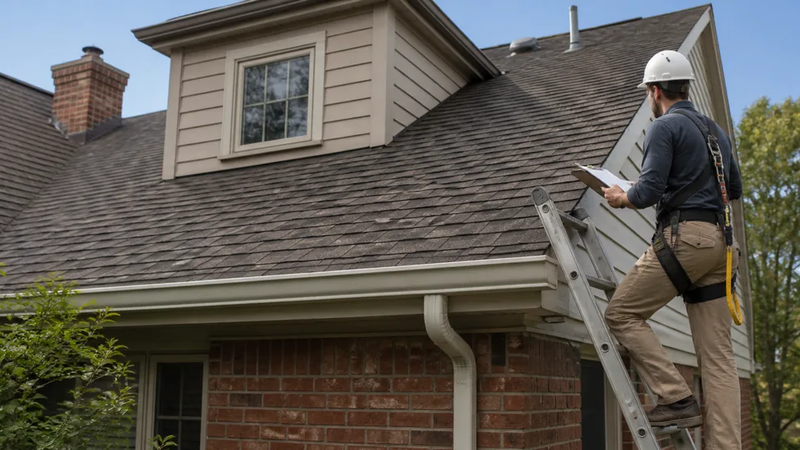
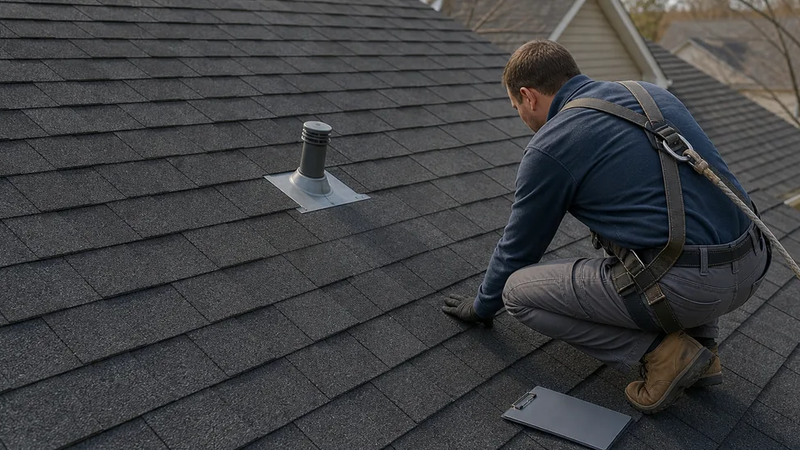
A visual inspection can document covering wear or damage, drainage, flashing, penetrations, and visible moisture indicators. InterNACHI’s standard covers those components within a non-invasive visual examination of accessible areas.
However, that standard is not technically exhaustive. It excludes concealed conditions and does not require conclusions about cause, remaining life, or repair cost. Steepness, fragility, weather, height, or debris may limit visibility.
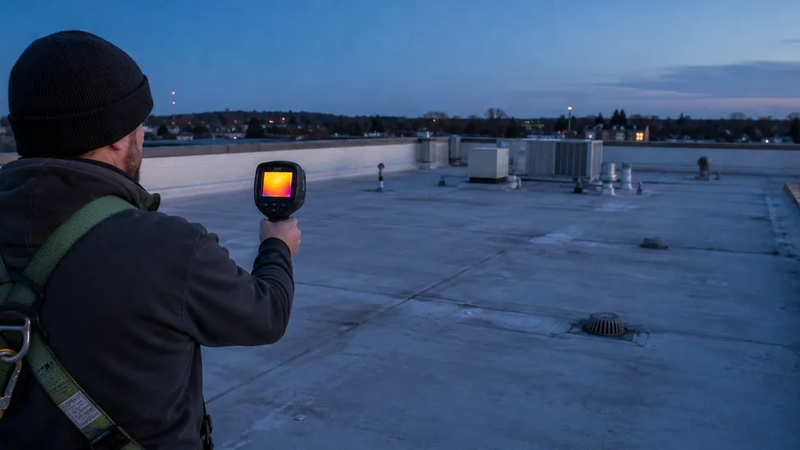
IIBEC likewise explains that visual review can provide valuable information about a roof problem’s nature, extent, and location. When the question concerns hidden moisture, membrane breaches, or underlying layers, additional methods may be needed. Its guidance identifies tools such as moisture surveys, electronic leak detection, water testing, and exploratory openings.
Compare scopes before comparing titles
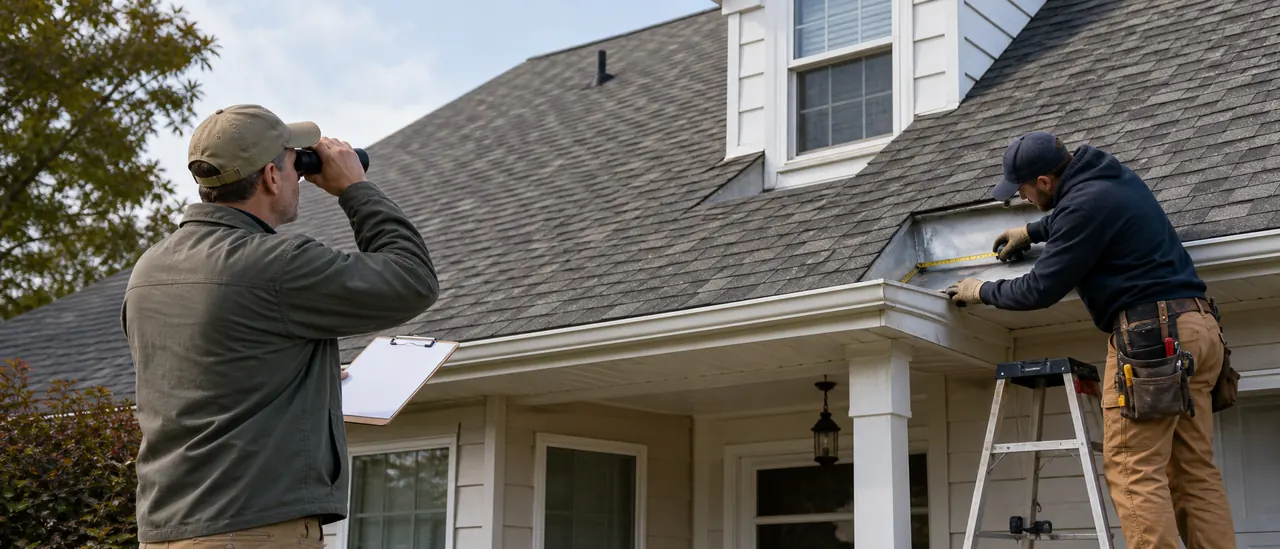
Ask what surfaces will be viewed, whether the attic is included, how inaccessible areas are documented, what testing is excluded, and whether the report separates observations from repair recommendations.
Practical bottom line
Hire an inspector who does not sell roofs when neutrality is the main priority, especially for a second opinion or documented baseline. Choose a qualified roofing contractor when the condition is already understood and the next question is how to repair it.
For an uncertain condition, competence and a written scope matter as much as independence. The evaluator should state observations, limitations, and any need for testing without treating a visual inspection as proof of concealed conditions.