On this page
There is no single failure speed
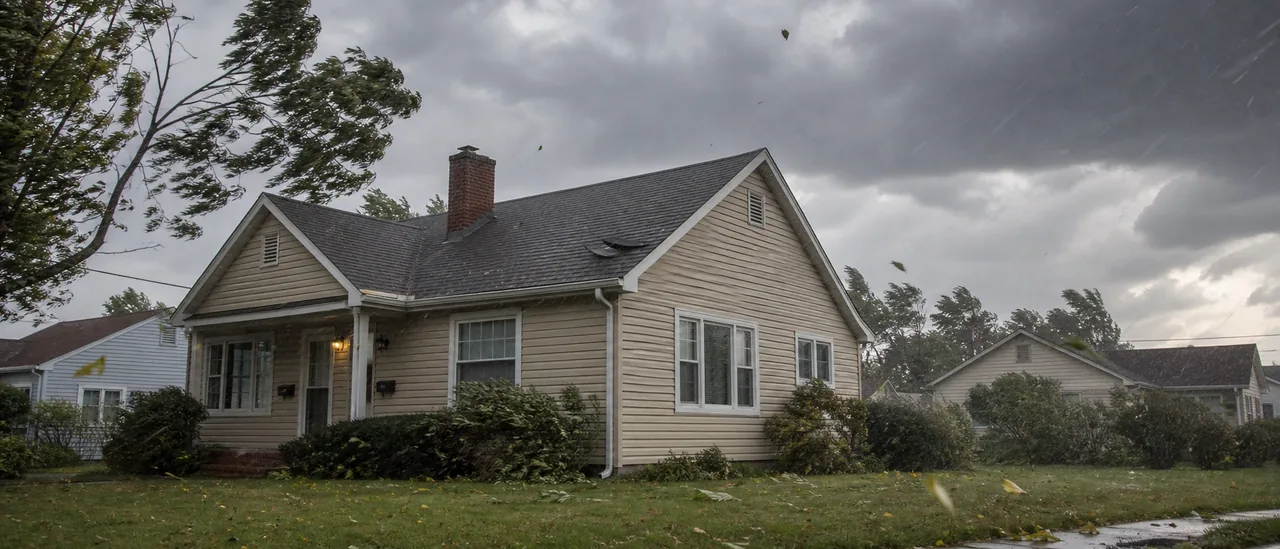
A roof can begin losing shingles in hurricane-force winds starting at 74 mph, but an entire roof does not predictably detach at one wind speed. The National Hurricane Center says well-built framed homes may suffer roof-decking or gable-end removal in 111–129 mph sustained winds. That range is a damage description, not a failure guarantee or a threshold for every house.
“Roof coming off” can mean several different failures. Wind may peel away shingles or metal panels, lift roof decking, separate trusses from walls, or remove much of the roof structure. Each layer has different fasteners and resistance.
Wind numbers are not interchangeable
Hurricane categories use maximum sustained wind. Building-code design speeds are typically 3-second gust values. A forecast, weather-station reading, or code-map number therefore cannot be compared without checking how the speed was defined.
Why one house fails before another
Wind moving over a building creates upward pressure on the roof. NIST explains that this uplift occurs in all types of windstorms. Openings caused by a broken window, failed door, or lost roof covering can add internal pressure and increase loads on the remaining structure.
The outcome depends on several interacting conditions:
- Connections: Roof-covering fasteners, deck attachment, and roof-to-wall connectors form a load path. The weakest connection may fail first.
- Roof shape and edges: Uplift is not uniform. Corners, eaves, ridges, overhangs, and some low-slope areas can experience especially strong suction.
- Exposure and height: An unobstructed coastal site generally experiences different loads than a sheltered, low-rise home at the same reported wind speed.
- Condition and installation: Loose shingles, corrosion, rot, missing fasteners, and installation errors reduce the resistance assumed for an intact assembly.
- Debris and openings: Windborne debris can breach the building envelope, changing pressure inside the house.
What the published wind ranges mean
The hurricane scale provides a practical reference. At 74–95 mph, well-constructed frame homes can sustain shingle and other roof damage. At 96–110 mph, major roof damage is possible. At 111–129 mph, removal of roof decking and gable ends may occur. In stronger categories, loss of roof structure becomes progressively more severe.
These sustained-wind ranges describe typical damage potential across many buildings. They do not certify what happened at a specific property. Building standards instead use site-specific gust speeds and calculated loads; they do not promise that every roof survives up to a simple mph cutoff.
Practical bottom line
Treat 74 mph as a point where roof damage becomes credible, not as the speed that removes a whole roof. Structural roof loss is associated with much stronger winds—roughly the 111–129 mph hurricane range and above—but vulnerable roofs can fail earlier, while well-connected roofs may remain intact.
After severe wind, stay off the roof. From a safe location, look for displaced materials, visible deck areas, a changed roofline, or openings that could admit water. A property-specific conclusion requires examination of the roof system and its connections, not a wind estimate alone.