On this page
Moisture is the most common concern
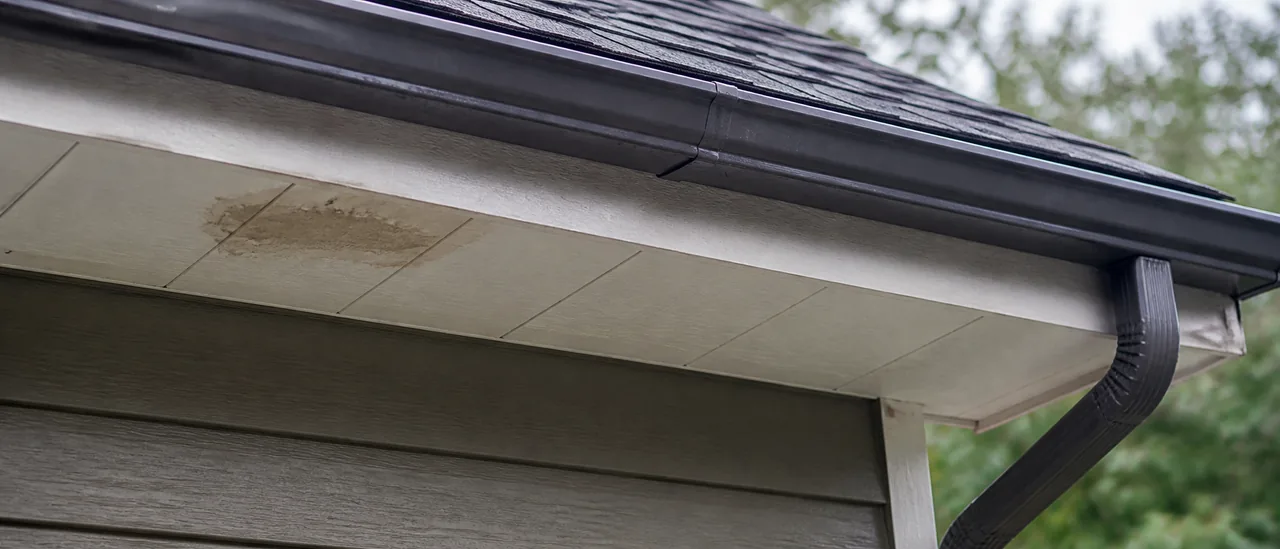
Stained soffits most often mean water has reached the underside of a roof overhang. The source may be roof runoff at the eave, leakage traveling along the roof deck, or moisture condensing in the attic. Staining alone does not show which source is active—or whether the mark is only dirt or an old, dry repair scar.
A soffit is the panel covering the underside of the eave. Because it sits below the roof edge, damage there may reflect a problem above or beside the panel rather than a defect in the soffit itself.
Where stains and damage come from
Several conditions can produce similar-looking marks:
- Misdirected runoff: A missing, bent, or poorly placed drip edge can let water wet the fascia and soffit instead of shedding clear of the roof edge. An overflowing or misaligned gutter can create a similar pattern.
- A roof or flashing leak: Water entering higher on the roof may follow sheathing or framing to the eave before appearing on the soffit.
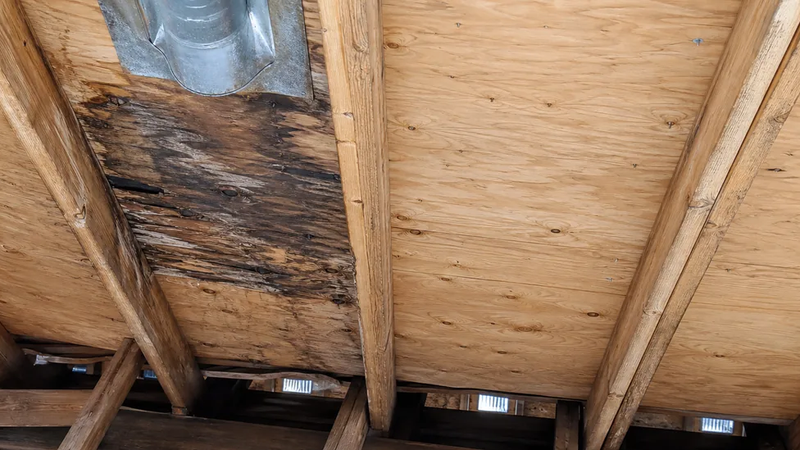
- Attic condensation: Warm, moist indoor air can leak into a cold attic and condense on roof framing or sheathing. Repeated moisture may drain toward the eave and stain nearby materials.
- Wind-driven rain or snow: Vented soffits can admit rain or snow during high winds.
- Surface weathering: Dirt, biological growth, peeling paint, corrosion marks, and aged sealant can discolor the surface without proving concealed decay.
Color does not identify the cause
Brown does not automatically mean a roof leak, and dark spotting does not confirm mold. Moisture, softness, movement, location, and change over time are more useful than color alone.
How to narrow the source
Start from the ground. Note whether the mark sits below a valley, wall intersection, gutter joint, downspout outlet, or roof penetration. Photograph it when dry, then compare it after rain. Active dripping, a spreading edge, or a stain that repeatedly darkens points toward current moisture.
Where safely accessible, an attic view may reveal damp sheathing, water tracks, wet insulation, condensation, or blocked airflow at the eaves. The exterior check should include the roof edge, drip edge, gutters, fascia, soffit vents, fasteners, and seams. A moisture meter or gentle probing can help assess material condition, but neither test identifies the entry path by itself.
When the condition needs prompt attention
Loose panels, soft wood, sagging, active dripping, or a rapidly changing stain deserve prompt evaluation. These signs suggest continuing moisture or loss of attachment rather than a cosmetic blemish.
An isolated, dry surface mark may only need cleaning and observation. If the source remains unclear, the attic is inaccessible, or roof access would be unsafe, a qualified roof or building-envelope evaluator can trace the moisture path and determine the repair boundary.