On this page
Yes, hidden problems can be missed
Yes, a condo inspection can miss hidden problems because a standard inspection is visual, limited to accessible areas, and not technically exhaustive. It reports conditions observed at the inspection—not a guarantee that every defect has been found.
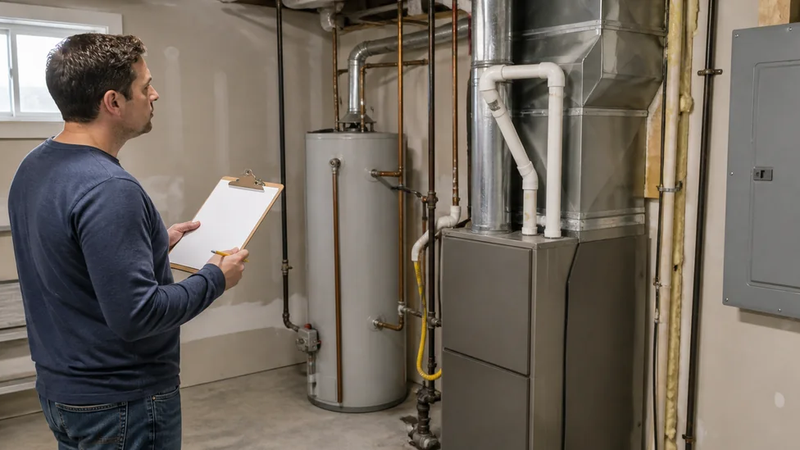
The American Society of Home Inspectors (ASHI) standard calls for inspection of readily accessible, visually observable, installed systems and components. That usually lets an inspector evaluate visible portions of the unit’s structure, plumbing, electrical, heating, cooling, interiors, and installed appliances included by the applicable standard and agreement.
What the inspector cannot see or confirm
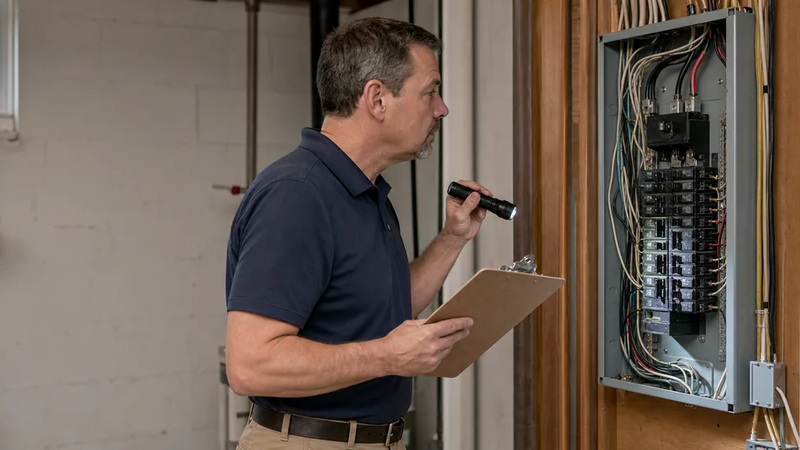
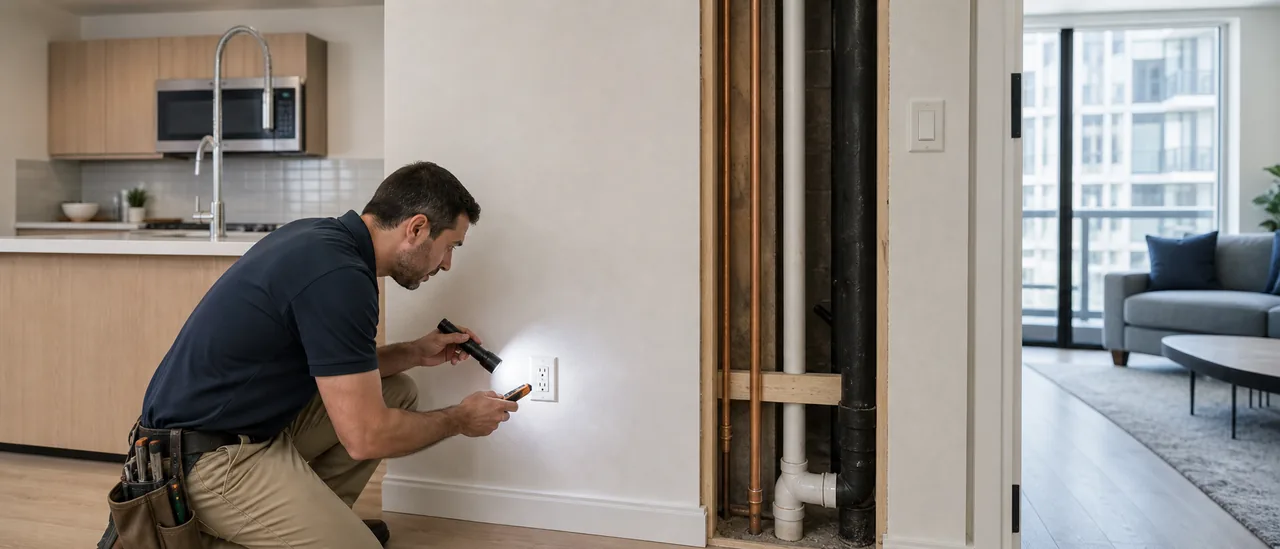
Some defects produce no visible or operational clue during the appointment. Examples include intermittent leaks inside walls, concealed wiring defects, moisture behind intact finishes, blocked pipes beyond visible sections, or equipment failures that appear only under unusual conditions. Furniture, stored belongings, sealed panels, finished ceilings, and inaccessible utility spaces may also block the view.
An inspector normally operates standard controls and opens readily openable access panels. ASHI does not require destructive measures, dismantling systems, moving personal property, or probing surfaces that would be damaged. Its standard also excludes determining concealed conditions, latent defects, exact causes, future failures, and code compliance.
A clean report is not a warranty
An inspection describes the accessible conditions observed that day. It cannot prove that concealed assemblies are defect-free or predict how every component will perform later.
Condo boundaries add another limitation
A condo inspection may be narrower than a detached-home inspection. ASHI’s minimum standard does not require inspecting common elements or common areas in multi-unit housing. Depending on the property and inspection agreement, that can leave the building exterior, roof, shared structure, elevators, central equipment, or common piping outside the unit inspection.
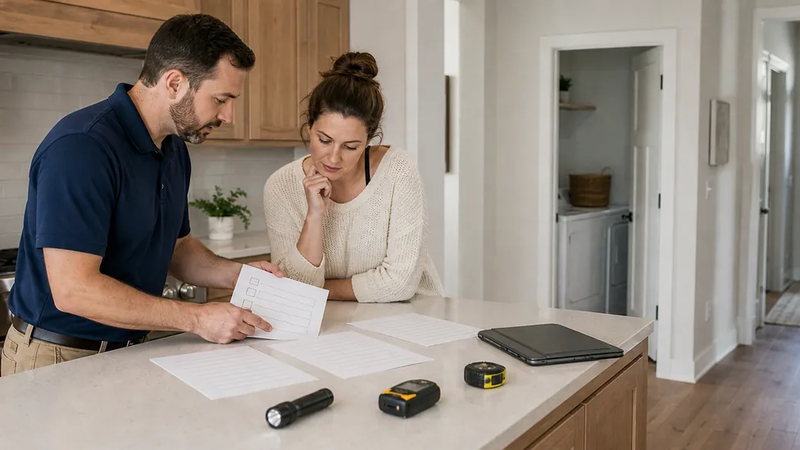
Ask the inspector in advance which unit components, limited common elements, and shared areas will be included. Separately review the condominium documents, maintenance records, reserve information, and recent assessments for evidence about building-wide conditions. Those records serve a different purpose; they do not expose a defect hidden behind the unit’s finishes.
Use the report as a decision tool
Read the limitations and “not inspected” entries as carefully as the defect list. A stain, musty odor, repeated breaker trip, slow drain, uneven floor, or seller disclosure may justify targeted follow-up even when the underlying cause remains unconfirmed.
Where a significant concern exceeds a visual inspection, a qualified system specialist can use appropriate testing or analysis. The practical bottom line is simple: a thorough condo inspection reduces uncertainty, but access, timing, shared-property boundaries, and the inspection method prevent it from eliminating uncertainty.