On this page
The direct answer
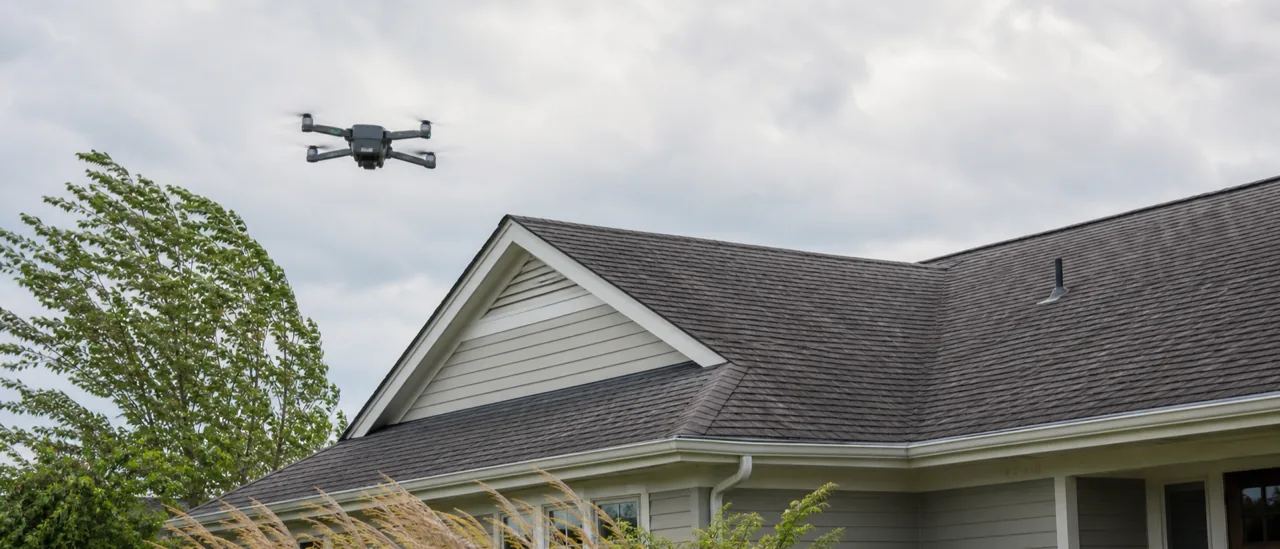
Yes, a drone can be used on a windy day, but only when the actual wind—including gusts—stays within the aircraft’s limits and the pilot can operate safely. “Windy” has no universal go/no-go speed for every drone, site, and inspection task.
The relevant limit is the one published for the specific aircraft and configuration. It should be treated as a ceiling, not a target. A flight can be impractical below that ceiling when gusts, turbulence, nearby obstacles, or the precision needed for useful roof images reduce the safety margin.
Why average wind speed is not enough
A steady reading does not describe every force the aircraft may encounter. The National Weather Service defines a wind gust as a rapid fluctuation with at least 10 knots between peaks and lulls; the gust speed is the maximum instantaneous speed.
Conditions can also change within a small area. National Weather Service guidance explains that trees and buildings can create turbulent air near the ground, with intensity related to wind speed and obstruction roughness. Around a roof, that makes a sheltered launch point an incomplete picture of conditions above the ridge or beside a wall.
What determines whether the flight should proceed?
The aircraft limit is only the first check. The pilot also needs current local weather, a safe operating area, adequate visibility, and enough control margin to hold position and land predictably. Under U.S. Part 107 guidance, the remote pilot in command must assess local weather, people, vehicles, property, airspace, and other hazards before flight.
Practical go/no-go questions
Before launch, confirm:
- Are sustained wind and forecast or observed gusts below the applicable limit?
- Is the aircraft stable during a brief, low-risk control check?
- Can it keep a safe distance from the roof, trees, wires, people, and property?
- Can the pilot maintain visual contact and complete a controlled return and landing?
- Will motion still allow sharp, correctly framed inspection images?
If any answer is uncertain, postponing the flight is the practical choice. Strong position-holding on a display does not override changing conditions or the pilot’s responsibility for the operation.
Practical bottom line
A windy day does not automatically rule out drone use. Proceed only when the specific aircraft, gusts, site airflow, flight path, and inspection objective all leave a comfortable safety margin. For roof work, conditions must support both safe control and usable imagery; meeting only one of those tests is not enough.