On this page
Yes—damage can be missed
Yes, a home inspector can miss a damaged sill plate, especially when the wood is concealed or the crawl space is unsafe or inaccessible. A standard home inspection is primarily visual and does not guarantee discovery of hidden defects.
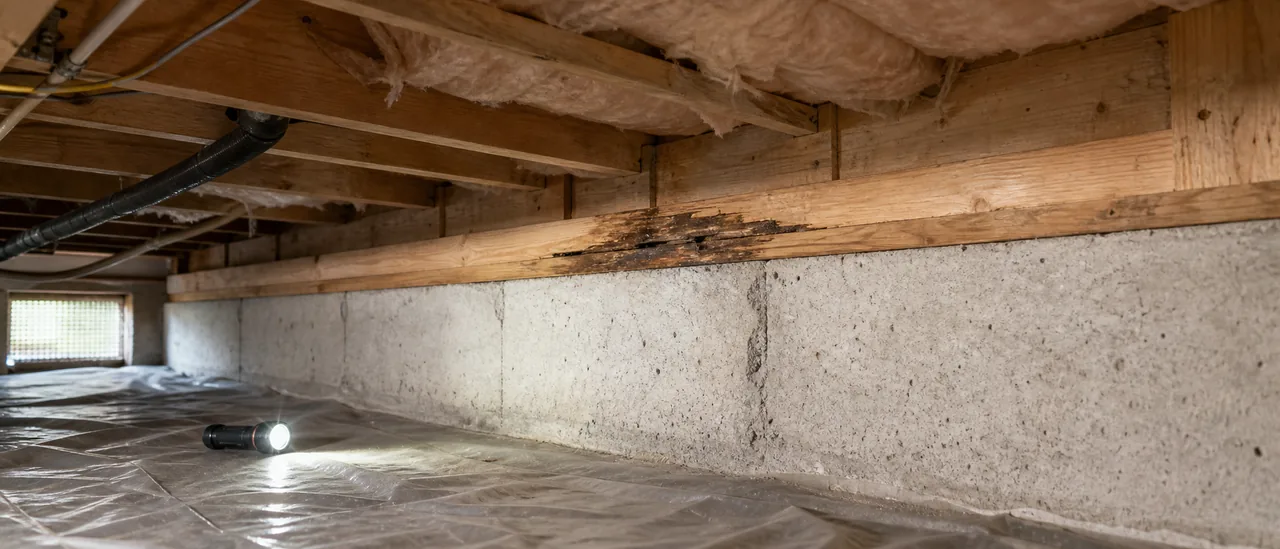
The sill plate, also called a mudsill, is the board laid directly on top of a foundation wall. In typical platform framing, the floor framing rests above it. Its position makes the plate important but sometimes difficult to see.
Why an inspection may not reveal damage
A widely used professional standard requires inspectors to examine the foundation, crawl space, and structural components. That standard also defines a general home inspection as visual and limited to readily accessible components.
A sill plate may be partly or completely hidden by:
- finished basement walls, insulation, or other coverings;
- a tight, blocked, wet, or otherwise hazardous crawl space;
- stored belongings or debris that an inspector is not required to move; or
- floor framing, ductwork, plumbing, and the foundation itself.
InterNACHI’s standard says a general inspection is not technically exhaustive and will not identify concealed or latent defects. Inspectors are not required to dismantle construction or determine structural adequacy.
A visible surface is not the whole plate
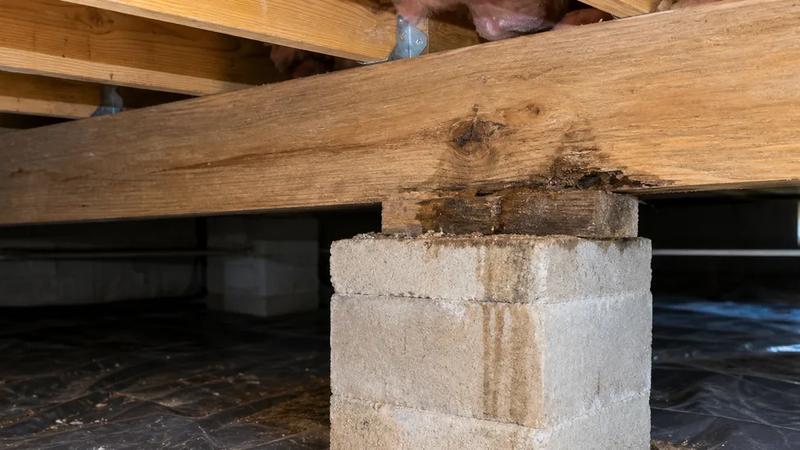
An inspector may document discoloration, decay, damaged wood, moisture evidence, or movement near an exposed section. A visual inspection generally cannot confirm the hidden extent of deterioration or the plate’s remaining structural capacity.
What the report can establish
When the sill plate is exposed and safely reachable, an inspector can report visible damage and related conditions. The report should also identify significant access limitations, such as an unentered crawl space or concealed foundation perimeter. Read the inspection agreement and report together because the exact scope may also reflect applicable state rules.
Visible damage is evidence of a problem, but absence of a reported defect is not proof that every section is sound. If the report notes suspected decay, insect activity, moisture intrusion, movement, or restricted access around the sill, further evaluation may be reasonable. A qualified contractor can expose or probe wood when appropriate; a structural engineer can assess capacity or design repairs when structural performance is uncertain.
Practical bottom line
A home inspector should evaluate the visible, accessible portions of the foundation and framing, but hidden sill-plate damage can remain undiscovered. The most useful report explains both the observed conditions and the areas that could not be inspected.