On this page
Typical cost in 2026
As of August 2026, a practical planning range is $100 to $1,000 for many localized professional repairs to indoor trip hazards. This is a synthesized range drawn from current carpet, stair, and subfloor estimates, not a single industry rate. The repair method, affected area, and access to the uneven layer change the price most.
Removing floor clutter or a movable rug may cost nothing. At the other extreme, combined floor and subfloor replacement can reach $1,500 to $10,000. These national planning figures are not a single “trip-hazard repair” rate because the phrase describes a condition, not one construction trade.
Cost by repair scope
| Scenario | 2026 planning range | What the range can include |
|---|---|---|
| Low | $0–$300 | Clear floor clutter or remove a rug; stretch or patch loose carpet; repair one stair step |
| Typical | $100–$1,000 | Published national ranges for carpet repair, stair repair, or a localized subfloor repair |
| High | $1,500–$10,000 | Extensive stair work, broad floor and subfloor replacement, or damaged framing |
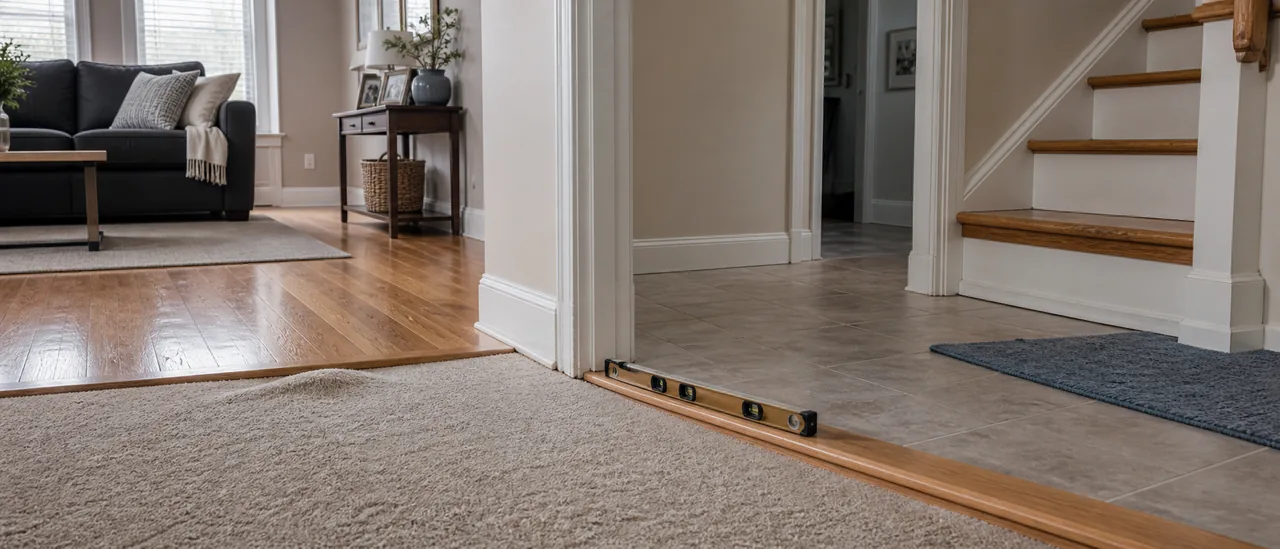
Federal fall-prevention guidance identifies throw rugs and floor clutter as trip hazards in the home. Repair estimates may also address buckled carpet, raised flooring edges or door thresholds, damaged stair treads, and uneven attic-access walking surfaces. This guide does not price bathroom slip resistance, accessibility remodeling, or unrelated cosmetic floor refinishing.
What an estimate may include
A basic quote may include the service call, labor, ordinary repair materials, fastening or patching, and cleanup. Carpet work may involve stretching or patching. Carpentry may address a door threshold, stair component, attic walkway, subfloor, or joists below it.
Ask each estimator to identify the defective layer and the area included. Removal and disposal, moving furniture, matching discontinued finishes, opening a ceiling below, repairing water damage, and restoring adjacent surfaces may be separate charges.
A flat price needs a defined cause
“Level the floor” is not a complete scope. A surface patch, subfloor replacement, and joist repair can address similar symptoms at very different prices. The written estimate should state what is uneven, why, and which layers will be opened or replaced.
Why the price changes
Material and repair method: Carpet stretching is generally less costly than replacing hard-surface flooring. Fixr places carpet repair at $150 to $300 nationally and a single stair-step repair at $75 to $150. A separate 2026 guide places subfloor repair at $3 to $10 per square foot.
Size and access: One loose edge costs less than work spanning several rooms or steps. Finished ceilings, built-ins, plumbing fixtures, tight crawlspaces, and restricted attic access can increase removal and restoration work.
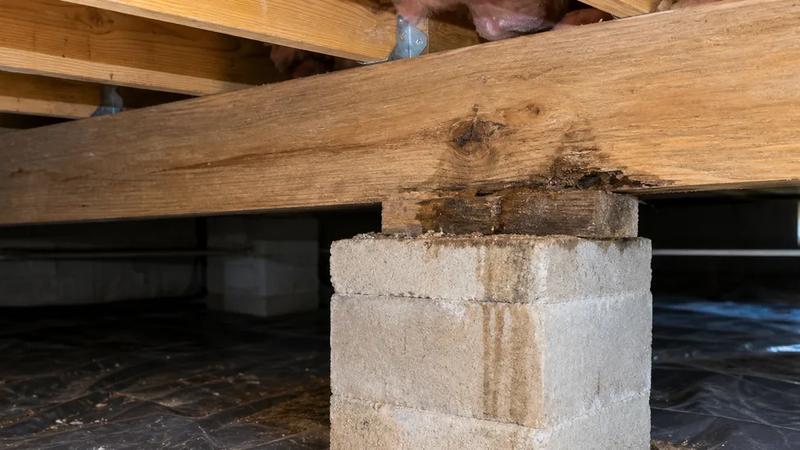
Depth of the defect: A visible covering may hide a weak subfloor or damaged framing. Published estimates separate surface repairs from structural work; the latter can move a project from hundreds into thousands of dollars.
Region and minimum charges: Local labor rates affect the quote, and a small job may still carry a minimum service charge. Material availability and matching an existing finish can add time or expand the repair area.
When to obtain specialist estimates
Obtain a flooring or carpentry estimate when the defect is limited to carpet, boards, a door threshold, a stair component, or an attic walkway. Seek a qualified structural evaluation before pricing the repair when a floor slopes, feels soft, continues moving, or appears to involve joists or the foundation.
Compare written estimates using the same cause and scope. If one quote covers only the visible surface while another includes subfloor or framing, the totals are not comparable—even if both promise a level walking surface.