On this page
Typical cost in 2026
As of August 2026, fixing one leaking condo window generally costs $100 to $600 for the window repair itself. A straightforward reseal may land near $150, flashing work around $400, and a rotted frame about $150 to $800. Repair scope, exterior access, and concealed damage change the total most.
Those are national planning figures, not a condo-specific quote. If repair is impractical, another current market guide places full window replacement at $400 to $2,000. Interior drywall, paint, trim, or wall-cavity repairs may be separate.
Cost by repair scope
| Scenario | 2026 planning range | What the estimate may cover |
|---|---|---|
| Low: simple reseal | $100–$200 | Remove failed sealant, prepare the joint, apply new exterior sealant |
| Typical: leak or flashing repair | $250–$600 | Diagnosis, localized flashing or frame work, ordinary access and materials |
| High: rot, difficult access, or replacement | $600–$2,000+ | Frame repair or replacement window; lifts and interior restoration may add cost |
Here, a “window leak” means rainwater entering at the glazing, sash, frame, perimeter joint, or window-to-wall connection. It does not mean ordinary indoor condensation on the glass. Water appearing beside a window can also travel from a wall joint above it, so the visible drip does not define the repair scope.
What the price includes
A basic proposal may include an inspection, removal of loose sealant, minor materials, labor, cleanup, and a water check after repair. Flashing work can require removing and reinstalling nearby trim or cladding. Ask whether those items and any finish repairs are included.
Condo estimates need another boundary: who controls the window and exterior wall. Before authorizing work, ask the association manager for the declaration, bylaws, or maintenance chart that assigns the window, perimeter seal, flashing, façade, and interior finishes. The responsible party can differ by component, even around the same opening.
Make every estimate name the leak source
A quote for “caulking one window” is not comparable to a quote for opening the wall and rebuilding flashing. Request the diagnosed entry point, repair area, access method, excluded finishes, and warranty in writing.
Main cost drivers
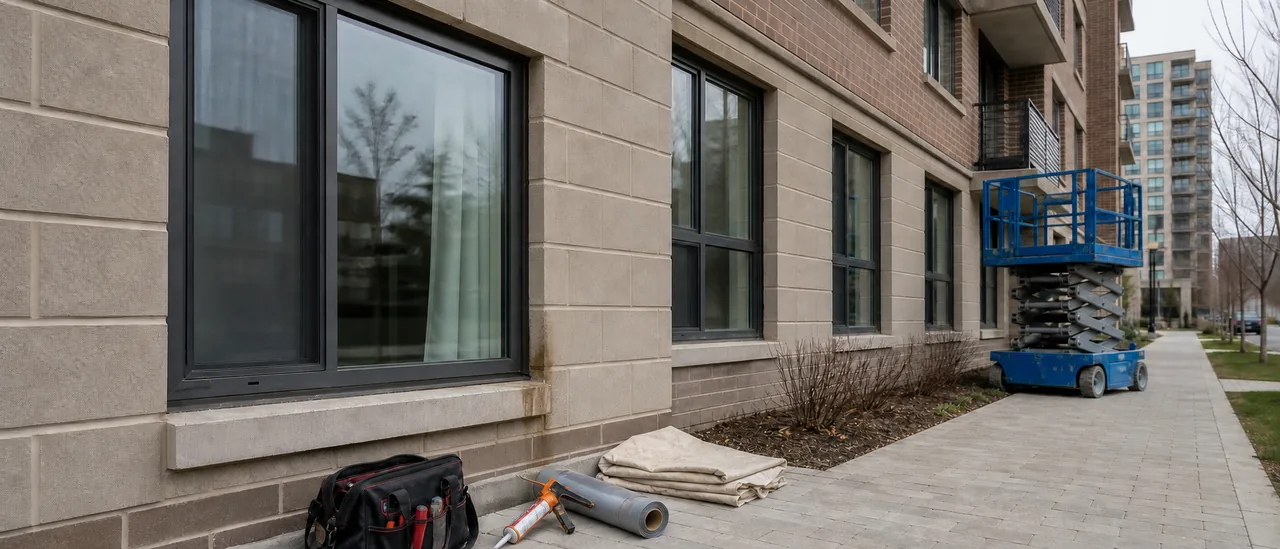
Access and building rules: Higher-floor work may require a lift, swing stage, traffic control, or scheduled façade access. National guides consistently identify accessibility as a cost factor, before any condo-specific mobilization charge.
Cause and repair depth: Fresh perimeter sealant costs less than removing cladding to reach flashing. Rotted framing, wet insulation, damaged drywall, and matching exterior finishes expand the work beyond the window.
Window design and size: Large, multi-pane, custom-shaped, or nonoperable units generally require more labor and material. Frame material also affects whether a damaged section can be repaired or the unit must be replaced.
Region and timing: Labor rates, lift rental, permits, façade restrictions, and minimum service charges vary locally. Combining several approved window repairs may spread one mobilization cost across multiple units.
When to obtain specialist estimates
Obtain a qualified window or building-envelope evaluation when water returns after resealing, enters above the frame, affects several stacked units, or has softened surrounding finishes. Standard home-inspection guidance includes visible windows, wall coverings, flashing, and trim, but excludes flashing that is not visible or readily accessible from the ground. Concealed leaks may therefore need targeted testing or selective opening.
For comparison, request at least two estimates using the same scope. Each should identify access equipment, association approvals, permits, cladding work, window or frame components, interior restoration, testing, and cleanup. That detail is more useful than comparing bottom-line totals that solve different problems.