On this page
Yes—finished surfaces can hide the evidence
Yes, a home inspector can miss finished basement water damage when walls, flooring, insulation, furniture, or stored items conceal it. A standard home inspection is a non-invasive visual examination of accessible areas, not an investigation inside closed building cavities.
An inspector should still examine the accessible basement and report material defects that are observed. Under InterNACHI’s Standards of Practice, that includes observed indications of active water penetration. The same standard says an inspection is not technically exhaustive and will not identify concealed or latent defects.
Why a finished basement changes what can be seen
Drywall, paneling, trim, carpet, and finished ceilings cover the foundation and other materials that may show direct evidence of water entry. Inspectors generally do not cut openings, lift installed finishes, or move obstructions simply to expose concealed construction.
The inspection also represents conditions on one date. A basement may be dry during the visit even if water appears during heavy rain, snowmelt, a plumbing leak, or another intermittent event. A dry visible surface therefore does not prove that the concealed side is dry or undamaged.
A moisture reading is a clue, not an all-clear
A moisture meter may help locate a suspicious area, but standard practice does not require one. Even when used, readings are limited to the tested locations and conditions; they do not expose every closed cavity or establish the full source and extent of damage.
What a visual inspection may reveal
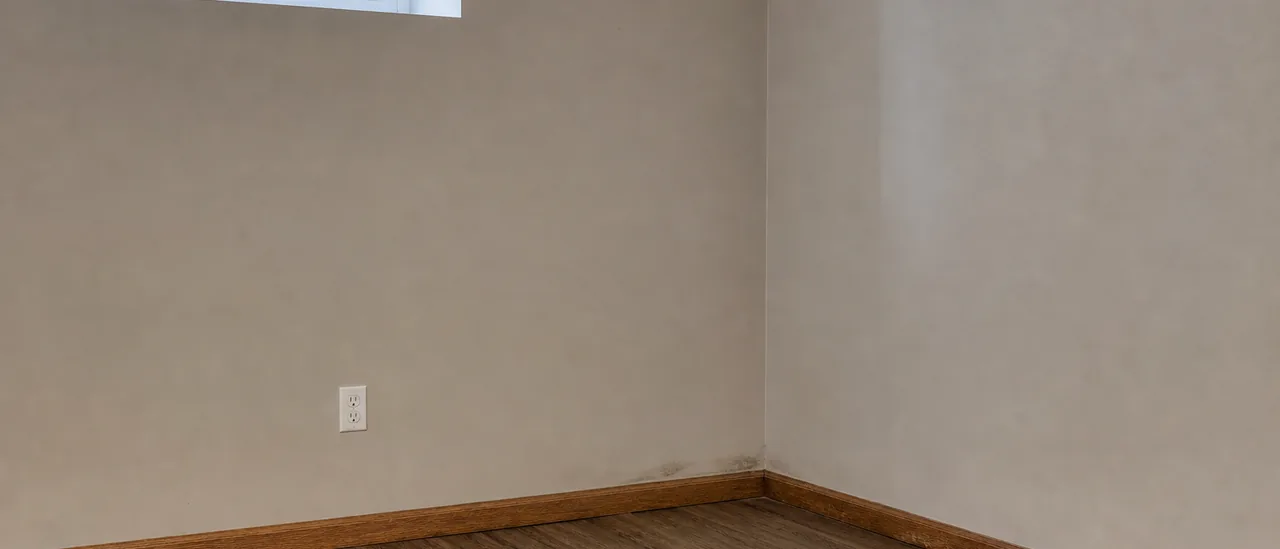
Visible clues can still justify reporting a concern. These may include staining, peeling finishes, swollen trim, damaged flooring, musty odors, or accessible areas that are damp at the time of inspection. Exterior grading and surface drainage may also provide relevant context when they could contribute to moisture intrusion.
Those clues cannot, by themselves, confirm what is behind every finished wall or beneath the entire floor. They also may not identify the water source, whether the event is active, how long it lasted, or the extent of damage to concealed materials.
The EPA notes that moisture problems can occur inside walls and on the back of drywall, paneling, wallpaper, carpets, and pads. Its investigation guidance says specialized tools such as moisture meters and borescopes may help locate hidden areas, while opening suspected areas requires care.
Practical bottom line
Read the report for both findings and documented limitations, including inaccessible rooms, covered surfaces, stored belongings, or conditions that restricted the inspection. Ask what was visible, whether any optional moisture testing was performed, and which areas could not be evaluated.
When stains, odors, prior leak records, recent repairs, or moisture readings suggest a concealed problem, a qualified evaluator may need to investigate beyond the standard inspection scope. That evaluation may require targeted testing or carefully opening a limited area with the owner’s permission. No visual inspection can guarantee that every concealed condition has been found.