On this page
Yes—because a standard inspection has limits
Yes. A home inspector can miss a sewer line blockage, especially when the inspection does not include a camera examination of the underground lateral.
A blockage is material or an object that partly or fully restricts wastewater flow. It may sit beyond every visible pipe section. Partial or intermittent restrictions can also allow fixtures to drain normally during the limited observation period.
A sewer scope is a separate examination
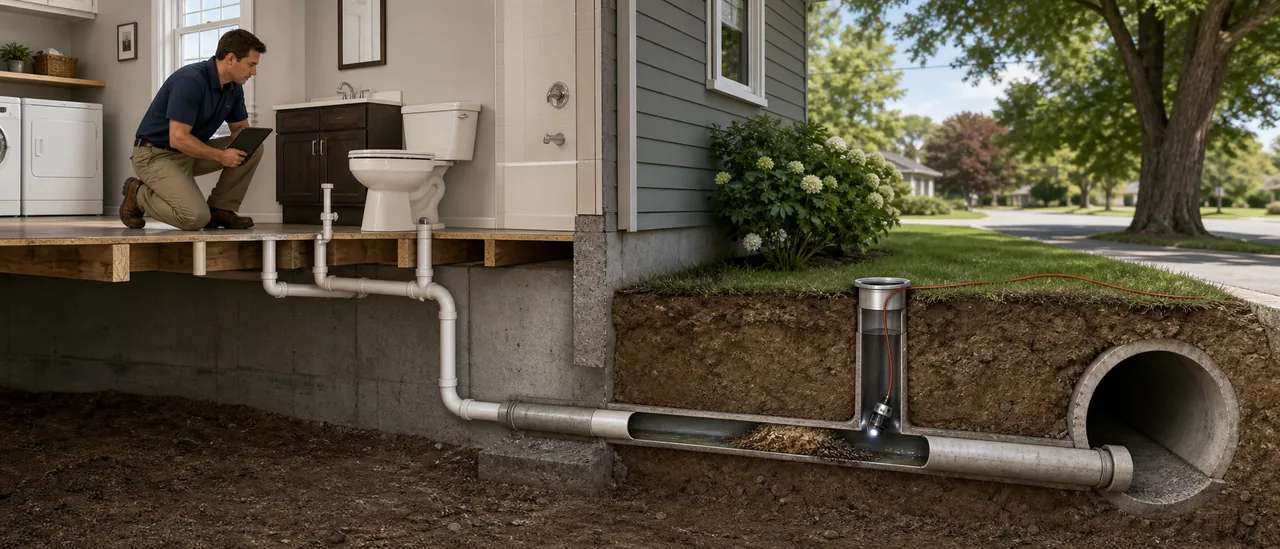
A sewer scope sends a video camera through the exterior lateral from an accessible cleanout or vent. Confirm that this service, its access point, and the portion examined are listed in the inspection agreement and report.
What a standard home inspection covers
Under the ASHI Standard of Practice, an inspector examines readily accessible, visually observable systems. The plumbing scope includes interior drain, waste, and vent systems and their fixtures. The same standard says the inspection is not technically exhaustive and does not require inspection of underground items.
During normal fixture operation, an inspector may observe slow drainage, a backup, or another visible symptom. Those findings can justify further evaluation, but they may not locate the obstruction or establish its cause.
Normal drainage at the inspected fixtures is reassuring only for that moment. It does not show the inside of a buried lateral, prove full pipe capacity, or predict how the line will perform under heavier use.
What a sewer camera can—and cannot—confirm
InterNACHI defines a sewer scope as a video inspection of the lateral between the house and the municipal tap, HOA tap, or septic tank. Its sewer-scope standard calls for reporting an observed blockage or restriction.
A usable camera view can document a visible obstruction and its approximate position along the inspected route. It may also reveal conditions associated with restricted flow, such as root intrusion, standing water, an offset, or a crushed section.
Even a sewer scope has boundaries. The camera may stop at an obstruction, access may be unavailable, or some piping may fall outside the agreed scope. InterNACHI’s standard describes the examination as not technically exhaustive and limited to material defects observed on the inspection date.
Practical bottom line
Read the agreement and report to see whether a sewer scope was included, how access was obtained, and where the camera stopped. Do not assume that a general inspection included this service simply because plumbing fixtures were operated.
If repeated backups, widespread slow drainage, or other unresolved symptoms remain, a qualified sewer-scope inspector or plumbing professional can evaluate the line. The goal is to document the affected section and distinguish a visible blockage from another drainage problem.