On this page
A practical cost range for 2026
As of August 2026, a practical national planning range is $1,388 to $5,323 when correcting a sewer-line belly requires partial or complete pipe replacement. Published open-trench work runs about $50 to $250 per foot, while difficult local replacements can reach $5,000 to $15,000 or more. Repair length, pipe depth, and the surface above the line change the price most.
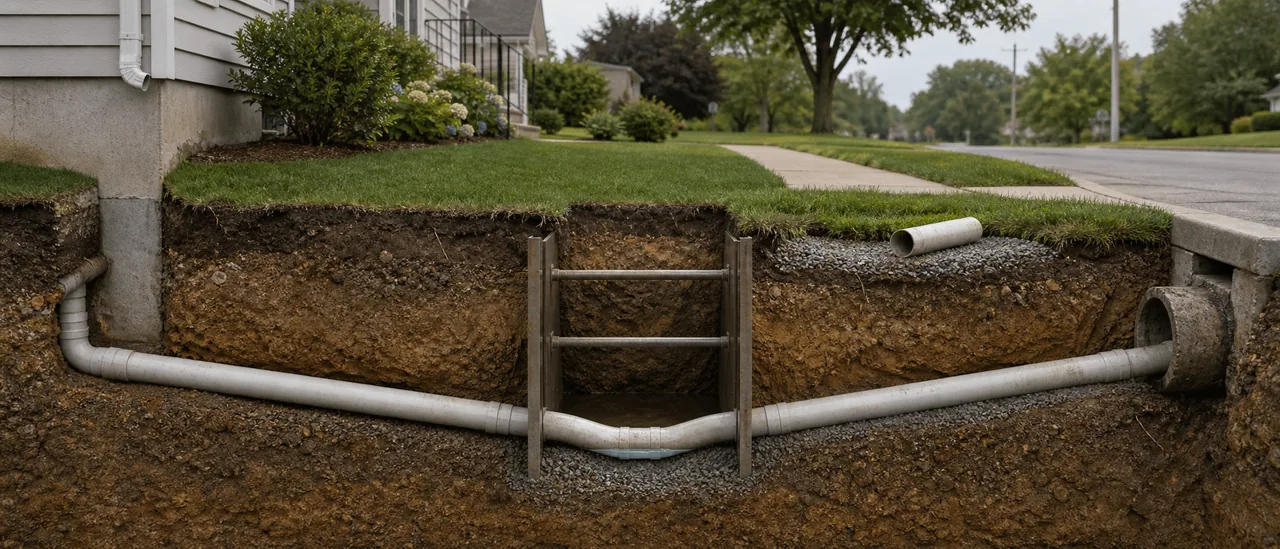
A belly is a sag or low spot that holds standing water because the gravity line no longer has a continuous downward grade. It is not simply a clog, crack, or root intrusion, although those defects can appear in the same section. Milwaukee Metropolitan Sewerage District guidance describes minor pipe sags as areas indicated by standing water.
Low, typical, and high scenarios
| Scenario | 2026 planning reference | Scope and limitation |
|---|---|---|
| Low: short, accessible section | $50–$250 per foot | Open-trench repair of limited footage; landscaping is extra |
| Typical: sewer-line replacement project | $1,388–$5,323 | National market range; actual belly length and access still matter |
| High: deeper or restoration-heavy lateral | $5,000–$10,000+ | Pinellas County replacement benchmark |
| High regional example | $8,000–$15,000 | Glen Cove, New York, lateral-replacement benchmark |
The rows are reference points, not four fixed packages. A short repair still carries mobilization and diagnostic costs, while a long belly beneath a driveway, slab, mature landscaping, or public right-of-way can exceed a national range.
What the price should include
The durable scope usually addresses the affected pipe's elevation, not just material inside the pipe. A recorded camera inspection should identify the standing-water section and its footage. Locating equipment may then mark the defect at the surface before excavation and replacement are priced.
A complete estimate should identify:
- the measured repair length, pipe depth, and access points;
- excavation, bedding, pipe, fittings, backfill, and post-repair testing;
- permits, utility locating, disposal, and any work near the public connection; and
- restoration of lawn, planting, concrete, asphalt, flooring, or other finishes.
Ask what is excluded. HomeAdvisor's current cost guide specifically calls out video inspection, permits, landscaping, and driveway repairs as budget items. Pinellas County likewise identifies depth, lateral length, and surface restoration as replacement-cost drivers.
Confirm that the proposal corrects the grade
A cured-in-place liner is installed inside an existing pipe to seal defects. A quote for a belly should explain whether and how the proposed method removes the low spot rather than only addressing the pipe wall.
Why estimates vary by property and region
Depth affects excavation time, shoring needs, and equipment access. Length controls pipe and labor quantities. Soil conditions, buried utilities, and limited machine access can slow digging, while hardscape or interior finishes add demolition and restoration.
Local labor rates and permit requirements also matter. Responsibility for the private lateral can end at the property line in one community and continue to the public main in another. That boundary changes both the footage and approvals included in a bid.
When to obtain specialist estimates
First obtain the full sewer-scope video and a report showing the belly's location, length, water depth, and any nearby cracks, offsets, roots, or collapse. Minor sags do not always require immediate work; MMSD lists minor pipe sags among noteworthy findings that may not need immediate action.
When replacement is proposed, compare qualified plumbing or sewer-specialist estimates built from the same camera findings. Each should state the repaired grade, method, footage, restoration, permits, exclusions, and post-repair verification. Without that common scope, the lowest total may simply describe less work.