On this page
Typical cost in 2026
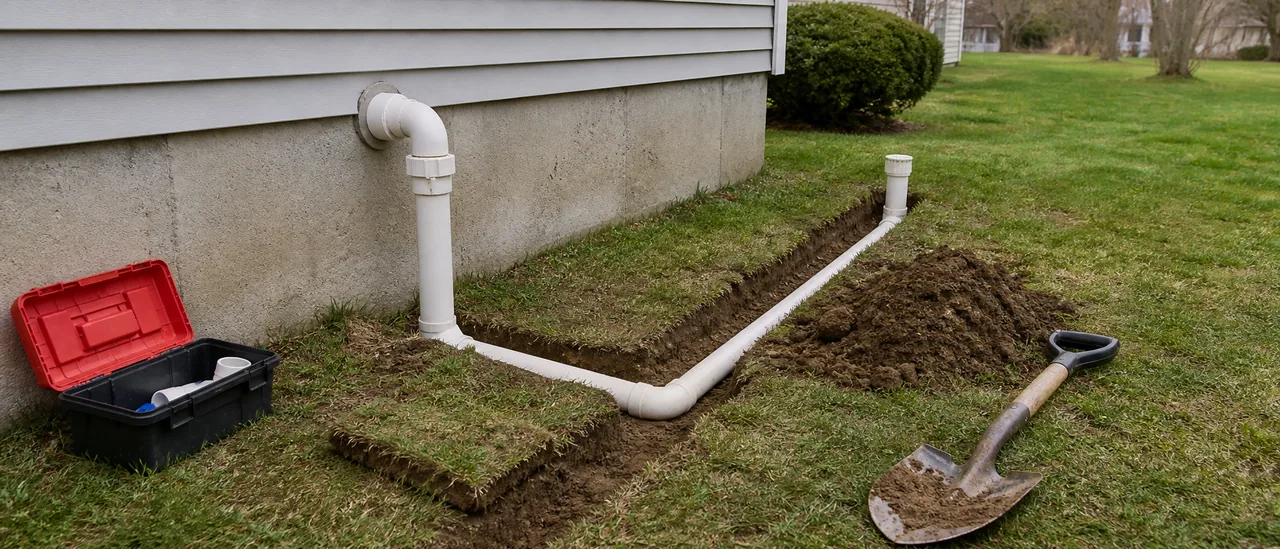
As of August 2026, fixing a sump pump discharge problem typically costs $125 to $600 when the work involves clearing, patching, or replacing accessible pipe. A simple above-ground extension may cost $150 to $400, while burying or rerouting an exterior line can cost $250 to $2,000. Pipe length, access, and excavation change the price most.
These are national planning ranges, not quotes. Two market guides place discharge-pipe repair at $125 to $300 and replacement at $175 to $600. The higher exterior range applies when the solution requires a trench, a longer route, or a new discharge point—not merely a coupling or short pipe section.
Cost by repair scope
| Scenario | 2026 planning range | Typical scope |
|---|---|---|
| Low: accessible clog or minor damage | $125–$300 | Diagnosis, clearing or patching, ordinary labor |
| Typical: replace accessible discharge pipe | $175–$600 | Remove and replace pipe, reconnect, test flow |
| High: bury or reroute exterior line | $250–$2,000 | Trenching, longer pipe run, backfill; restoration may be extra |
“Discharge problems” means defects in the piping that carries water from the sump basin to an approved outlet. It can include a clog, leak, disconnect, frozen section, poor route, or outlet that sends water back toward the foundation. It does not include replacing the pump, rebuilding foundation drainage, or repairing water-damaged finishes.
What an estimate may include
A basic estimate may include a service call, diagnosis, accessible pipe or fittings, ordinary labor, reconnection, and a flow test. Ask whether clearing a blockage and replacing pipe are priced separately, and whether the diagnostic fee is credited if work proceeds.
Exterior work may exclude utility locating, permits, landscape removal, concrete or pavement cutting, soil haul-off, and surface restoration. A storm-drain connection or dry well is also a different scope from discharging onto the yard.
Compare the outlet, not only the pipe
A low quote may restore flow without correcting where the water ends up. Each estimate should identify the final outlet, how the route avoids backflow toward the foundation, and which yard or hardscape repairs are excluded.
Why the price changes
Length and access: Replacing a short, exposed section costs less than opening a crawlspace route or tracing buried pipe. Tight access adds labor even when materials are inexpensive.
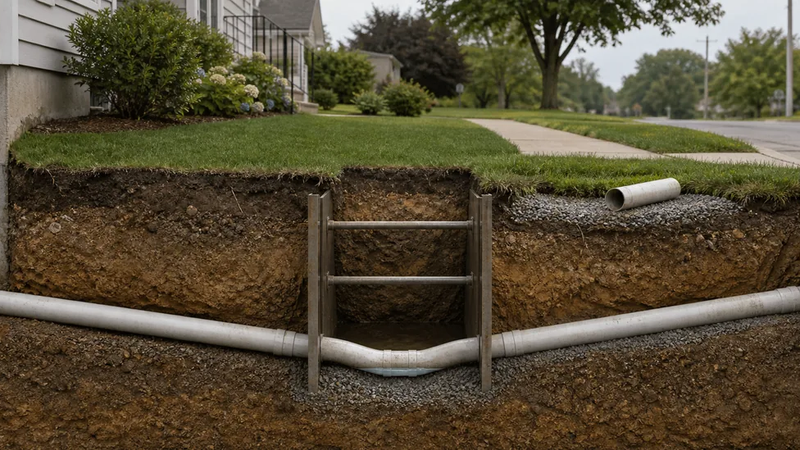
Excavation and restoration: Trench length, depth, rocky or saturated soil, buried utilities, and machine access affect the digging cost. Sod, planting beds, walks, and pavement may require separate restoration.
Cause of the problem: A reachable clog or loose joint is usually a repair. A crushed underground line, recurring freeze point, or poorly located outlet may require replacement or rerouting.
Location and local rules: Labor rates and minimum service charges vary by region. Permitted discharge locations also vary; municipal requirements can change the route, connection, permit, and inspection work included in a quote.
When to obtain specialist estimates
Obtain a qualified plumbing or drainage evaluation when the discharge point is unknown, the pipe is buried, the line freezes repeatedly, or water returns toward the foundation. Inspection guidance notes that an obstructed or disconnected line can leave the pump running without carrying water away, and poor outlet placement can recirculate water back to the sump.
For buried rerouting or a municipal storm connection, compare written estimates that name pipe length, outlet location, excavation method, permits, testing, and restoration. If the pump is running but the water level continues rising, treat diagnosis as time-sensitive rather than waiting for a routine price comparison.