On this page
The 2026 cost range
As of August 2026, budget $300 to $1,000 for a straightforward professional venting correction. If the solution requires a replacement water heater, a current national guide places installation at $1,600 to $5,400. The cause, vent route, and appliance type change the price most.
These are national planning figures, not a single “backdraft repair” price. A June 2026 market guide lists basic gas venting at $300–$500, direct venting at $500–$1,000, and power venting at $300–$600 plus $300–$500 for electrical work. Its broader installation range reflects equipment, labor, property, and location differences.
| Scenario | Planning range | Likely scope |
|---|---|---|
| Low | $300–$500 | Accessible correction to basic venting |
| Typical | $500–$1,000 | Direct-vent work or power venting with related electrical work |
| High | $1,600–$5,400+ | Replacement water-heater installation |
The high column is not a prediction that every backdrafting water heater needs replacement. It shows why diagnosis must come before budgeting.
What the price includes
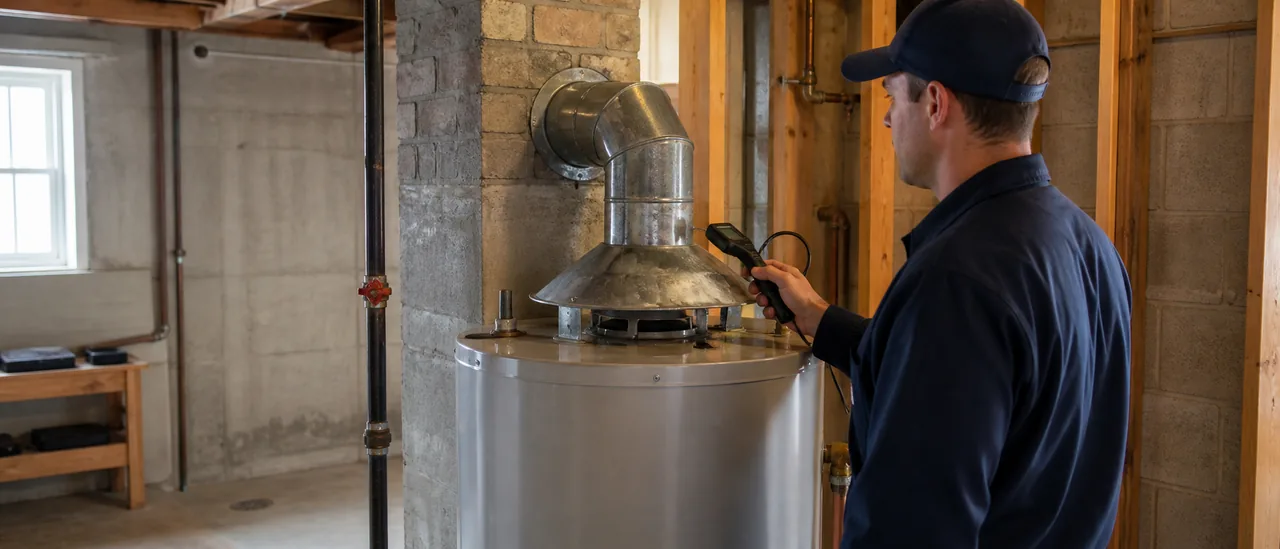
Backdrafting means combustion products, including carbon monoxide, are drawn into the house by negative pressure instead of moving outdoors. That is a performance symptom, not a diagnosis. The correction might involve the vent connector, combustion air, an exhaust-fan imbalance, a chimney, or the appliance itself.
A useful estimate should identify the cause and describe the correction. It should separate labor, materials, appliance or vent components, electrical work, chimney work, permits, disposal, and post-repair draft or combustion testing. Inspection-only charges and concealed repairs may be separate.
Do not price the symptom alone
A stain or draft concern at the hood cannot show whether a connector adjustment, airflow correction, chimney work, or appliance replacement is appropriate. Compare estimates only after each bidder states the diagnosed cause and verification method.
What changes the final cost
The estimate moves most with these conditions:
- Vent path and access: A short, exposed connector is simpler than a route through finished areas or a tall chimney.
- Air pressure: Exhaust fans, tight construction, and inadequate combustion air can require broader airflow evaluation rather than a pipe-only repair.
- Appliance choice: A like-for-like tank replacement differs from direct-vent, power-vent, or tankless conversion work.
- Local requirements: Labor rates, permit fees, adopted codes, and inspection requirements vary by jurisdiction.
Do not add the table’s ranges together automatically. A replacement quote may already include venting, while another quote may exclude permits, electrical work, chimney access, or finish repair.
When to obtain specialist estimates
A home inspection can flag visible water-heater and venting concerns, but its scope has limits. InterNACHI’s standard includes water-heating equipment and venting connections, while excluding chimney interiors, combustion-air adequacy, and vent design or sizing.
Because backdrafting can return combustion products indoors, avoid treating a draft-hood test as a do-it-yourself repair decision. Obtain an itemized evaluation from a qualified plumbing or HVAC professional. If a masonry chimney is involved, chimney evaluation may also be needed.
Ask the evaluator to test under relevant operating conditions, identify the cause, and verify draft after the work. That turns a broad national range into a property-specific scope you can compare fairly.