On this page
The direct answer
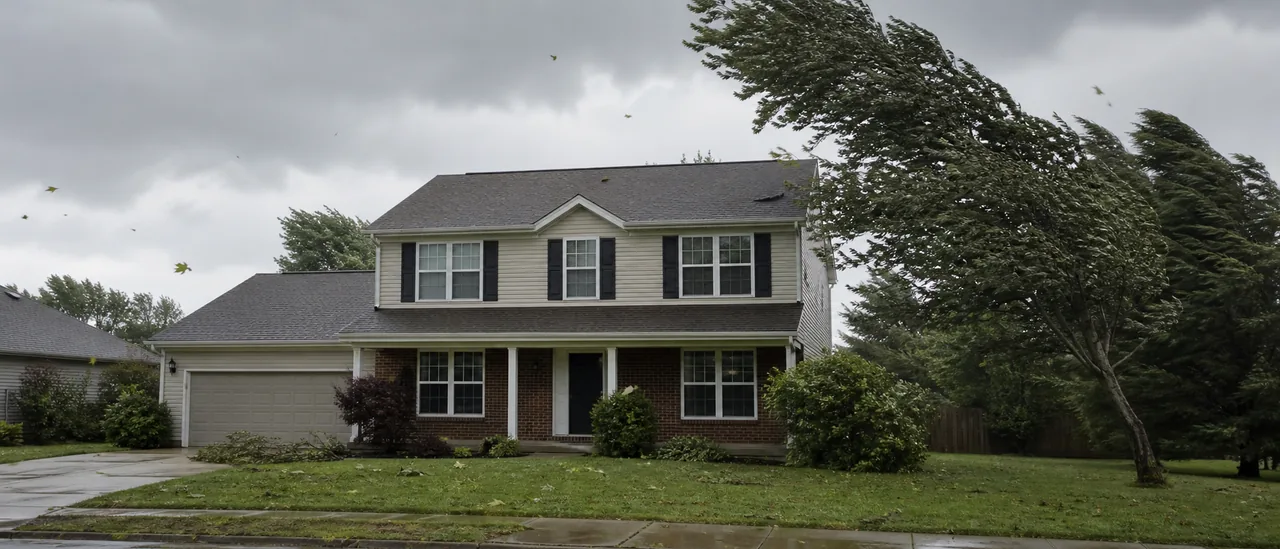
Yes, most sound, conventionally built houses can withstand a 70 mph wind without major structural failure, but exterior damage is still possible. Roof condition, construction details, exposure, wind duration, and flying debris can change the outcome.
The National Weather Service says most homes and businesses do not suffer significant structural damage in 70–80 mph straight-line winds. It also warns that roofs, awnings, and siding can be damaged at those speeds.
A wind speed is not a damage diagnosis
A nearby weather report cannot prove what happened at one house. Wind varies over short distances, and damage also depends on the building and anything carried or toppled by the wind.
Why 70 mph can still cause damage
A house is a system, not one uniformly strong object. Roof coverings, siding, windows, doors, and structural connections can have different weak points. Damage to one exterior component does not necessarily mean the main structure failed.
Seventy mph also sits within the National Weather Service’s 58–74 mph damage-estimation range. At that level, large limbs may break, shallow-rooted trees may fall, and shingles or awnings may be removed. A structurally intact house can therefore emerge with localized roof, chimney, antenna, fascia, or siding damage.
What changes the answer
The most important variables are:
- Wind measurement: Building requirements commonly express design speeds as three-second gusts tied to a location. A sustained wind, peak gust, radar estimate, and code design speed are not interchangeable.
- Condition and connections: Loose or aged roof covering, deteriorated decking, weak attachments, and poorly secured doors can fail before the main structure does.
- Wind pattern: A brief gust and a prolonged period of strong wind do not apply the same repeated stress. Direction also matters because roof edges, overhangs, and openings are not identical on every side.
- Debris and trees: A branch or loose outdoor object can damage a roof or window even when wind pressure alone would not cause structural failure.
The practical bottom line
Seventy mph wind does not automatically mean a house will suffer serious structural damage. It is strong enough, however, to damage vulnerable exterior parts and turn nearby objects into hazards.
After the wind passes, look from the ground for missing or lifted roof material, displaced flashing or fascia, damaged siding, broken windows, leaning trees, or debris impacts. Stay away from downed power lines and do not climb onto a wet, steep, or visibly damaged roof.