On this page
Yes—but only as a limited inspection
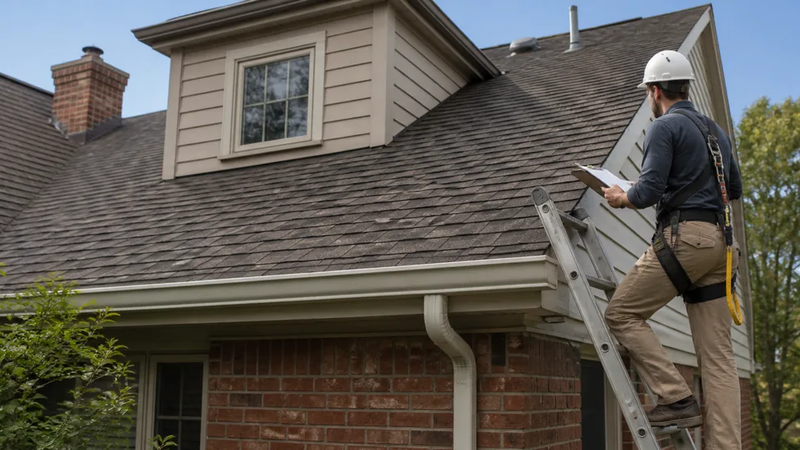
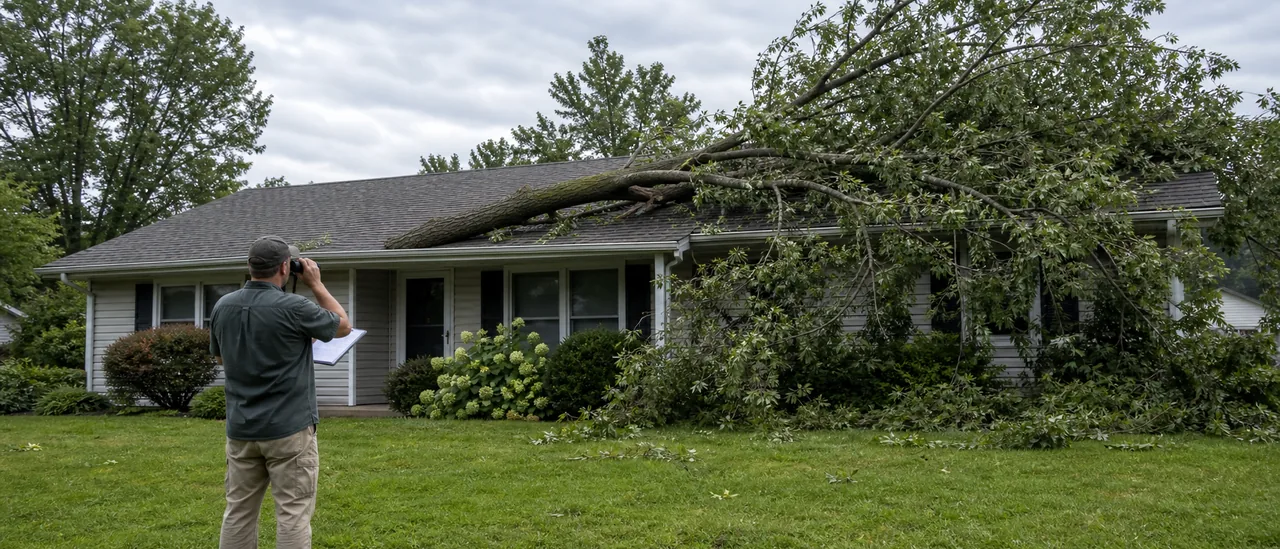
Yes, a roof can be inspected while a tree is still on it, but the tree may make roof access unsafe and prevent a complete damage assessment. An inspector can begin with visible, accessible areas without treating the covered section as cleared.
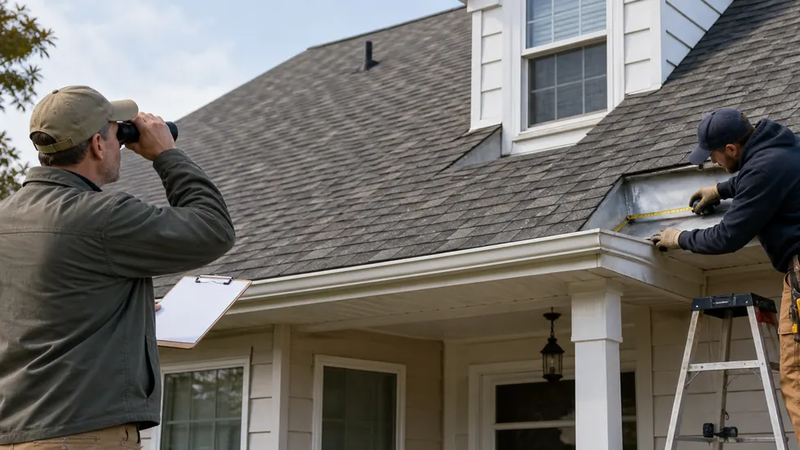
That first inspection can still be useful. From the ground, a neighboring safe vantage point, or accessible interior spaces, an inspector may document the tree’s contact area, displaced roof edges, changes in the roofline, water entry, and visible framing distress. Those observations help define immediate safety concerns and the scope of a later inspection.
Do not climb onto the roof to get a closer look
A fallen tree can involve unstable limbs, uncertain roof strength, fall exposure, and nearby electrical hazards. Keep clear of the tree and any downed or contacted power lines while qualified personnel assess safe access.
What the tree prevents an inspector from confirming
A roof inspection is primarily visual, so a trunk, limb mass, or leafy canopy prevents direct observation of the surface beneath it. An early inspection can therefore be valid without being complete.
While the tree remains, an inspector usually cannot confirm:
- the condition of shingles, flashing, underlayment, or roof decking beneath the contact area;
- the exact size and path of punctures, cracks, or crushed material;
- whether concealed framing connections shifted; or
- the full extent of damage that may become visible after the load is removed.
The report should identify these areas as obstructed or not inspected—not describe them as undamaged. Photos and notes should also distinguish direct observations from conditions that are merely suspected.
Safety determines how far the inspection can go
The tree’s size and position matter, but stability matters more. A small branch resting near an eave presents a different access problem from a trunk spanning the ridge or pressing into the roof deck. Hanging limbs, movement, damaged walking surfaces, or contact with utilities can stop exterior access entirely.
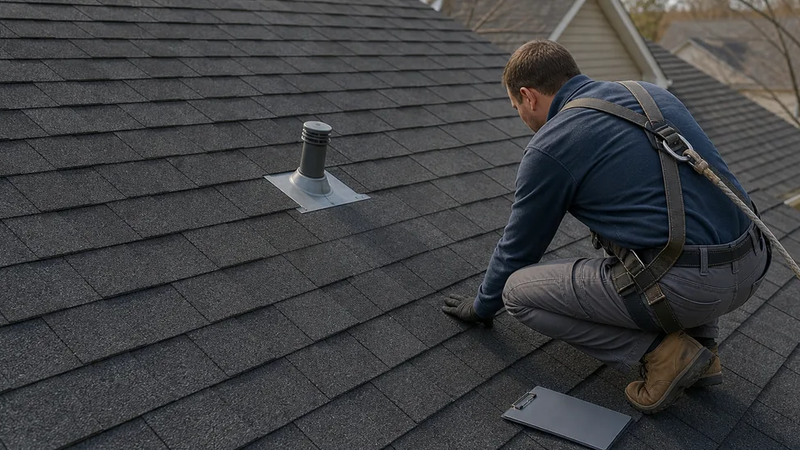
OSHA’s storm-cleanup guidance identifies falls from heights, impact from tree debris, and contact with downed electrical lines as tree-trimming hazards. Its roof-repair guidance also says roof structural integrity must be determined before repair work begins and notes that scaffolds or aerial lifts can provide stable access. These are workplace rules and practices, not a homeowner inspection standard, but they illustrate why a visual check should never depend on standing on a possibly weakened roof.
The practical bottom line
An inspection before removal can establish visible conditions and urgent restrictions. It cannot clear the roof area hidden by the tree. After a qualified tree crew removes the load without disturbing evidence unnecessarily, the roof should be inspected again wherever access becomes safe, including the covering, deck, framing, attic, and interior areas relevant to the impact.
The most accurate conclusion is often two-stage: an initial limited inspection, followed by a complete inspection of previously obstructed areas.