On this page
Yes—with an important limit
Yes, an older homeowner can perform a useful roof check without climbing, provided it is treated as a visual screening rather than a complete inspection. The National Roofing Contractors Association advises homeowners to inspect roof systems from ground level.
That distinction matters. A safe check may reveal missing or displaced materials, sagging, damaged flashing, debris, or signs of water entry. It cannot confirm the condition of every shingle, seam, fastener, underlayment layer, or concealed part of the roof.
Stay off ladders and roof surfaces
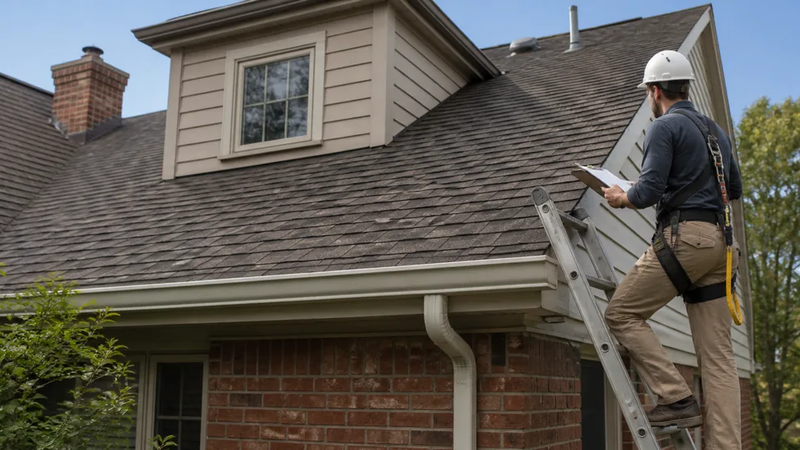
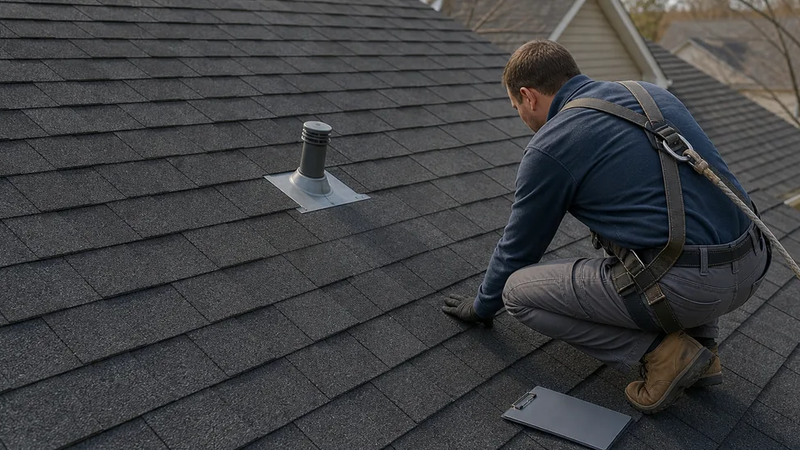
Do not climb for a better angle. Older adults face elevated consequences from falls, and CPSC identifies falls as the most common product-related cause of injury and death among older Americans. Stop the check if viewing requires unstable footing, leaning, or entering an unsafe attic.
A practical no-climb check
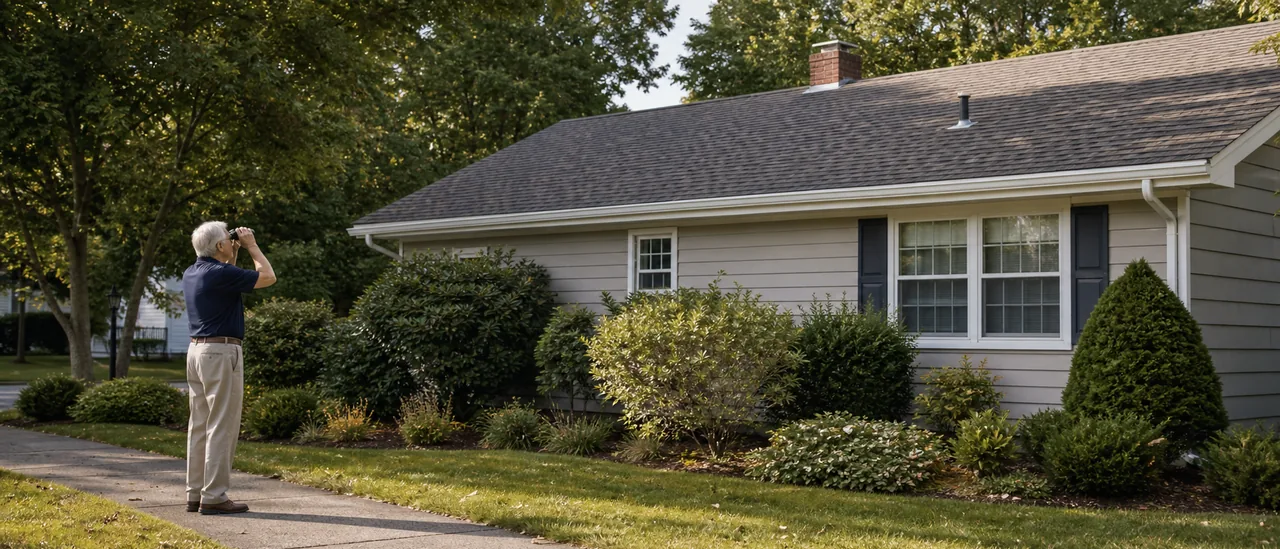
Choose dry daylight and walk around the home on firm, level ground. Use binoculars or a camera’s optical zoom; avoid backing into streets, slopes, or other hazards.
View each roof plane from more than one position. Look for:
- missing, slipped, curled, cracked, or visibly loose roofing;
- an uneven ridge, sagging area, or changed roofline;
- lifted metal, open seams, or gaps around chimneys, vents, and skylights;
- branches, heavy debris, or gutters pulling away from the edge; and
- interior ceiling stains or damp areas that appeared after rain.
NC State Extension specifically lists binoculars for viewing shingles and flashing from the ground. It also recommends checking rafters, insulation, ceilings, and walls for water stains or discoloration.
If the attic has permanent stairs and a safe, boarded route, a flashlight check may reveal damp insulation, stained framing, or daylight around a penetration. Do not enter through a ceiling hatch that requires a portable ladder, step on insulation or ceiling drywall, or disturb questionable material.
What this method cannot establish
Distance, roof pitch, trees, upper stories, and overlapping roof sections can hide defects. Small hail marks, fine cracks, loose fasteners, seal failures, and conditions beneath the covering may be invisible from the ground. Even a clear-looking roof is not proof that it is watertight.
Photos can help document location and change over time, but digital zoom cannot create detail the camera never captured. A drone may improve the viewing angle, yet its images still provide a visual survey—not physical testing or access to concealed layers.
Practical bottom line
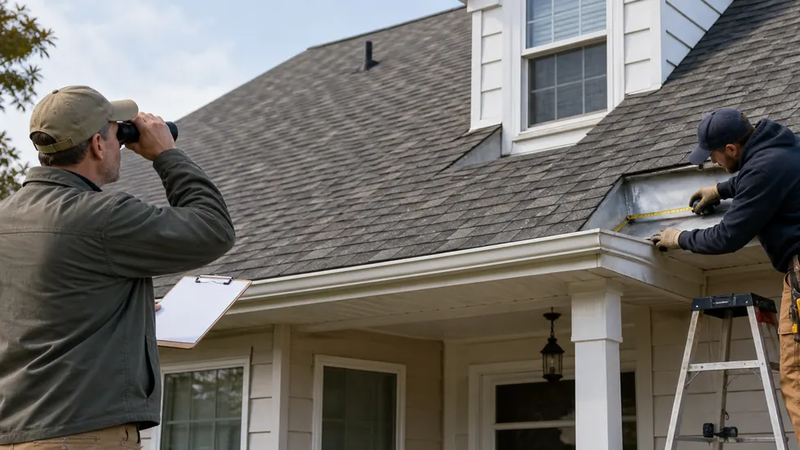
A no-climb inspection is appropriate for finding obvious warning signs and deciding whether closer evaluation is warranted. Arrange a qualified roof inspection when the view is obstructed, water staining is present, the roofline has changed, materials are missing or displaced, or the homeowner needs a reliable assessment of overall condition.