On this page
Yes, with important limits
Yes, binoculars can be used for a roof inspection, provided the inspection remains visual and the chosen viewpoints show the areas within its scope. They are a viewing aid, not a test that proves the condition of the entire roof assembly.
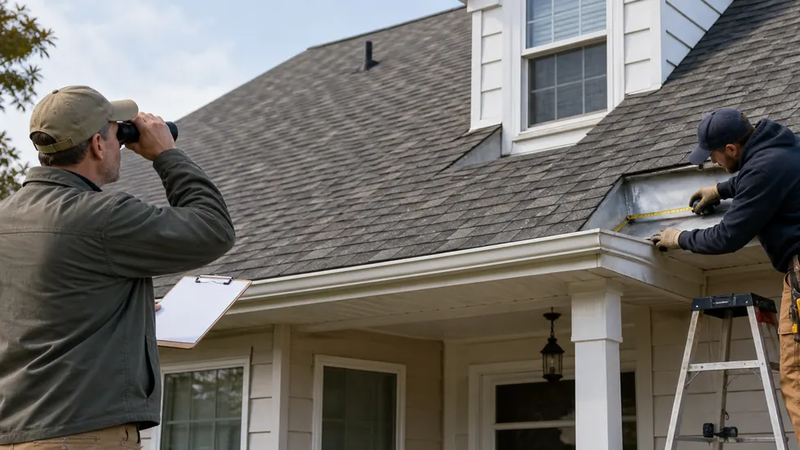
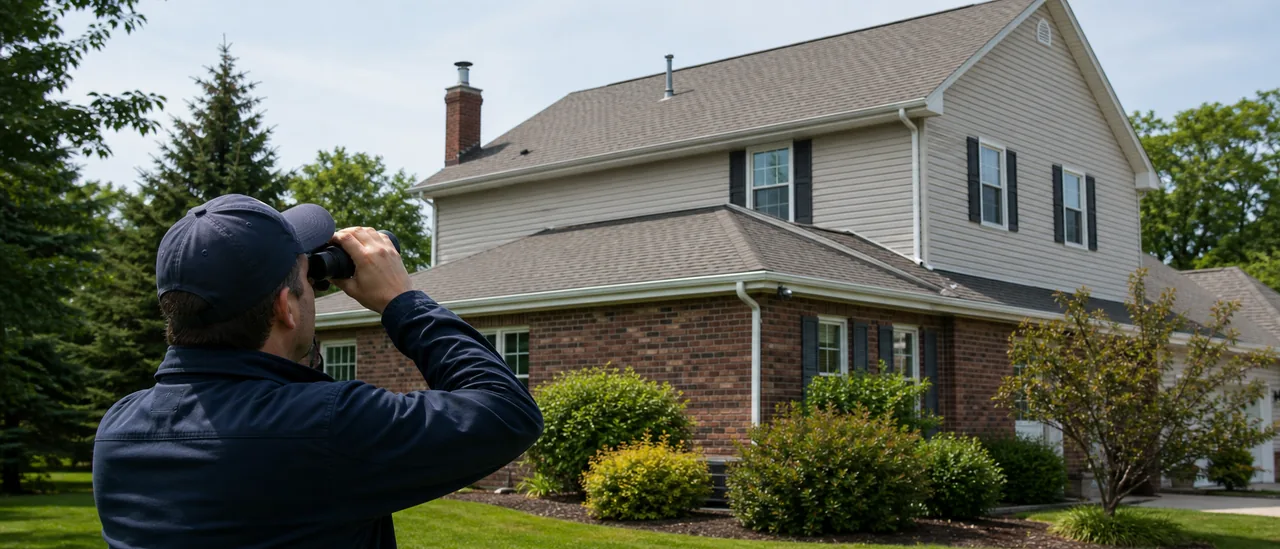
From the ground or another safe vantage point, magnification can make distant surface details easier to observe. North Carolina State Extension specifically lists binoculars for inspecting roof shingles and flashing from the ground.
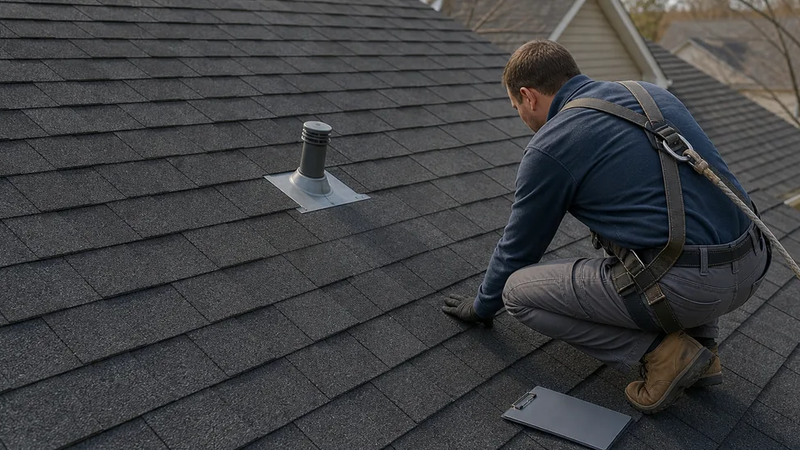
Whether that method satisfies a particular inspection depends on the agreement, applicable standard, roof design, and local rules. For example, Washington’s home-inspector rule allows traversing the roof or using alternate inspection methods. If the roof is not traversed, the report must identify the alternate method used.
What binoculars can help an inspector see
Binoculars can support a systematic scan of visible roof coverings and exterior components. Depending on distance, angle, lighting, and obstructions, the inspector may be able to observe:
- missing, displaced, cracked, curled, or visibly deteriorated covering materials;
- open-looking flashing edges and obvious defects around vents or other penetrations;
- visible gutters, downspouts, skylights, chimneys, soffits, and fascia; and
- surface areas obscured by snow, debris, tree cover, or the roof’s own geometry.
The last item is a limitation, not a finding. An inspector should document which slopes or components could not be seen clearly rather than treating an incomplete view as a clean result.
Magnification does not create a new viewing angle
Binoculars enlarge whatever is already in the line of sight. They cannot see behind a parapet, over a ridge, beneath an overlapping material, or through a roof covering.
What binoculars cannot confirm
A distant visual check can miss small defects and areas hidden from the selected viewpoints. It also cannot confirm concealed underlayment, fastening, flashing laps, insulation, or roof-deck conditions. Even close surface views do not by themselves establish the source or full extent of moisture entry.
Those limits matter because a roof inspection normally covers more than shingles or panels. The agreed scope may also include drainage components, visible flashing, penetrations, ventilation, accessible structure, and signs of leakage from below. Binoculars can contribute to that work, but they do not replace attic observations or another safe exterior viewpoint when those are part of the inspection.
Practical bottom line
Binoculars are appropriate for screening and documenting visible roof conditions, especially where walking the roof would be unsafe or damaging. A useful report should state where the inspector stood, which surfaces were visible, and what remained inaccessible. If an important area cannot be evaluated from any safe viewpoint, a qualified roof specialist may be needed for a closer evaluation.