On this page
Yes, but only the accessible portions
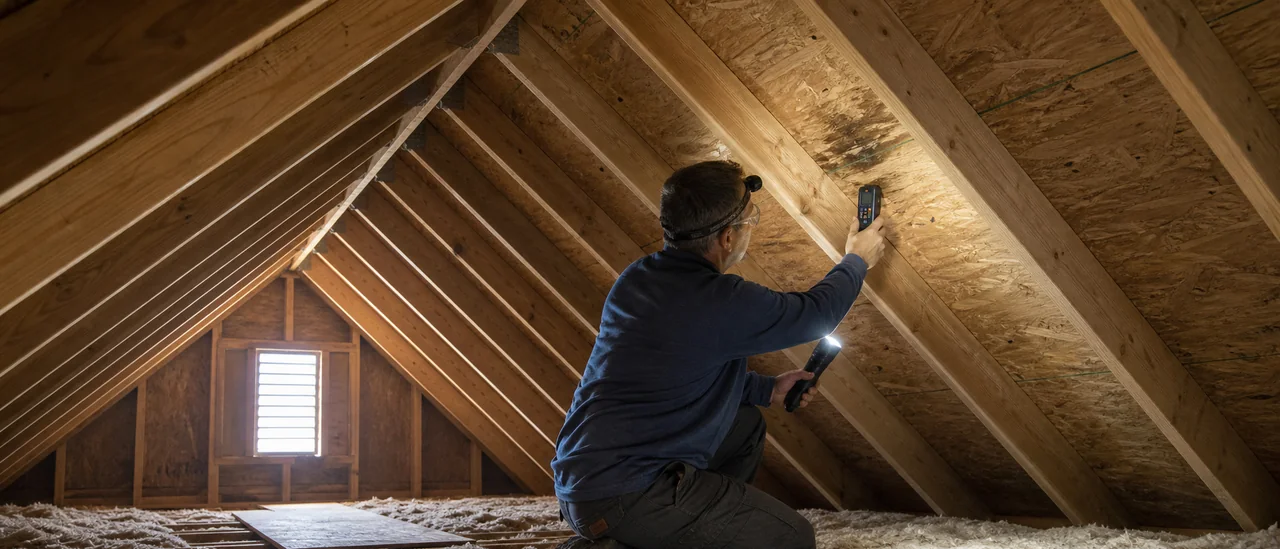
Yes, roof decking can often be inspected without removing shingles, provided its underside is visible from an accessible attic or open soffit. That is a limited visual inspection—not a complete examination of both faces, every fastener, or every concealed area.
Roof decking, also called roof sheathing, is the board or panel layer fastened over rafters or trusses. It supports the roof covering and contributes strength to the framed roof.
What an inspection can reveal
From inside an unfinished attic, an inspector may be able to identify the decking material and observe its general condition. Visible findings can include:
- water staining, darkened areas, or active dripping;
- sagging, warping, delamination, or broken panels;
- daylight through an opening;
- rusted or protruding fasteners; and
- panel edges, span markings, or thickness at an exposed edge.
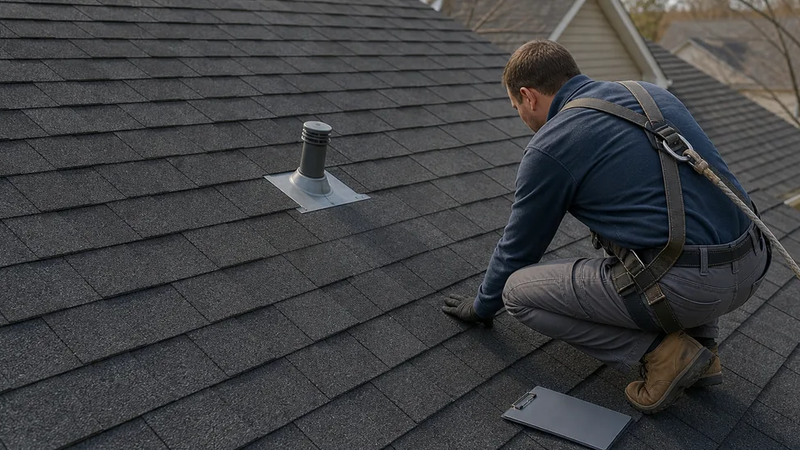
The exterior roof shape can add context. Localized dips or waves may correspond with thin, moisture-damaged, or poorly supported sheathing, although appearance alone does not establish the cause. Interior ceilings and walls may also show moisture symptoms, but a stain does not pinpoint the exact entry point.
An attic view is still a partial view
Shingles and underlayment conceal the deck’s upper face. Insulation, spray foam, finished ceilings, tight roof geometry, stored belongings, or unsafe access can also hide the underside.
What cannot be confirmed
A non-invasive inspection cannot reliably rule out decay, small leaks, damage between framing members, or defects covered on both sides. It also may not confirm fastener type, spacing, or attachment across the entire roof.
Infrared imaging and moisture meters can help locate areas that deserve closer attention. They do not see through shingles or prove the deck is sound. Readings require suitable conditions and interpretation, and suspected moisture still needs confirmation.
Inspection standards reflect these boundaries. InterNACHI describes a home inspection as visual and non-invasive, limits it to accessible areas, and does not require an inspector to move insulation or enter an unsafe attic.
When shingles may need to come off
Direct exposure is usually necessary when the question concerns the deck’s top surface, hidden deterioration, or attachment details that cannot be confirmed below. This commonly becomes practical during roof-covering replacement, when removed materials expose the deck for section-by-section evaluation.
Selective removal may also be justified when visible sagging, persistent leakage, soft areas, or other evidence points to a specific concealed problem. It should be planned by a qualified professional because lifting shingles can damage the roof covering and disturb its weather-resistant layers.
The practical bottom line is simple: an accessible attic can provide meaningful evidence without disturbing shingles, but only exposed decking can receive a complete direct visual examination.