On this page
Yes—damage does not always create an immediate leak
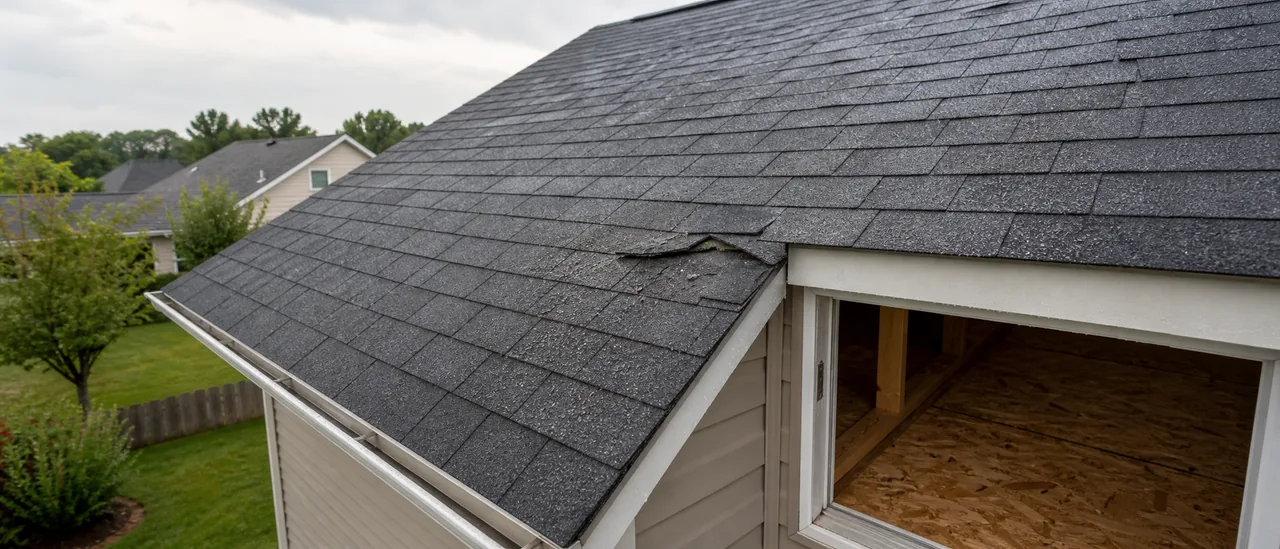
Yes, storm damage can exist without a roof leak, especially when the damage has not opened a path through the complete roof assembly. A roof covering may be dented, cracked, unsealed, displaced, or partly torn while the underlayment and deck still limit water entry.
“Damage” describes a physical change that impairs or may impair a roof component. A “leak” means water has passed through the assembly into a place it should not reach. One can occur without the other.
Why a dry interior is not a damage test
A roof is layered. Shingles, tiles, or panels form the primary weather-shedding surface, while properly installed underlayment can provide secondary protection. IBHS notes that a sealed roof deck can protect against water intrusion even when the roof covering is damaged.
Damage severity also matters. IBHS testing of hail-damaged shingles found negligible leakage from small dents but much greater leakage from large dents and more severe tears. That result shows why “damaged” and “currently leaking” are not interchangeable descriptions.
No ceiling stain is good news—not proof
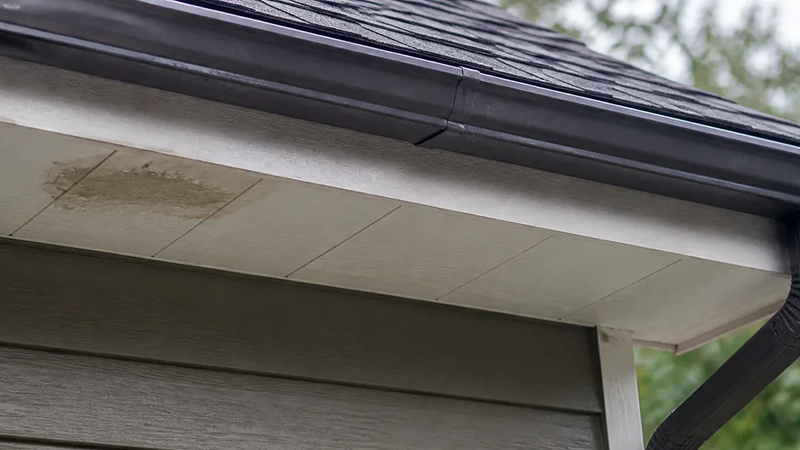
A dry ceiling shows that no interior leak has been observed. It does not establish that every roof layer is intact, identify when a defect occurred, or predict performance in the next wind-driven rain.
What changes the answer
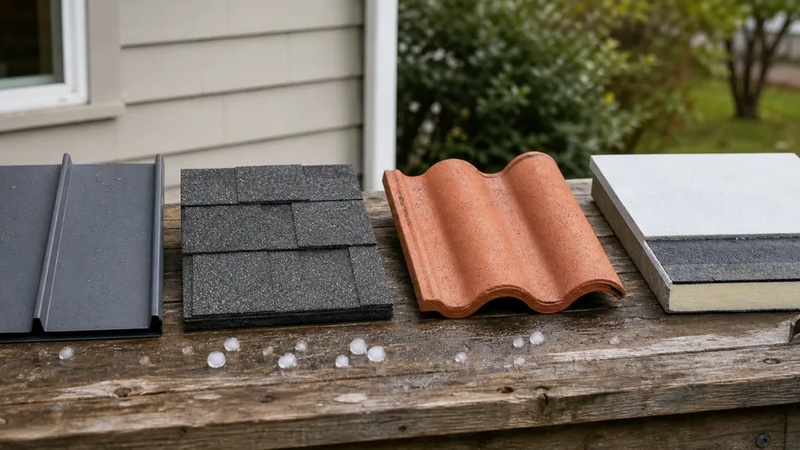
The practical significance depends on the roof material, damage type, location, and remaining layers. Hail can dent, breach, or displace granules on asphalt shingles. Large hail may crack or shatter roof tiles, while metal may retain dents that change appearance without proven loss of function, according to IBHS.
Wind damage follows a different pattern. A lifted or missing shingle may expose underlayment before water reaches the deck. Water entry can also depend on rain intensity, wind direction, the damaged area’s position, and whether flashing or a roof penetration is involved.
Visible marks do not establish cause by themselves. NRCA’s published hail-assessment protocol uses field inspection and test areas on directional roof slopes to quantify damaged shingles or shakes. That is more disciplined than treating a storm date, weather map, or lack of indoor moisture as a diagnosis.
Practical bottom line
No active leak is reassuring, but it answers only the moisture question at that moment. After a significant storm, document safely visible changes from the ground and check accessible attic and ceiling areas after rain. Do not walk a wet, steep, or potentially damaged roof.
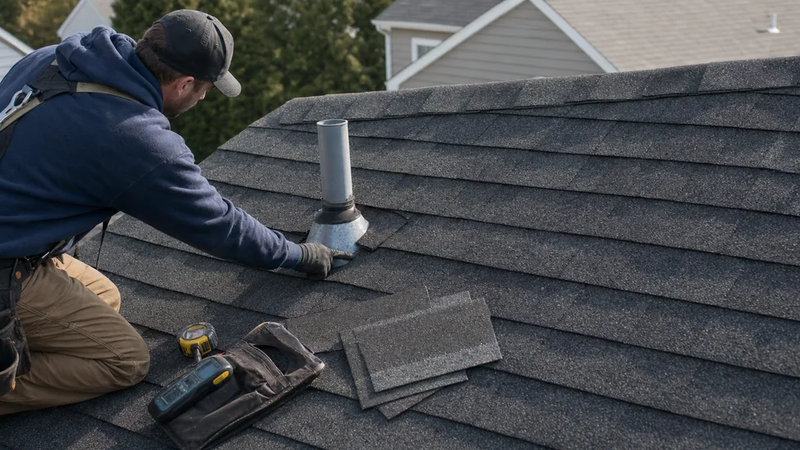
If shingles or tiles are missing, creased, cracked, or displaced—or the condition is unclear—a qualified roof evaluator can examine the covering, flashings, penetrations, and accessible underside. The goal is to distinguish cosmetic change, repairable localized damage, and an opening that threatens water resistance.