On this page
Direct answer
Yes—but only when the inspector or certifier agrees to the credit and the earlier inspection satisfies the certification’s required scope. Paying an inspection fee does not automatically make that amount transferable to a later certificate.
The provider may credit all, part, or none of the first fee. The written terms should also list charges for a return visit, testing, repairs, or the certificate.
Separate the price question from the roof decision
A fee credit answers how the services are billed. A certification answers what the signer is prepared to state, for what period, and with which exclusions. One does not establish the other.
Why an earlier inspection may not be enough
A standard home inspection and a roof certification can have different purposes. The American Society of Home Inspectors’ standard covers readily accessible, visually observable components and requires the report to identify relevant items that were not inspected and explain why. It also says the inspection is not technically exhaustive and does not require warranties or guarantees.
“Roof certification” is not a single nationwide promise. Its meaning depends on the requested form, the signer’s terms, and applicable local rules. For example, California law uses the term in a specific context for a licensed roofing contractor’s written statement after a roof inspection and any necessary repairs, including a limited warranty about leaks and performance. That state-specific definition should not be assumed elsewhere.
Before expecting a credit, compare the earlier assignment with the requested certification:
- Does the recipient accept the original inspector’s qualifications and report format?
- Were the same roof areas and components within scope?
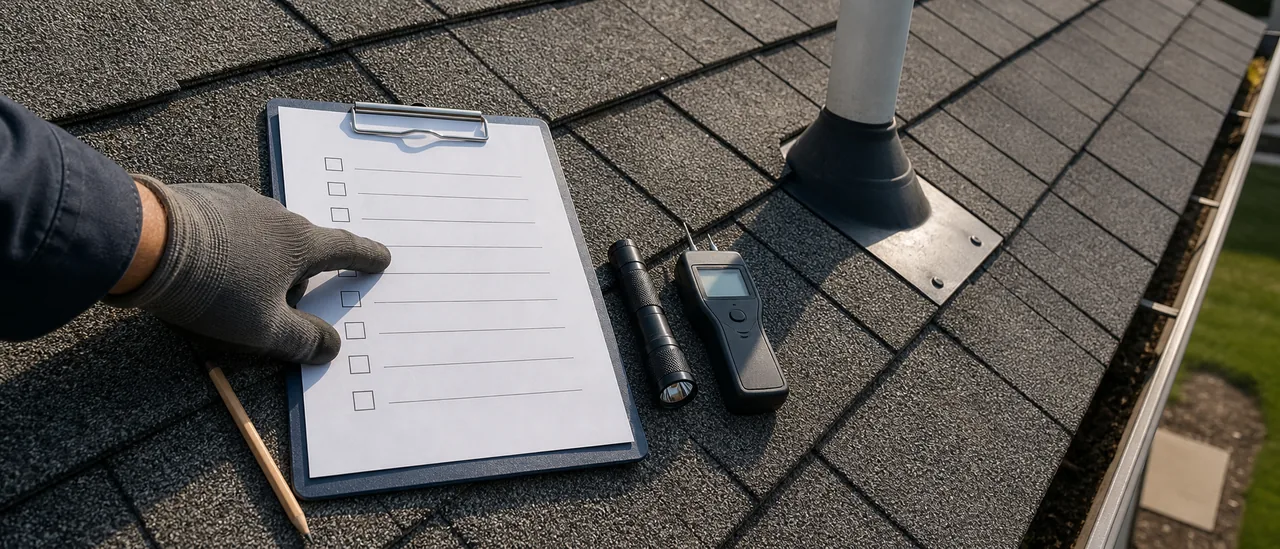
- Are a roof walk, attic review, moisture testing, repairs, or reinspection required?
- Has weather, repair work, or time changed the roof since the first visit?
- Does the certificate include a warranty or stated period?
Any added work can justify a separate charge even when some prior findings remain useful.
What a visual review can confirm
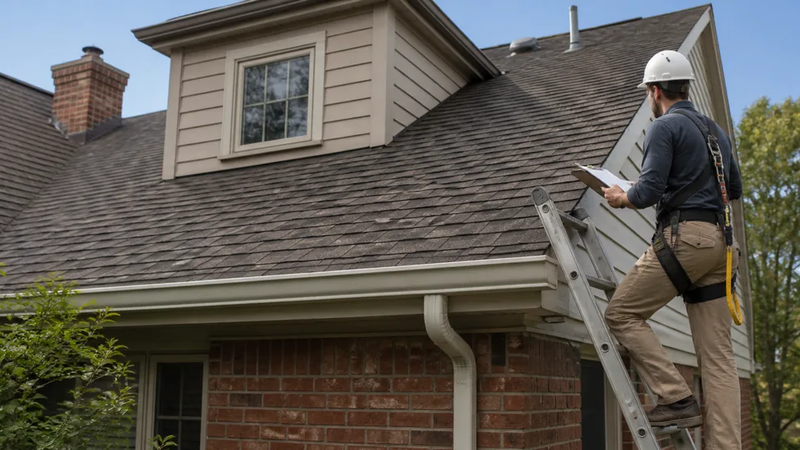
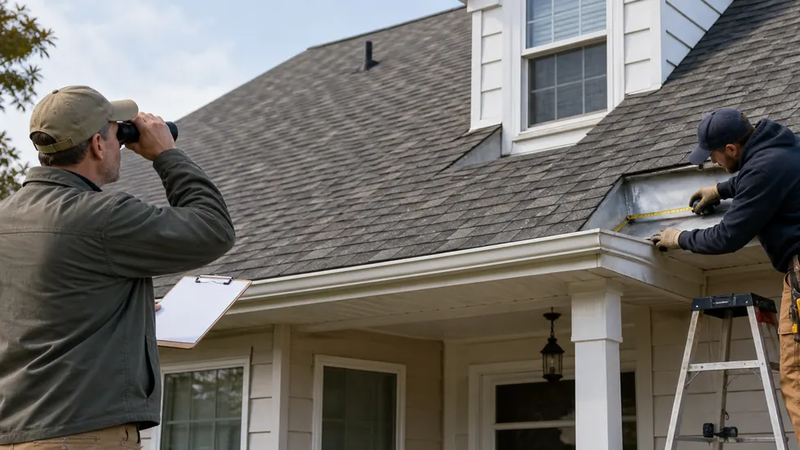
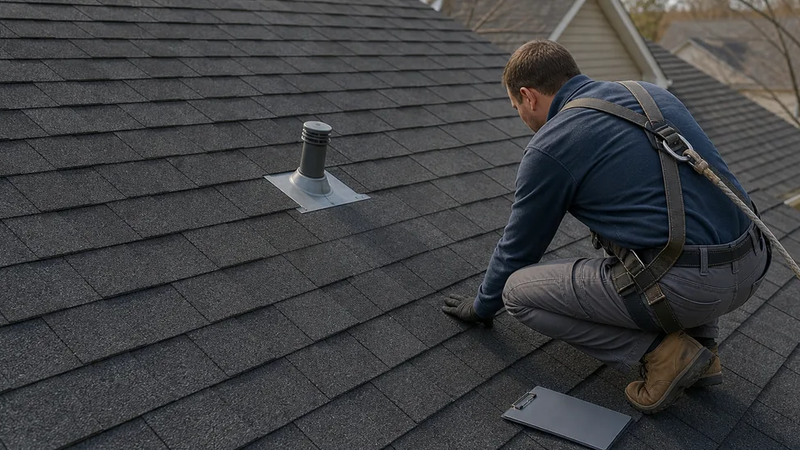
A visual roof inspection can document observable roof coverings, drainage components, flashings, skylights, chimneys, penetrations, and visible signs of leakage or deterioration. Access and safety still control what the inspector can see, so the report should identify omitted areas and the inspection method.
It cannot establish every concealed or future condition. Sheathing below intact roofing, hidden moisture paths, and latent defects may remain unseen. Maryland’s rule, for example, excludes required determinations of remaining roof-covering life, hail damage, manufacturer defects, installation methods, and layer count. A certification provider may require a different scope.
Practical bottom line
Ask for a written breakdown showing the original fee, the credit amount, added work, certification language, exclusions, and any reinspection charge. If the original inspection meets the new scope, applying its fee may be reasonable. If it does not, the certificate is a separate service with a separate price.