On this page
The direct answer
Yes, the seller can often be present at the home inspection, but the purchase contract, local law, access arrangements, or the inspector's rules may limit attendance. Permission to inspect does not necessarily promise the buyer a private visit, nor does ownership necessarily let a seller interfere with an agreed inspection.
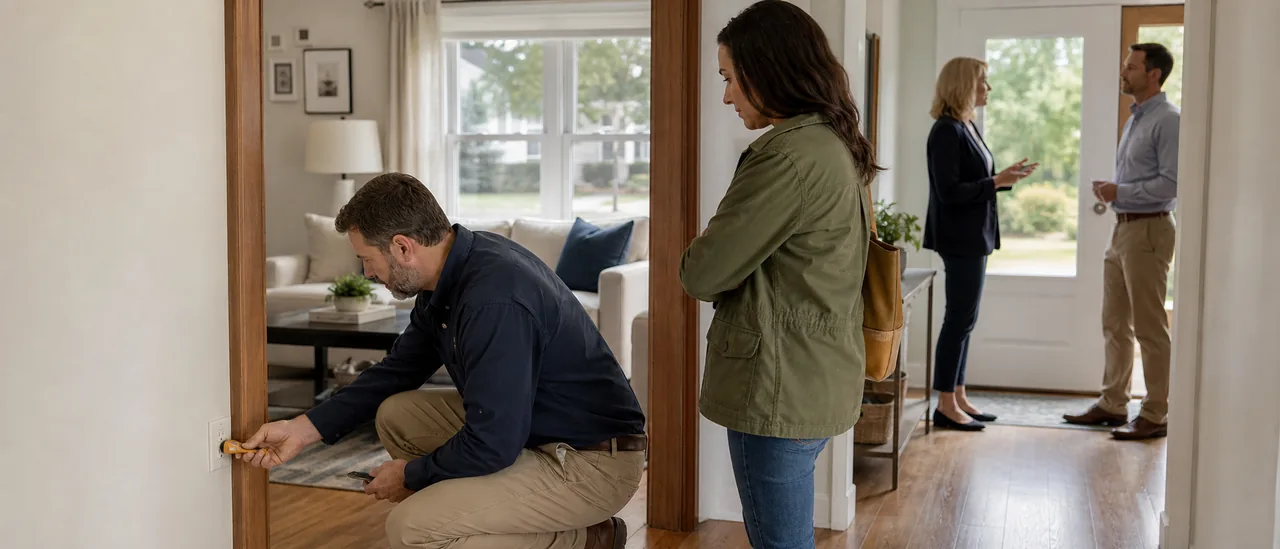
The practical default is usually to coordinate attendance through the real-estate professionals and inspector before the appointment. If the seller remains, everyone should agree on where the seller will be and how questions will be handled.
Attendance and participation are different
A seller's presence does not make the seller the inspector's client or give the seller control over the inspection. The inspector should remain free to follow the agreed scope, document observations, and communicate with the client under the inspection agreement.
Why a seller might stay—or step away
A seller may need to remain because the property is occupied, pets require supervision, access is complicated, or a particular system needs an explanation. Brief factual information—such as the location of a shutoff or access panel—can help the inspector reach an otherwise accessible area.
However, constant commentary can distract from a methodical inspection. It may also make the buyer less comfortable asking questions about condition, maintenance, or possible follow-up. A workable compromise is for the seller or listing agent to remain available nearby without following the inspector and buyer from room to room.
The buyer's attendance has a distinct purpose. North Carolina Real Estate Commission guidance encourages client presence so the client can receive the inspector's explanations. That guidance is not a nationwide attendance rule, but it illustrates why the buyer needs reasonable access to the inspector even when the seller stays.
What changes the answer
Check these controls before treating anyone's preference as a rule:
- The signed contract and addenda: inspection rights, access conditions, notice, deadlines, and responsibility for damage may be stated there.
- The inspection agreement: it identifies the client and may set attendance or safety rules.
- Local requirements: licensing rules, association rules, occupancy terms, or property-specific restrictions can alter the arrangement.
- The type of inspection: destructive testing, specialty testing, or entry into restricted spaces may require separate written permission.
- Safety and access: children, pets, alarms, stored belongings, locked rooms, or unsafe areas may require a different plan.
California's Department of Real Estate advises buyers to place desired contingencies and special conditions—including home inspections—in the offer. Once accepted, the offer becomes a binding contract. Although that guidance is California-specific, the transaction lesson is broader: read the actual agreement rather than relying on a customary practice described by one participant.
What attendance does not prove
Being present does not expand a standard home inspection into a warranty or invasive investigation. InterNACHI defines a home inspection as a non-invasive, visual examination of accessible areas. Its standard also says inspectors are not required to move stored items or inspect inaccessible systems.
Therefore, neither the buyer nor seller should assume that a walk-through confirms concealed conditions, determines every cause, or resolves the cost and method of repair. The written report should identify observed material defects and limitations within the inspector's scope. A specialist may still be needed for a system or condition the inspector could not fully evaluate.
Seller attendance can also create communication issues. Statements about repairs, causes, or future work can become part of a later disagreement. Questions about concessions, contract rights, or disclosure duties should go through the appropriate real-estate or legal channels, not be negotiated with the inspector during the visit.
The next transaction step
Before the appointment, review the inspection clause, addenda, inspection agreement, and access instructions. Have the agents or parties document who may attend, whether the seller will remain nearby, and how the inspector will obtain uninterrupted access.
If the documents conflict or attendance could affect inspection, termination, disclosure, or negotiation rights, have the signed transaction documents reviewed by a qualified local real-estate attorney or licensed real-estate professional before the inspection deadline.