On this page
The direct answer
No, thermal imaging cannot replace an attic inspection because it records surface-temperature patterns, not the condition or cause hidden behind them. It works best as a screening tool that directs closer visual investigation.
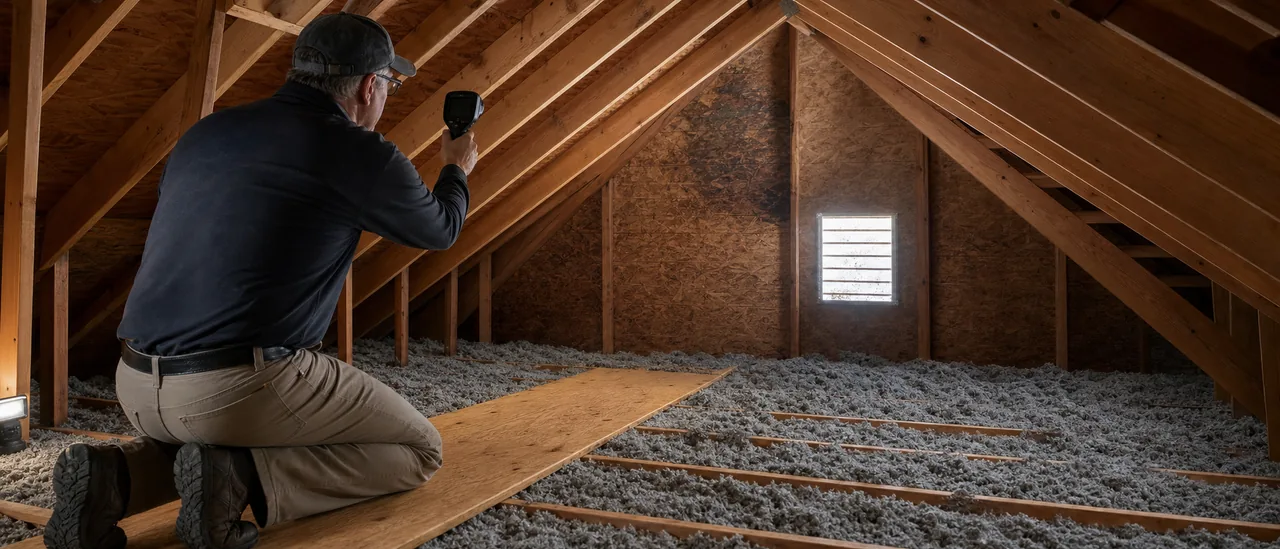
A thermal camera may reveal patterns consistent with missing or disturbed insulation, air leakage, or moisture-related cooling. Those patterns are clues because the camera measures apparent surface temperatures; it does not expose materials or determine why their temperatures differ.
That limitation remains when thermal images are collected during a drone inspection. The platform changes the viewing position, not what the camera can confirm.
A thermal anomaly is not a diagnosis
Warm or cool areas can have several causes, including air movement, insulation differences, thermal bridging, shade, or reflections. The image identifies where to investigate; it does not establish which cause is present.
What each method can confirm
An accessible attic lets an inspector directly examine visible roof framing and sheathing, insulation, vapor retarders, attic ventilation, and exhaust routing. It may also expose staining, damaged materials, compressed insulation, blocked vents, or disconnected ducts. These observations provide context that a temperature map alone cannot show.
Thermal imaging has a different strength: it can scan broad finished surfaces quickly and highlight temperature differences that are invisible to the eye. Pacific Northwest National Laboratory guidance explains that infrared cameras sense radiative surface temperatures and expose anomalies. Its attic guidance also says a significant indoor-to-outdoor temperature difference provides the best timing for imaging.
| Method | Useful for | Cannot establish by itself |
|---|---|---|
| Thermal imaging | Locating unusual surface-temperature patterns | The material condition or exact cause behind a pattern |
| Attic inspection | Observing accessible components and visible evidence | Conditions concealed by insulation, finishes, or unsafe access |
Conditions and limits
Weather and building operation affect thermography. A weak indoor-to-outdoor temperature difference can make useful patterns harder to see, while depressurizing the house can make air-leakage streaks more apparent. Timing and interpretation therefore matter.
An attic inspection also has boundaries. The American Society of Home Inspectors’ standard covers readily accessible, visually observable systems. Inspectors need not disturb insulation or enter an attic that is not readily accessible. Thermal imaging may add information when access is limited, but it does not turn concealed conditions into confirmed findings.
Practical bottom line
Use thermal imaging to prioritize where an attic inspection should look, or to document a pattern that deserves further testing. Use direct attic access, when safe and available, to evaluate visible materials, ventilation, exhausts, and the likely source of an anomaly.
If access is unsafe or the two methods disagree, the report should state the limitation and recommend a qualified evaluation targeted to the unresolved condition.