On this page
Yes—but the delay does not prove the cause
Yes, wind damage can cause a roof leak that first becomes noticeable months later, especially when wind loosened or displaced a water-shedding component without leaving a large opening. The important limitation is that timing alone cannot connect a leak to one storm.
Wind can lift or remove roof covering, disturb flashing, or expose underlayment. Independent building-science research shows that loss of roof covering leaves a roof vulnerable to wind-driven rain.
“Delayed leak” describes discovery, not necessarily water entry
The roof defect may exist before water reaches a visible ceiling surface. Conversely, an old stain may remain visible after the moisture source has stopped. A date and a stain do not establish causation by themselves.
Why signs may appear later
A damaged roof does not have to leak during every rain. Whether water enters depends on the opening’s location, rain intensity, wind direction, roof slope, and the condition of the underlayment beneath the outer covering.
That secondary layer matters. Research from the Insurance Institute for Business & Home Safety found that a sealed roof deck can protect against intrusion even when roof covering is damaged. In its full-scale testing, researchers removed shingles and measured water passing through roof assemblies during simulated wind-driven rain.
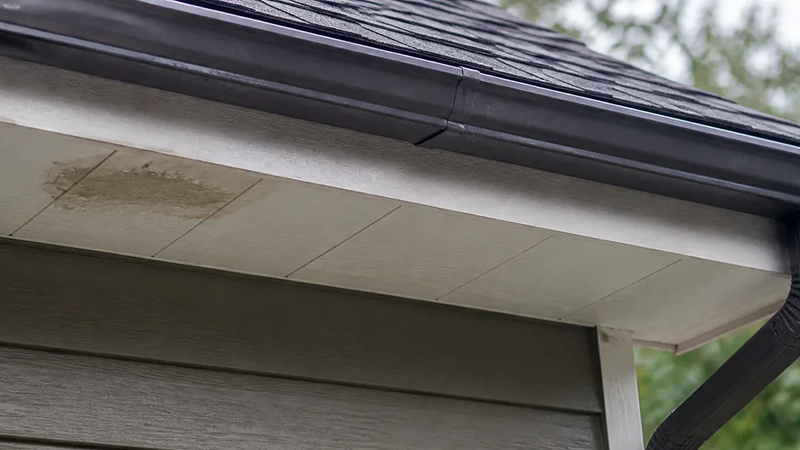
A later storm can approach from a different direction or drive water beneath a lifted edge. Repeated lifting may also expose more of the assembly. Once water enters, insulation, framing, and finish materials can obscure its route, so the first obvious symptom may be a ceiling stain away from the opening.
What affects the likelihood
Delayed leakage is more plausible when an inspection finds:
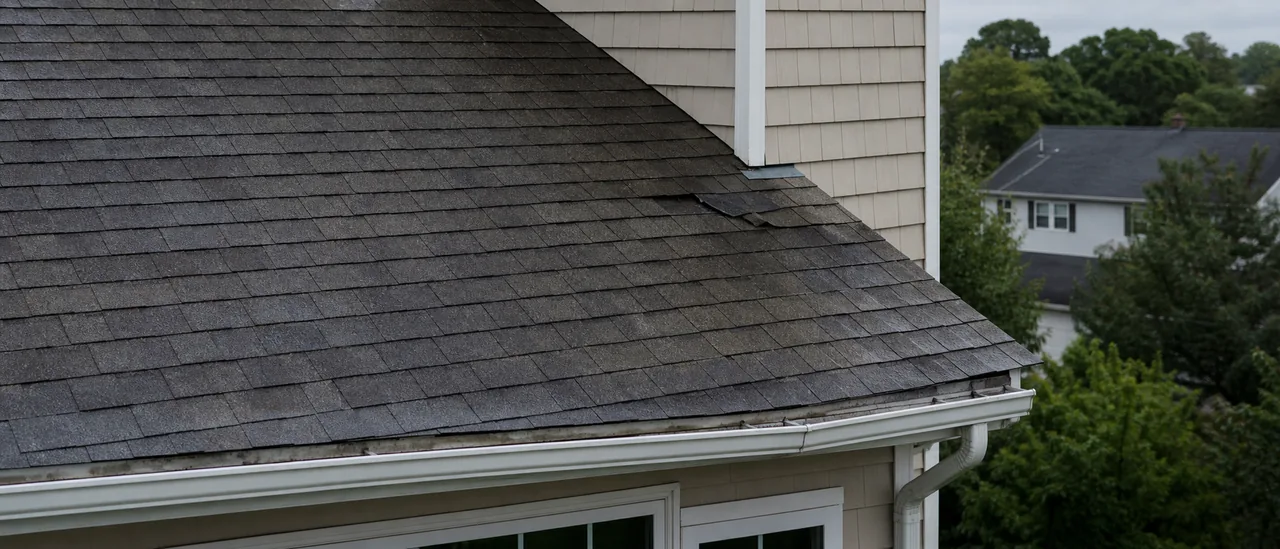
- missing, creased, shifted, or unsealed shingles;
- displaced metal panels, tiles, ridge pieces, or flashing;
- punctures from wind-borne debris;
- exposed, torn, or poorly sealed underlayment; or
- moisture or staining that aligns with a credible path from the roof.
It is less certain when the roof has no corresponding exterior defect, the stain predates the storm, or other sources are possible. Plumbing, condensation, ice dams, installation defects, and ordinary material deterioration can also produce moisture symptoms.
Practical bottom line
Treat a new stain, damp insulation, or musty area as evidence of moisture—not proof of when or why it began. Document where and when it appeared, avoid walking a wet or steep roof, and have accessible roof surfaces, flashing, attic materials, and moisture paths evaluated together.
The most supportable conclusion comes from matching an observed opening or disturbance with a plausible water path. A storm date may guide the investigation, but physical evidence must do the explaining.