On this page
Yes, if the seller or listing agent agrees
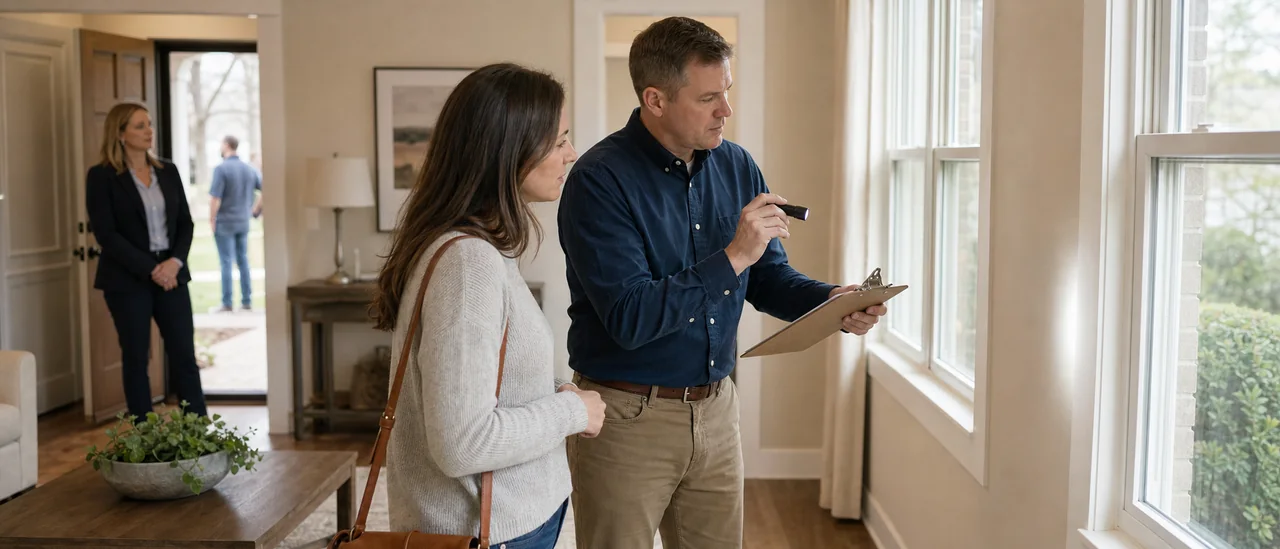
Yes, you can bring a home inspector to an open house if the seller or listing agent approves it in advance. However, that visit usually cannot replace a separately scheduled home inspection with adequate time, access, and an agreed scope.
Ask before arriving with the inspector. An open house is a controlled showing, and the host may limit visitor activities to protect the property and keep other buyers moving.
Confirm four details:
- whether the inspector may attend and how much time is available;
- whether normal operating controls, such as faucets or thermostats, may be used;
- whether any rooms, panels, attic openings, crawlspaces, or exterior areas are restricted; and
- whether you are purchasing a brief consultation or a full inspection with a written report.
Without clear permission, treat the visit as an ordinary showing. Do not open panels, move belongings, use ladders, enter restricted spaces, or operate equipment that the host has not authorized.
Why an open-house walk-through has limits
North Carolina’s state Standard of Practice illustrates why an open-house visit may fall short. It requires licensed inspectors to examine readily visible and readily accessible installed systems and components. A written agreement must identify the services, cost, and any limit to particular systems or components.
The state standard says inspections performed under it are not technically exhaustive. It does not require an inspector to move obstructing personal items, enter a dangerous area, or operate a shut-down system. An active open house may impose even tighter limits because rooms are occupied by visitors and the appointment is not reserved for inspection work.
Name the service accurately
A short open-house visit may be an informal consultation, not a standards-based home inspection. Ask the inspector what will be examined, whether findings will be documented, and which areas or systems will remain unassessed.
What can be confirmed visually
Within the permitted area, an inspector may point out observable conditions such as staining, damaged finishes, visible foundation cracking, drainage clues, or aging equipment.
Visual evidence cannot confirm what is concealed behind finishes or blocked by belongings. It also may not establish a condition’s cause, future performance, repair cost, code compliance, or the condition of an inaccessible system. The North Carolina standard, for example, does not require reporting repair causes, correction costs, code compliance, or any uninspected system.
Practical bottom line
Bringing an inspector can make an open house more informative when the host approves and everyone understands the limited scope. If the home remains a serious candidate, arrange a dedicated inspection under the purchase process and local rules. The Consumer Financial Protection Bureau advises scheduling an independent inspection promptly after choosing a home, leaving time for any additional evaluations, and attending when possible to understand the report and ask questions.