On this page
No—inspectors usually do not open finished walls
No, home inspectors generally do not check inside closed walls, because a standard inspection is visual and non-destructive. They examine accessible wall surfaces, components, and nearby areas for evidence of a problem.
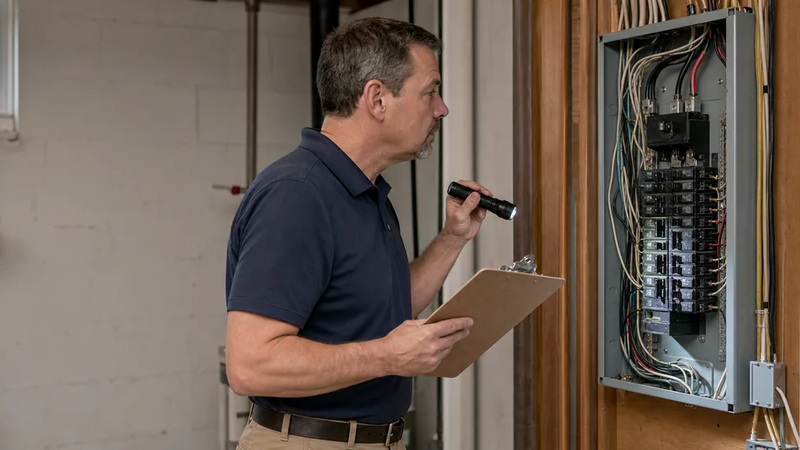
That distinction matters. An inspector may evaluate an unfinished basement wall, framing visible from an attic, or components exposed through a normal access panel. Removing drywall, siding, tile, or other finishes is outside the usual scope.
Published standards reflect this boundary. Ohio's licensing rule, for example, limits an inspection to a visual, non-technically-exhaustive examination of readily accessible systems and components.
An access panel is not the same as opening a wall
An inspector may open a panel designed for routine homeowner access. Cutting a new hole or removing a fixed finish is destructive investigation, not a standard home inspection.
What a visual inspection can reveal
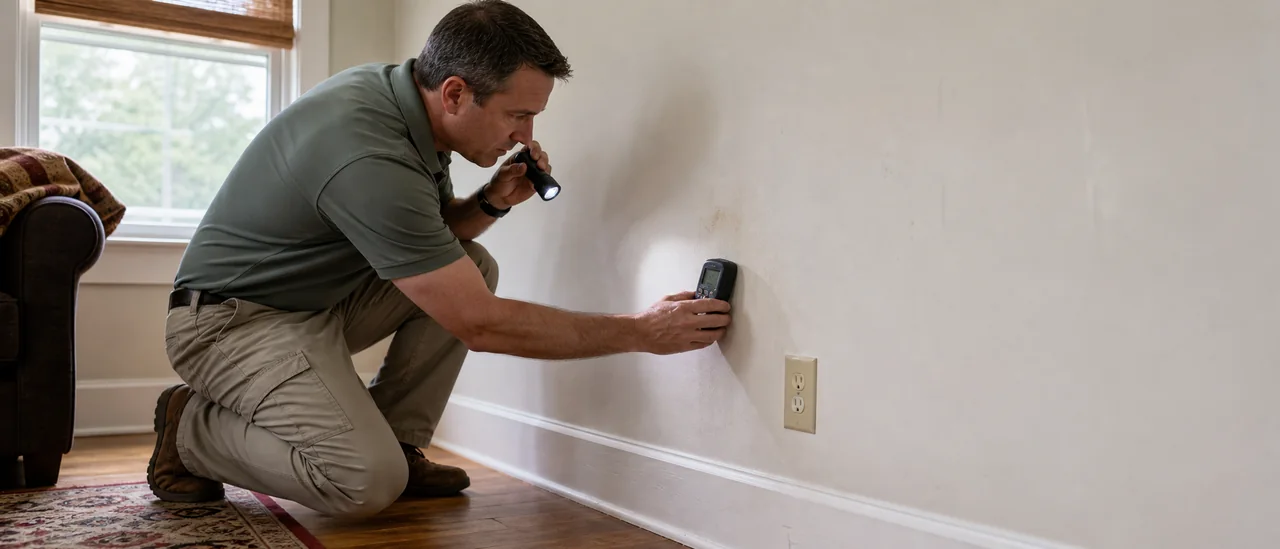
Inspectors can report observable symptoms that may point to a concealed condition. Examples include staining, bubbling paint, soft or damaged finishes, unusual wall movement, visible cracks, musty odors, or abnormal operation of accessible electrical and plumbing components.
Those clues do not prove exactly what is happening inside the cavity. A stain may indicate moisture, but a visual inspection alone may not establish its source, path, extent, or whether the area is currently wet.
| Situation | What may be assessed | What remains unconfirmed |
|---|---|---|
| Finished, intact wall | Surface condition and visible symptoms | Framing, insulation, wiring, pipes, and hidden moisture |
| Existing access opening | Components visible through that opening | Areas beyond the available sightline |
| Unfinished wall or exposed framing | Visible materials and installation conditions | Concealed faces, internal deterioration, or inaccessible sections |
The same rule says inspectors need not identify concealed conditions, dismantle systems, or perform procedures likely to damage the property. Rules and contracts vary, but this example illustrates the practical boundary between observation and investigation.
When further evaluation makes sense
Start with the inspection report and agreement. The report should identify observed concerns and important access limitations under the standard that governed the inspection.
If visible evidence suggests an active leak, electrical concern, structural movement, or other concealed defect, a qualified specialist may recommend targeted testing or an opening. Any destructive work should occur only with the property owner’s permission and a clear plan for repair.
The practical bottom line is simple: a home inspection can flag evidence around a wall, but it normally cannot confirm the condition of everything behind it.