On this page
The direct answer
No—home inspectors generally do not move furniture, because a standard home inspection is limited to visually observable, readily accessible areas. A particular inspector may choose to shift a small item, but homeowners and buyers should not assume that sofas, beds, dressers, or loaded shelving will be moved.
InterNACHI’s Standard of Practice specifically excludes moving furniture, rugs, stored belongings, and other obstructions that restrict a visual inspection. New York’s licensing rules provide a state-level example of the same limitation.
Why furniture usually stays in place
A general home inspection is non-invasive. InterNACHI defines a readily accessible component as one that can be safely observed without removing obstacles, detaching secured items, or using other unsafe or difficult access procedures.
New York’s home-inspector standards do not require an inspector to move furniture or personal and stored items. They also exclude tests or procedures that could damage the item being evaluated.
Those standards set a minimum scope, not a ban on every minor adjustment. The inspector’s agreement, applicable state rules, site conditions, and judgment determine whether anything gets shifted. Permission alone does not make a heavy or fragile item safe to move.
An obstruction is a limitation, not a finding
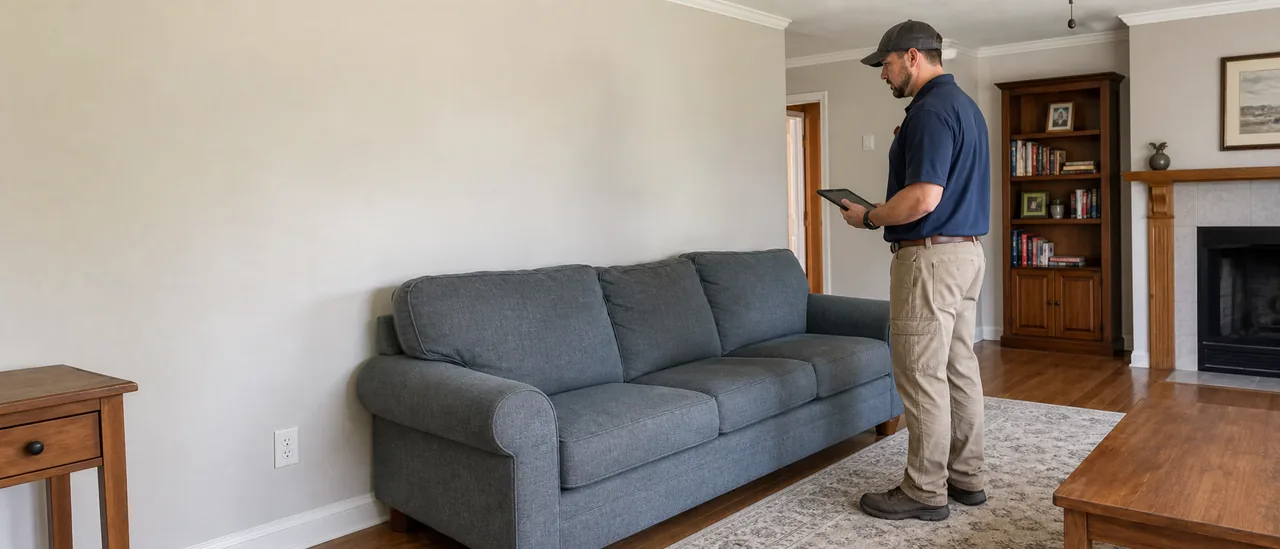
A sofa hiding part of a wall does not prove that the concealed area is sound or defective. It means the inspector could not visually confirm its condition.
What the inspector can confirm
The inspector can examine the visible portions around furniture and report material defects that are actually observed. Depending on placement, furniture may block sections of flooring, baseboards, walls, receptacles, windows, radiators, or other installed components.
An inspector cannot confirm the condition of a concealed surface simply by inspecting nearby areas. Standard inspections are not technically exhaustive and are not designed to identify every latent or hidden defect. The report may therefore identify an access limitation, especially when an important component could not be observed.
How to prepare for better access
Before the appointment, ask the inspector what should be made accessible. If it can be done safely and with the property owner’s permission, clear belongings from:
- walls or floors where there is a known concern;
- visible receptacles, windows, and heating units; and
- any installed component the inspector specifically requests access to.
Move heavy furniture well before the inspection rather than expecting the inspector to handle it on site. If accessible evidence suggests a significant problem continues behind an obstruction, arranging safe access or a qualified evaluation may be reasonable.
Practical bottom line
Plan on furniture staying where it is. The inspection covers what is visible and readily accessible, while blocked areas remain unconfirmed. Preparing access in advance gives the inspector a better view without turning a visual inspection into a moving job.