On this page
Most inspections use a representative sample
No, home inspectors do not necessarily test every window; common standards require checking a representative number of accessible windows. The inspection agreement and any applicable state rules can set a different or broader scope.
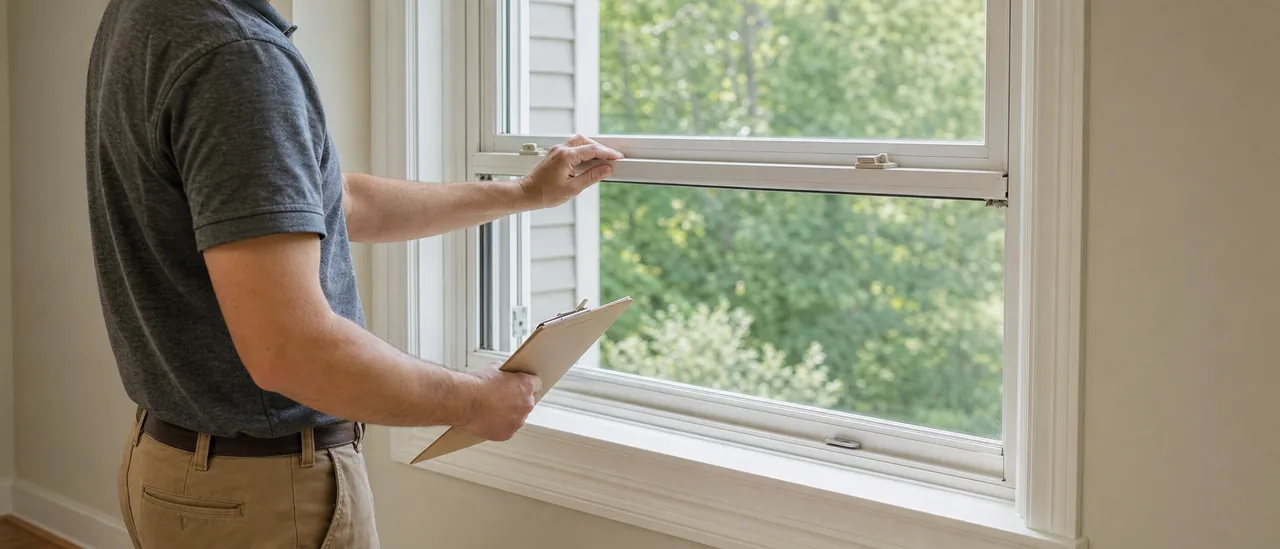
In this context, “test” usually means a visual inspection plus normal operation, not dismantling or laboratory analysis. InterNACHI’s Standards of Practice call for opening and closing a representative number of doors and windows. ASHI similarly requires inspection of a representative number of windows and defines that sample as one component per room for multiple similar interior components.
Those are minimum standards, not a ban on checking more. An inspector may operate additional windows when time, access, safety, and the agreed scope allow. Still, a standard home inspection is not designed to certify every individual window.
Why some windows may not be operated
A window must be readily accessible and safe to operate without causing damage. Inspectors generally do not move heavy furniture, remove window treatments, force painted-shut or stuck sashes, or dismantle assemblies merely to complete an operational check.
Practical limits can include:
- furniture, stored belongings, or window coverings blocking access;
- locks or hardware that cannot be operated normally;
- cracked glass, deterioration, or other conditions that make operation unsafe; and
- windows located where normal access is unavailable.
ASHI’s standard requires the report to identify designated components that were present but not inspected and explain why. The inspection report and pre-inspection agreement should therefore show what standard applied and whether access or safety limited the work.
“Representative” does not mean “random”
Under ASHI’s definition, the minimum for multiple similar interior components is one per room. Another governing standard or the inspection agreement may define the scope differently.
What the inspection can—and cannot—confirm
Operating a sampled window can reveal observable problems such as binding, damaged hardware, or failure to remain in its intended position. A visual review may also identify cracked glass, visible frame deterioration, or obvious fogging between panes. InterNACHI specifically calls for reporting a window that is obviously fogged or shows other evidence of a broken seal.
However, a normal visual inspection cannot prove that every unoperated window works. ASHI also excludes inspection of coatings and the hermetic seals between panes. That means an inspector may report visible evidence of seal failure without confirming the internal condition of every insulated-glass unit.
Practical bottom line
Read the agreement before the inspection, then review the report for the sampling method, limitations, and window-specific findings. If operating every window matters to the purchase decision, ask whether that expanded scope can be agreed upon in advance. A visibly damaged, inaccessible, or unusually complex window may warrant evaluation by a qualified window specialist.