On this page
The direct answer
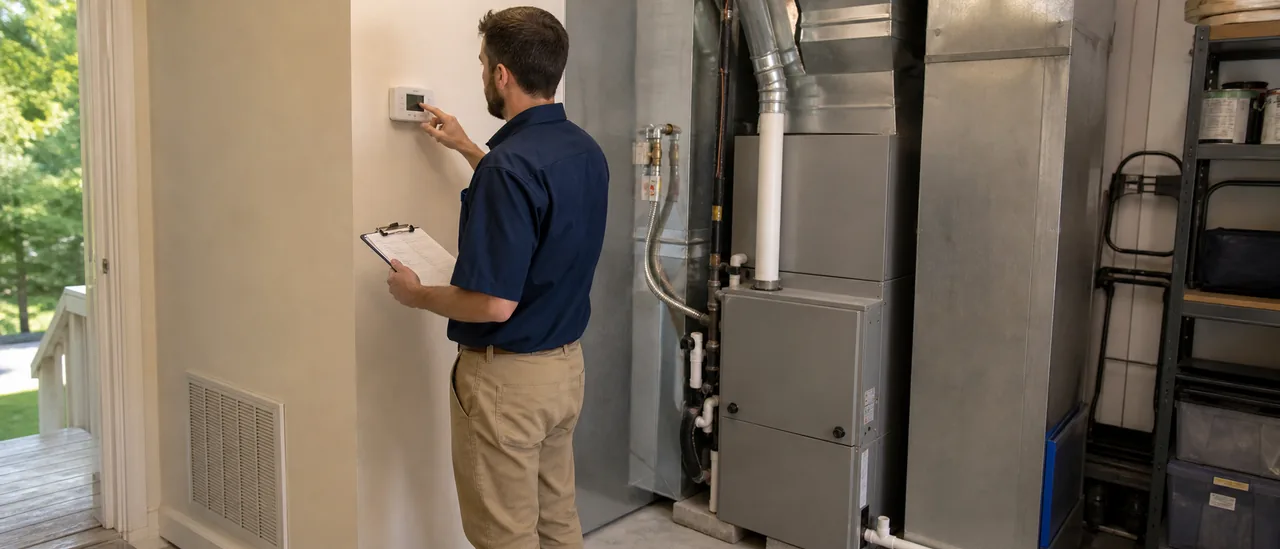
Yes—home inspectors generally test permanently installed heating systems in summer, but only when the weather and equipment allow safe operation. A seasonal test normally means using the thermostat or another ordinary control to request heat, then observing accessible components and the system’s response.
Summer does not automatically place heating equipment outside a standard home inspection. InterNACHI’s Standards of Practice call for inspecting the heating system with normal operating controls. North Carolina’s licensing rules similarly require operation appropriate to weather conditions at the inspection.
What the inspector can check
The exact procedure depends on the equipment, access, applicable standard, and inspection agreement. When operation is appropriate, the inspector may confirm that the thermostat produces a response and observe readily accessible equipment, distribution components, and visible venting. The report should identify a system that did not operate or could not be accessed under the governing standard.
A typical summer check may establish:
- whether the system responds to its normal controls;
- whether accessible components show visible defects;
- the heating method and energy source; and
- whether obvious limitations prevented a complete operational check.
That is useful evidence, but it is not a full seasonal performance test. A brief call for heat on a warm day cannot reproduce winter demand or prove that every room will heat evenly.
When summer conditions limit testing
Inspectors should not activate equipment when ambient conditions could damage it or make operation unsafe. This exception matters especially for some heat-pump systems. Texas inspection rules, for example, do not require operating a heat pump in heating mode above 70°F. That number is a Texas requirement, not a universal national cutoff; other standards, manufacturers, contracts, and jurisdictions may use different limits.
“Not operated” is not the same as “failed”
If the report says weather conditions prevented operation, it describes an inspection limitation. It does not establish that the heating system works or that it is defective.
Other limitations can include a system that is shut down, inaccessible, unresponsive to normal controls, or missing an energy source. Inspectors generally do not override controls, light pilot flames, dismantle equipment, or inspect concealed heat exchangers.
Practical bottom line
Expect the inspector to attempt an ordinary operational check in summer unless conditions, system design, safety, or the applicable rules make that inappropriate. Read the heating section for what was operated, what responded, and what was excluded—not merely whether the inspection occurred in July or August.
If a major heating decision depends on performance that warm-weather testing could not establish, a qualified HVAC evaluation before the relevant transaction deadline may be reasonable.