On this page
You usually do not need to be home
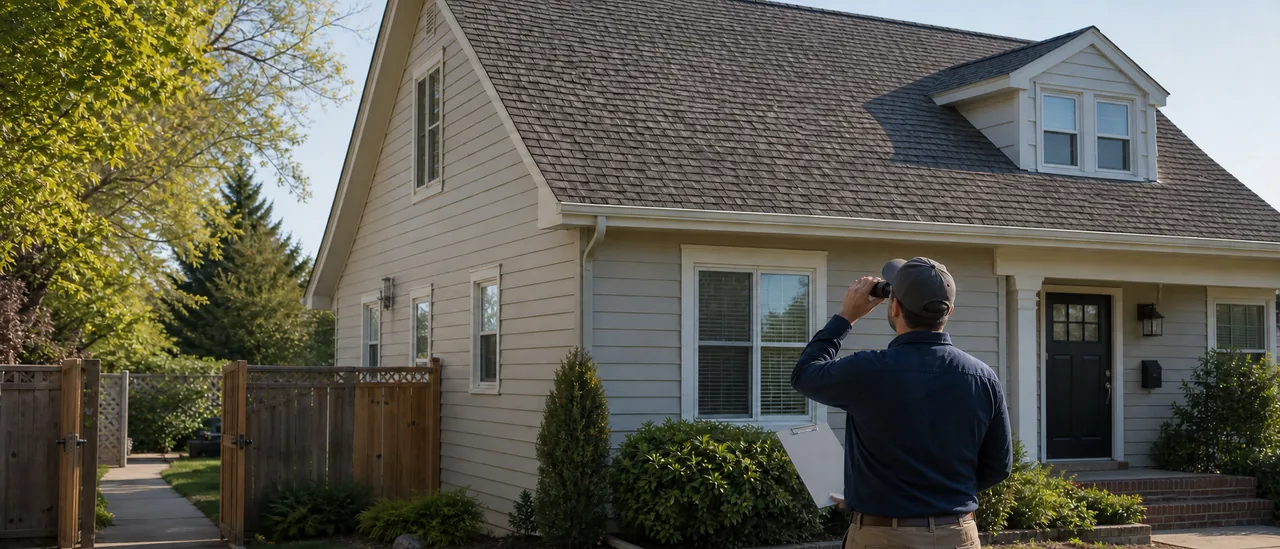
No—you usually do not need to be home for a roof inspection, provided the inspector can safely reach every area included in the agreed scope. You should be present, or arrange authorized entry, if the inspection includes an attic, garage, interior ceiling, roof hatch, or another locked area.
A roof inspection is generally a visual examination of accessible roof components and related structure. The exact scope comes from your agreement with the inspector, not from the appointment name alone. Confirm the access plan before leaving.
When an exterior-only visit can proceed
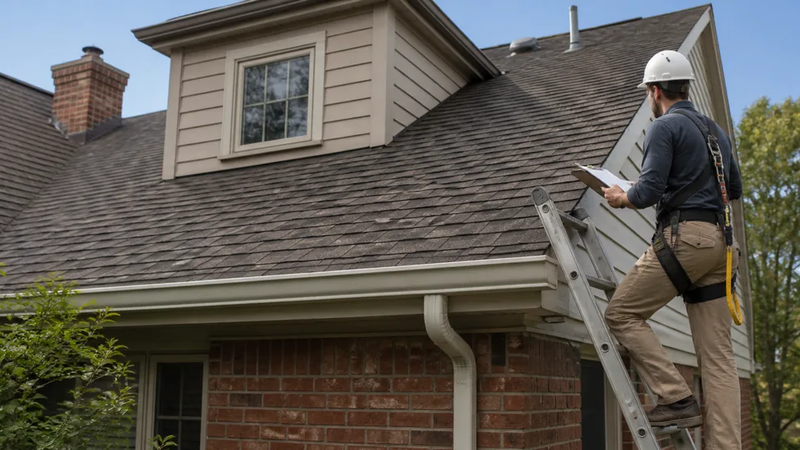
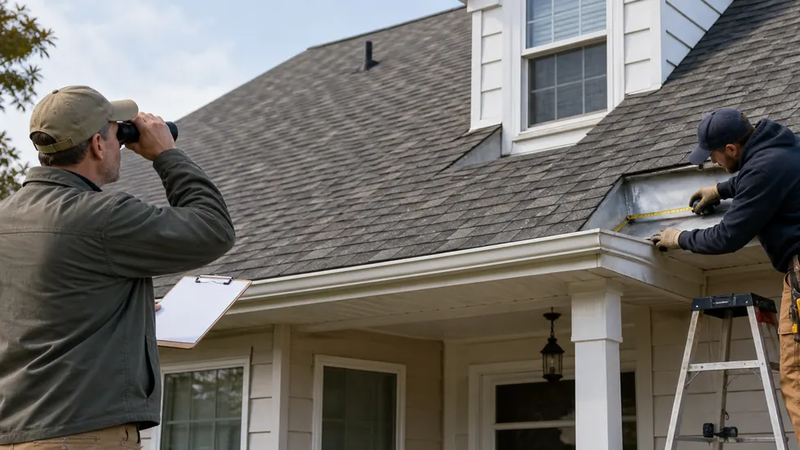
An exterior inspection can often happen without an occupant when the inspector has permission to enter the property and unobstructed access around the building. The International Association of Certified Home Inspectors' standard, for example, covers roof coverings, gutters, downspouts, flashing, skylights, chimneys, and penetrations.
Roof access is not guaranteed. That standard defines a home inspection as a visual examination of accessible areas. It does not require an inspector to enter a dangerous area, move personal property, or walk on a roof when doing so could be unsafe or damaging.
When someone must provide access
Make arrangements when any part of the inspection is behind a lock or inside. Before the appointment:
- unlock gates and keep the driveway and perimeter clear;
- secure pets away from the inspector's route;
- provide access to an attic hatch, garage, or interior rooms if included; and
- tell the inspector about known leaks, stains, repairs, or hard-to-find access points.
You may leave a lockbox only if the property owner authorizes it and the inspector agrees to use it. Send the code securely, identify which doors it opens, and confirm who will lock up afterward. A lockbox does not replace permission to enter.
Confirm the scope, not just the arrival time
Ask whether the visit is exterior-only, whether attic or interior access is included, and how the inspector will report any area that cannot be examined.
What the inspection can confirm
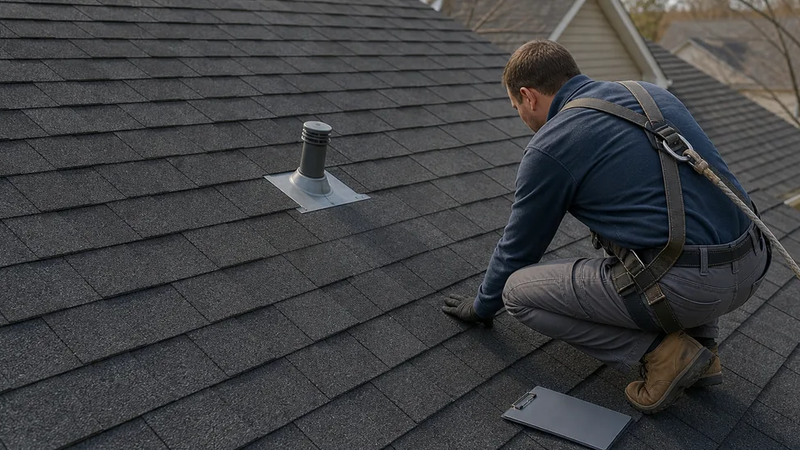
A visual inspection can document observable conditions on accessible components at that time. Depending on access, that may include roof coverings, flashing, drainage components, penetrations, and visible indications of active leakage.
It cannot establish the condition of concealed layers, guarantee future performance, or certify that every installation detail is correct. InterNACHI's standard specifically excludes warranties, destructive investigation, and confirmation of fastening or installation of roof coverings. Snow, debris, unsafe slopes, and inaccessible attic areas can further limit what the inspector sees.
Practical bottom line
You can usually be away if the inspection is exterior-only and access is ready. If interior observations are part of the scope, be home or arrange authorized entry. A quick access check with the inspector prevents a limited visit and makes the written findings easier to interpret.