On this page
Yes—inspect the home and its installation
Yes, mobile homes need a home inspection, especially before purchase, but the inspection must address the home’s site-installed support and connections. A factory certification, appraisal, or previous inspection does not describe every visible condition today.
“Mobile home” is widely used as a general label. HUD calls a home built to its federal construction and safety standards a manufactured home; qualifying sections built after June 15, 1976 carry certification labels. Older mobile homes and modular homes may follow different rules, so identify the home type and construction date before defining the inspection scope.
An inspection is still a condition report, not a pass-or-fail decision. Any contract, lender, park, state, or local requirements are separate questions to confirm for the specific transaction.
What the inspection should cover
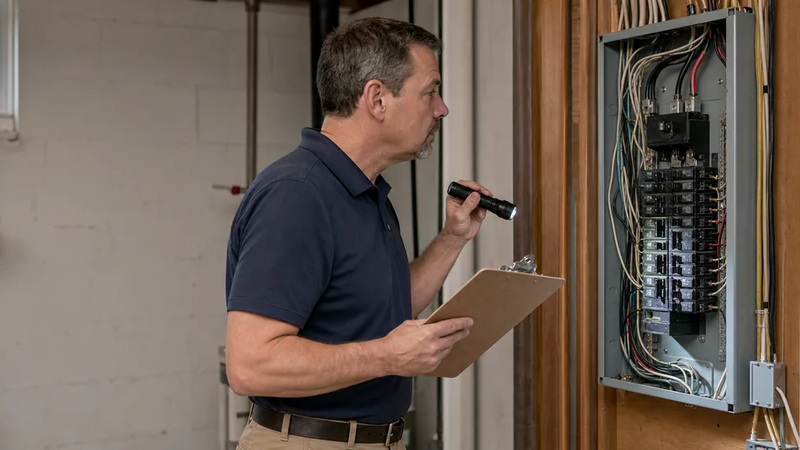
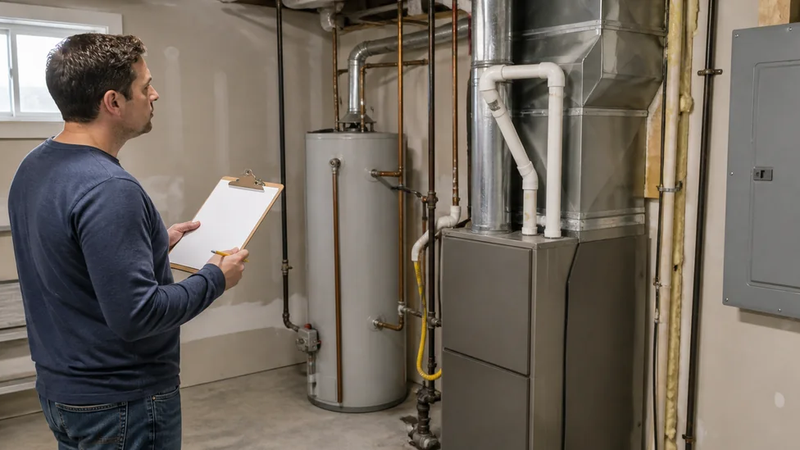
A standard home inspection examines readily accessible, visually observable systems and components. That generally includes the roof and exterior, visible structure, plumbing, electrical and heating or cooling systems, interiors, insulation, ventilation, and site drainage.
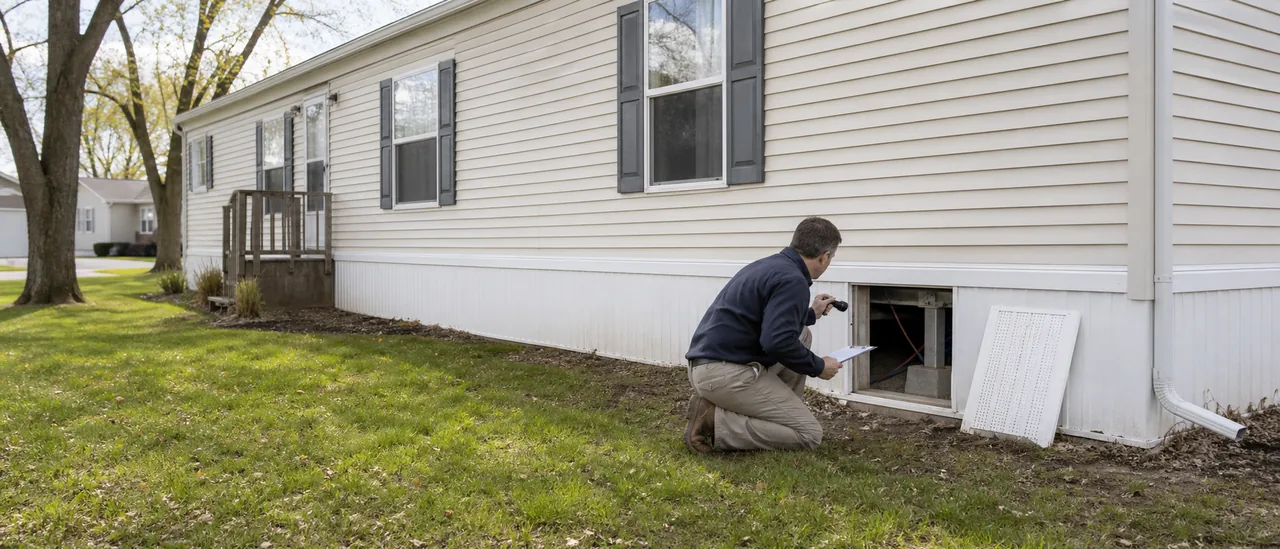
For a manufactured home, the inspector should also understand its installation. Visible concerns may involve:
- foundation supports or piers, anchoring, and under-home access;
- grading, drainage, and the condition and ventilation of perimeter skirting;
- utility connections, dryer exhaust, and exposed plumbing or wiring; and
- on-site additions or alterations that may affect the home or its supports.
HUD’s homeowner guidance treats stable soil, the foundation and anchoring system, utility hookups, drainage, and installation instructions as important parts of setup. These items deserve deliberate attention rather than being treated as background scenery.
Factory inspection is not the same inspection
HUD-approved agencies inspect manufactured homes during production. A buyer’s home inspection evaluates the readily visible condition of the installed home at a particular time, including site-related components that were not part of factory production.
What a visual inspection cannot confirm
A standard inspection is not technically exhaustive. It does not require dismantling, destructive testing, or entry into unsafe or inaccessible spaces. Concealed decay, covered anchors, buried utilities, blocked crawl areas, and conditions inside sealed assemblies may therefore remain unconfirmed.
The inspector also does not ordinarily provide structural engineering, certify foundation adequacy, verify every code requirement, or guarantee future performance. The report should identify excluded or inaccessible areas and explain why they were not inspected.
Practical bottom line
Use an inspector whose scope and experience include manufactured homes, then read the agreement for exclusions before the visit. Make the under-home area accessible when it can be entered safely, and provide installation manuals or prior foundation documents if available.
If the visual inspection finds movement, damaged supports, altered anchoring, or an installation it cannot evaluate, a qualified engineer, installer, electrician, plumber, or other appropriate specialist may be needed. That follow-up answers a narrower technical question; it does not replace the whole-home inspection.