On this page
The direct answer
Yes, you should arrange a dedicated well evaluation before buying a house with a private well, but it is not universally required. The purchase contract, lender, loan program, and state or local rules determine whether an inspection or water test is a closing condition.
A well inspection examines the water-supply system; laboratory testing analyzes a collected water sample. They answer different questions, so ordering one does not automatically provide the other.
A standard home inspection may not be enough
Read the home inspector’s agreement before relying on it. For example, Delaware’s minimum standard does not require inspection of wells, well pumps, or water-storage equipment, or determination of water quantity or quality.
What to include in the evaluation
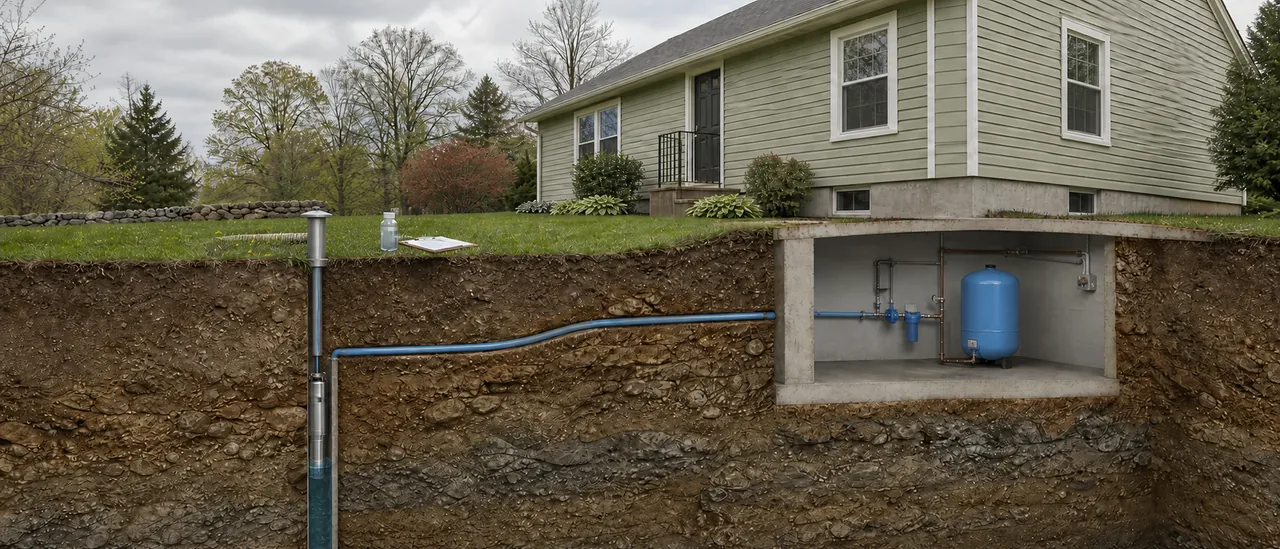
The requested scope should identify the well serving the house and review available construction, permit, maintenance, and prior test records. A qualified well professional can examine accessible parts of the casing, cap, pump installation, pressure system, and surrounding site for visible defects or contamination pathways.
Ask whether the service includes an operational or yield test. That test may provide evidence about performance during the test period, but it cannot guarantee future capacity or predict when a pump or pressure tank will fail.
Water quality requires its own sampling plan. EPA advises private-well owners to test annually for total coliform bacteria, nitrates, total dissolved solids, and pH, and to consider other contaminants when local conditions warrant. Use a state-certified drinking-water laboratory and confirm which analytes the lender or health authority requires.
Before the inspection contingency expires, collect:
- the specialist’s written scope and report;
- laboratory results tied to the correct well and sample point;
- well construction, permit, repair, and treatment-system records; and
- written lender and local-authority requirements.
What the results cannot confirm
A visual inspection covers only visible, accessible conditions. Buried casing depth, underground connections, concealed contamination sources, and some internal components may require records, specialized testing, excavation, or disassembly. Wisconsin’s property-transfer guidance specifically notes that some features cannot be seen without opening the well, excavating, or researching records.
A laboratory report is also limited to the sampled water, collection conditions, and listed contaminants. Clear-looking water does not establish that untested contaminants are absent, while a passing result does not guarantee future quality.
When it is legally required
Requirements differ sharply. Virginia’s health department says state private-well rules do not require an inspection for a property transfer, although localities or lenders may. Oregon, by contrast, requires sellers in covered transactions to test domestic-well water for specified contaminants and share the results.
Review the purchase contract, disclosure and well records, inspection deadlines, lender conditions, and current state and local rules. Then obtain the exact well inspection and certified-laboratory testing required for the property from the appropriately licensed well professional and laboratory before the transaction deadline.