On this page
No—an inspection is not a leak guarantee
No. A roof inspection can document conditions that are visible and accessible at that time, but it cannot promise the roof will never leak.
The exact scope depends on the inspection agreement and the standard being followed. Under the American Society of Home Inspectors standard, an inspector examines readily accessible, visually observable systems and reports their condition at the time of inspection. That standard also says its inspections are not technically exhaustive and do not require warranties or guarantees.
Why a sound-looking roof may still leak later
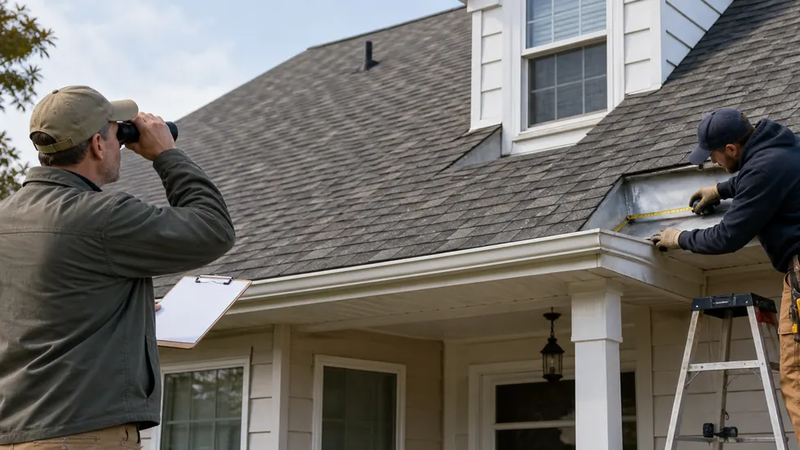
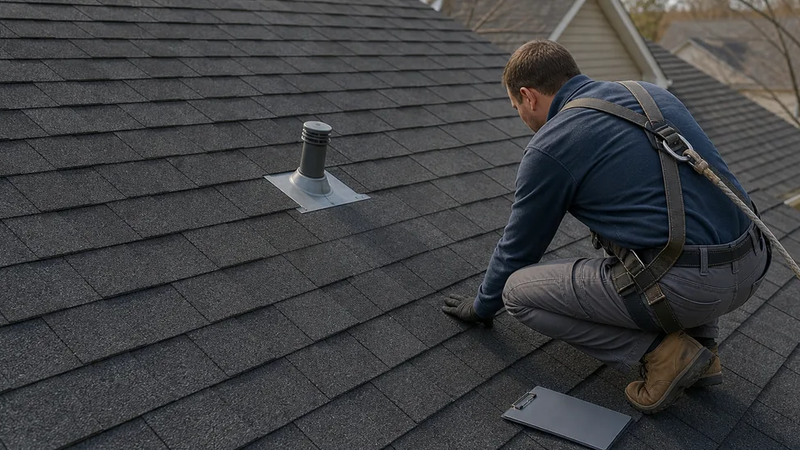
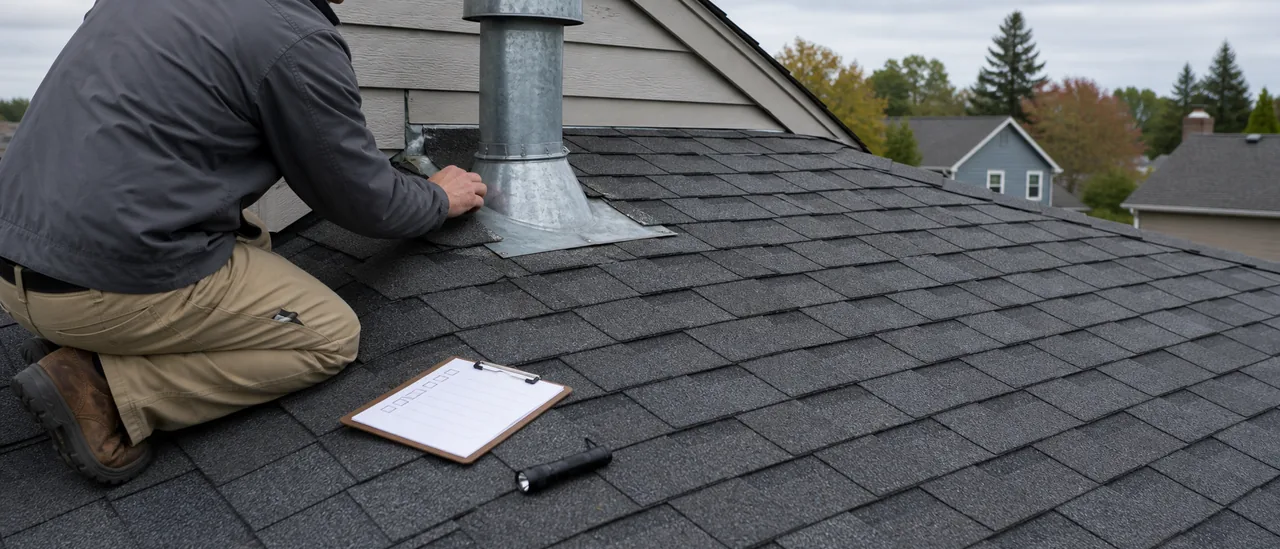
Water can enter through roof coverings, flashing, skylights, or other penetrations. An inspection can identify visible deficiencies in those areas, along with observable evidence of water penetration or prior repairs.
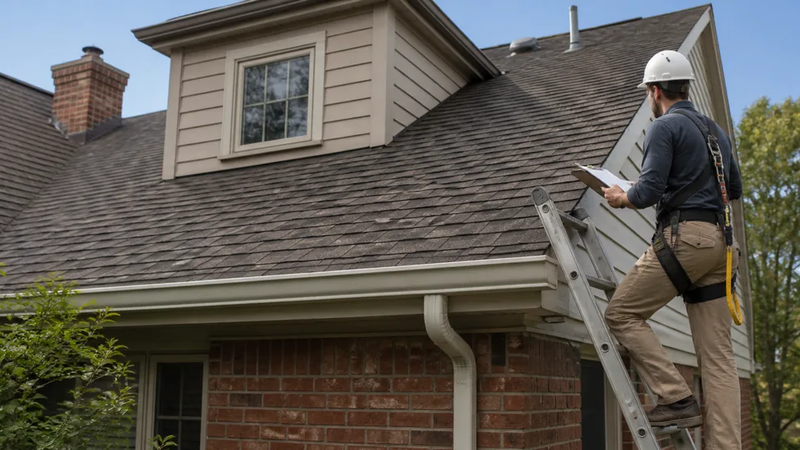
However, visual access has boundaries. Concealed, latent, or inaccessible conditions may be outside the inspection. The inspector may also use a different vantage point when walking the roof would be unsafe or could damage the covering.
Texas inspection rules provide a useful example of these limits. They define a real-estate inspection as a limited visual survey, not a comprehensive investigation or exploratory probe. Their roof provisions do not require an inspector to identify latent hail damage or exhaustively list every deficiency or water-penetration location. Other jurisdictions and specialized roof inspections may use different requirements.
| An inspection may confirm | It cannot guarantee |
|---|---|
| Visible deterioration, failed flashing details, or evidence of water entry | That no hidden opening or latent defect exists |
| The condition of accessible components on the inspection date | How every component will perform after later weather or aging |
| Areas that were inspected and the vantage point used | Conditions in excluded or inaccessible areas |
What the report means in practice
A report with no observed leak does not mean the inspection failed or the roof is “leak-proof.” It means the inspector did not identify reportable evidence within the stated scope, access, and conditions. Read the methods, exclusions, inaccessible areas, and recommendations—not only the summary page.
Likewise, a reported concern is not always proof of an active leak. It may identify a condition that needs monitoring or further evaluation before its cause and significance are clear.
Bottom line
A roof inspection reduces uncertainty; it does not eliminate it. Treat the report as a dated assessment of observable conditions, not a warranty of future performance. If there is active dripping, a recurring stain, unexplained moisture, or an important area was excluded, a qualified roof or building-envelope evaluation is a reasonable next step.