On this page
The attic is often included, but scope controls
Yes—an attic is often included when a roof inspection is part of a full home inspection, but it is not automatic in every roof-only service. The inspection agreement should say whether the inspector will examine accessible attic areas, view the attic from its opening, or assess only exterior roof components.
Official inspection standards show why the wording matters. Ohio’s home-inspector rule, for example, lists attics and roof structure under structural systems. It separately lists roofing materials, drainage, flashing, and penetrations under roofing systems. A full Ohio home inspection addresses both sets of readily accessible components, but that state rule does not define every standalone roof service elsewhere.
Virginia takes a different organizational approach. Its minimum home-inspection scope groups the roof covering, roof framing and sheathing, attic, and attic insulation together. The regulation still limits the inspection to readily accessible components and readily observable defects, and the inspection agreement may narrow that scope.
Check the report language
Look for an attic inspection method or vantage point, any areas marked inaccessible or not inspected, and the reason for each limitation. A report that covers the roof surface does not, by itself, prove the attic was examined.
What an attic view can reveal
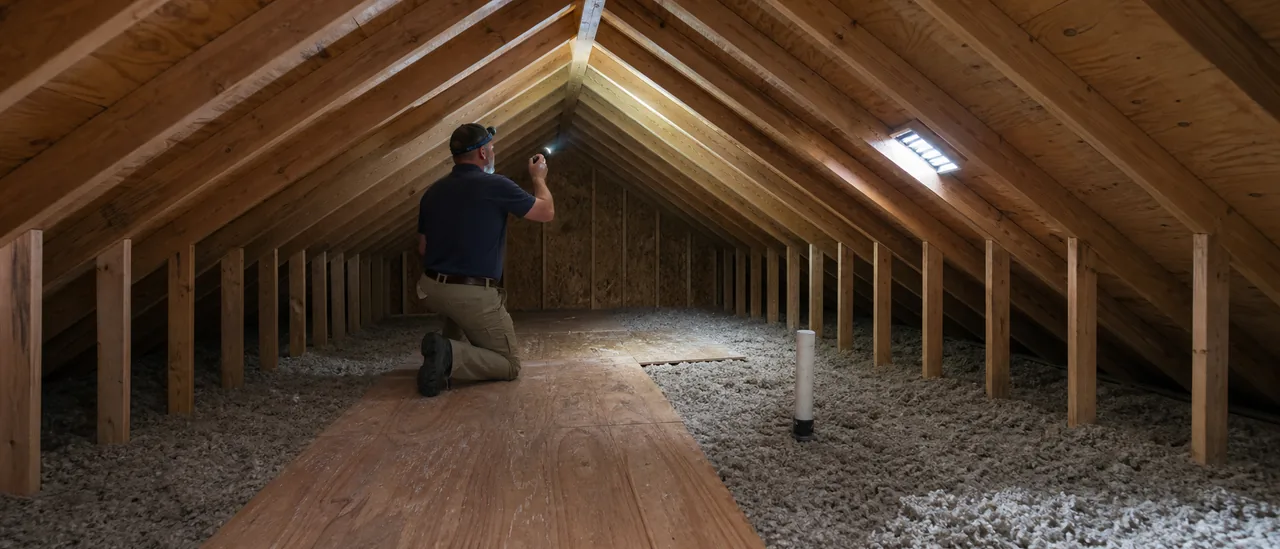
In accessible areas, an inspector may observe exposed roof framing and sheathing, visible staining, attic ventilation, and insulation conditions. Ohio’s home-inspection rule includes attic ventilation and insulation in unfinished spaces. Virginia’s scope includes roof framing and sheathing, the attic, and attic insulation. These requirements illustrate a full home inspection; a roof-only agreement may include fewer components.
An attic view adds an interior perspective, but it remains visual and limited. It cannot establish that every concealed area is sound. It also cannot always show whether an old stain is active, identify the exact entry point of water, or confirm hidden deterioration beneath roofing materials.
Common access limits include:
- an opening or headroom that is too small;
- unsafe footing or framing hidden beneath insulation;
- stored belongings, ducts, or equipment blocking the route; and
- sealed, finished, or vaulted assemblies with no usable attic access.
Inspectors generally should not disturb finishes or insulation or take actions likely to injure someone or damage the property. Depending on the conditions, an attic may be viewed only from the hatch rather than traversed.
The practical bottom line
Before the inspection, ask whether the quoted scope includes the attic and how inaccessible areas will be reported. Afterward, confirm that the report identifies the inspection method, visible findings, and limitations.
If suspected leakage, sagging, or concealed deterioration remains unresolved because access was limited, a qualified roof or building professional can define the next evaluation needed. That recommendation follows from the limitation; it does not turn a visual inspection into a guarantee.