On this page
The direct answer
Yes, hail damage can cause roof leaks when an impact fractures, tears, punctures, or otherwise compromises the roof covering. However, not every hail mark admits water. A shallow dent or superficial scuff may look dramatic while leaving the roof’s water-shedding function intact.
That distinction is the heart of the answer. The U.S. Department of Energy’s Building America Solution Center explains that hail can damage shingles, leaving only the underlayment and sheathing to resist rain. Open joints or holes in sheathing can then admit water.
How an impact becomes a leak
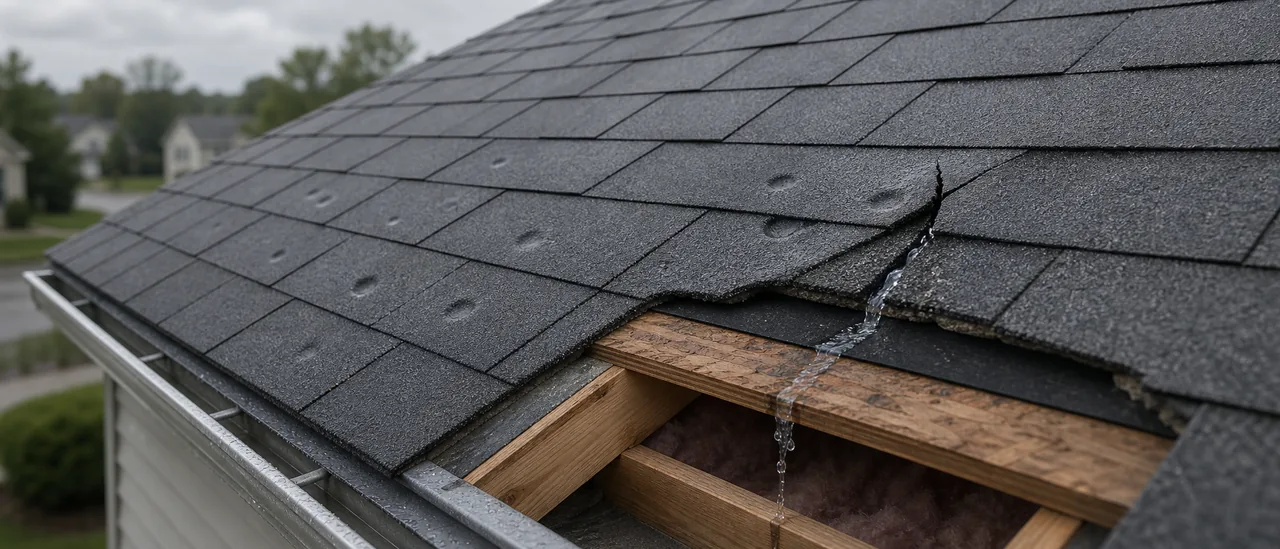
Hail does not need to create a movie-style hole for water entry to become possible. On asphalt shingles, a crack or tear can interrupt the protective surface. Any opening that reaches deeper layers creates a possible route past the exterior covering.
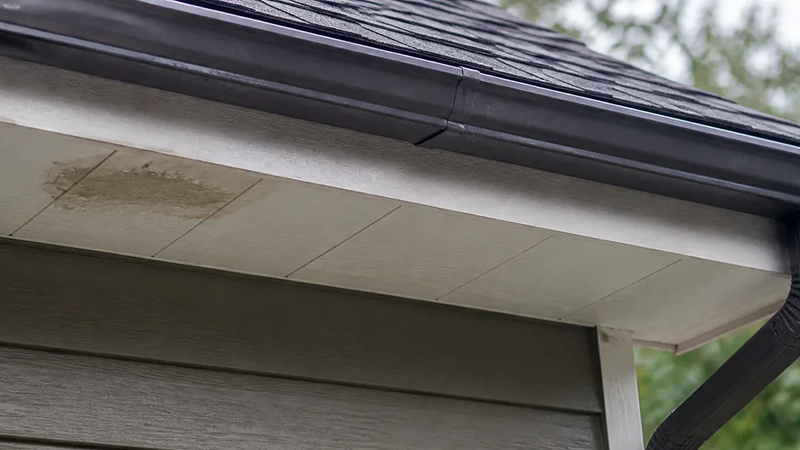
Rain then supplies the water. Whether it reaches the building interior depends on the damage and the rest of the roof assembly, so visible ceiling moisture is not a reliable measure of the original impact’s size.
Research by the Insurance Institute for Business & Home Safety tested hail-damaged shingles for water permeability. It found relationships between leakage rate and both dent size and tear severity. Small dents produced negligible leakage in that study, while larger dents and more severe tears allowed more water through.
A mark is not the same as a leak
Hail impact describes the event. Hail damage describes a physical change. A roof leak means water has passed through a vulnerable part of the roof system. One does not automatically prove the next.
What changes the answer
The most important variables are the damage mode and its severity. A shallow dent is different from a tear, and a surface mark is different from an opening through the covering.
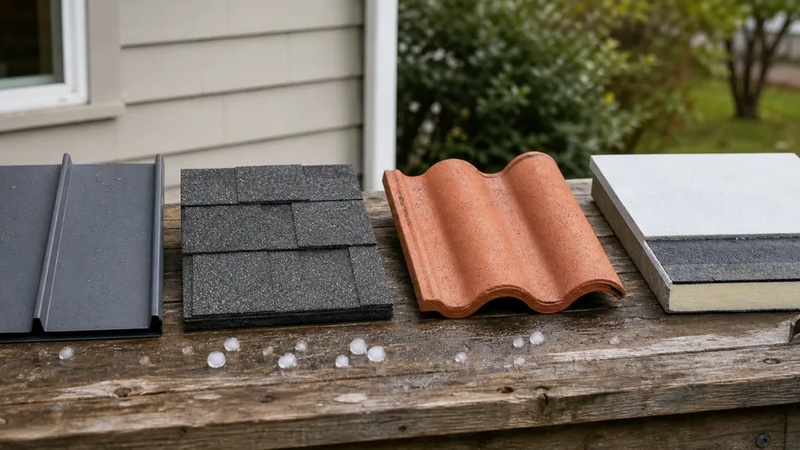
Practical signs that deserve evaluation include a split or puncture, a cracked tile, a displaced roof piece, or new moisture after the storm. By contrast, a dent alone cannot show how deeply the assembly was affected.
What storm records can confirm
A ground report can document observed hail near a place and time. Radar products estimate hail signatures over an area. NOAA’s Severe Weather Data Inventory cautions that much automatically derived radar data represents probable conditions, not a confirmed occurrence.
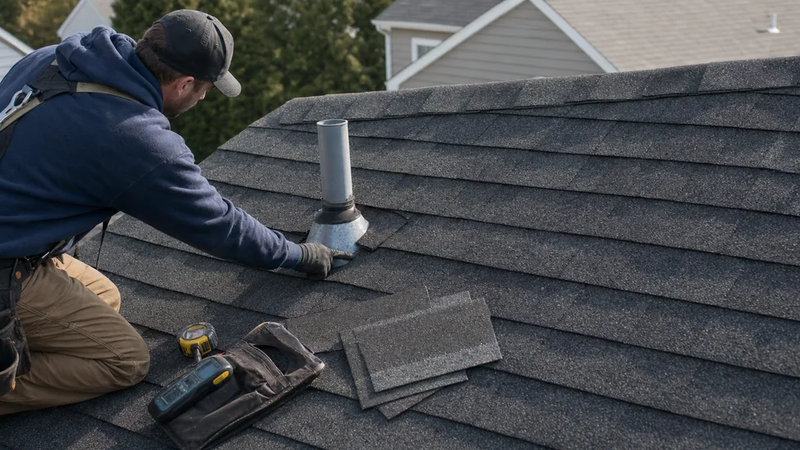
Neither kind of storm record confirms damage to a particular roof. Confirmed property damage requires evidence from that property, and determining whether a specific opening is leaking may require a qualified roof evaluation.
The practical bottom line
Hail damage causes a roof leak only when the impact creates or worsens a water-entry path. Some damage leaks readily; some remains superficial; and some requires close examination to classify. Treat radar estimates and nearby observations as storm context, not a diagnosis of the roof.