On this page
The direct answer
Yes, roof age affects wind resistance, but the effect is not a simple year-by-year decline. Weathering can change an asphalt shingle roof’s adhesive seals, flexibility, and ability to tolerate lifting. Yet an older, well-installed roof may remain intact while a newer roof with poor fastening or incomplete sealing can fail sooner.
“Wind resistance” means the roof covering’s ability to remain attached when wind creates lifting forces. It is not a promise that a roof will survive every gust, and it does not describe the wind resistance of the entire house.
Age is a clue, not a wind rating
A shingle’s original test classification describes a product installed under defined conditions. It does not certify the remaining capacity of a particular weathered roof years later.
Why aging can matter
Self-sealing asphalt shingles rely heavily on the bond between overlapping courses. ASTM explains that sealed-shingle wind resistance is directly related to the shingle’s ability to resist lifting from the course below. The relevant test evaluates new shingles applied and sealed under defined conditions.
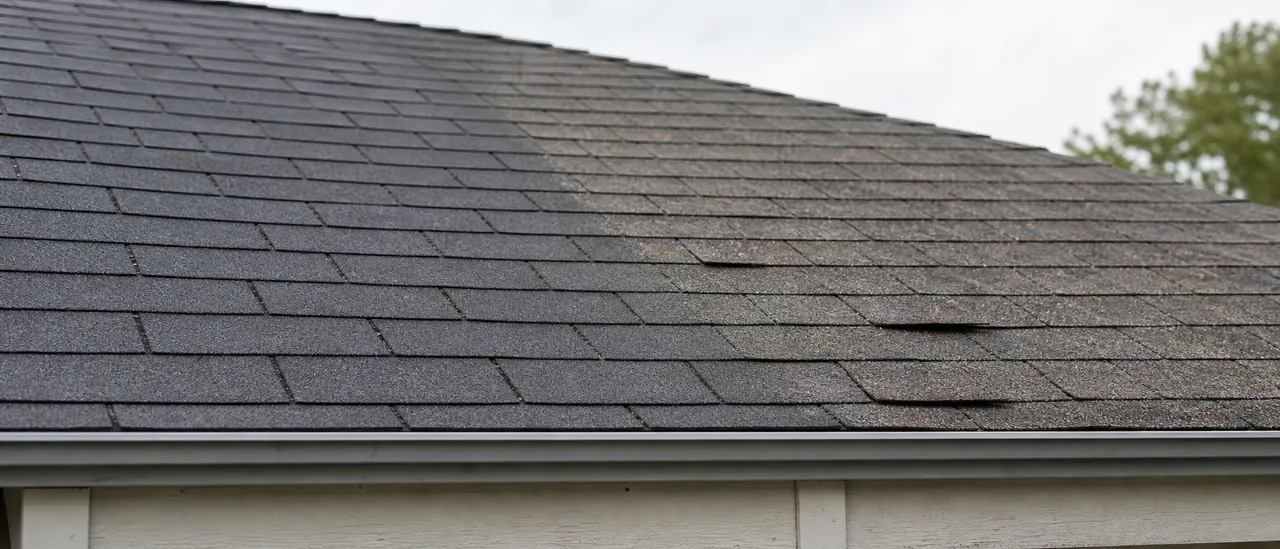
Sun, temperature cycling, moisture, and repeated wind exposure do not affect every roof equally. Over time, tabs may become unsealed, edges may curl, and shingles may become brittle. National Bureau of Standards testing found that age influenced initial distortion: older, more brittle shingles resisted bending, but suffered greater immediate damage once sufficiently strong wind distorted them.
What can outweigh chronological age
The roof’s starting condition and exposure help determine how quickly useful resistance is lost:
- Installation: Correct nail placement, fastening, starter strips, and sealing all affect attachment.
- Roof geometry: Edges, corners, ridges, and some roof shapes experience greater wind pressure.
- Climate and exposure: Heat, cold, sunlight, and repeated storms change the rate of weathering.
- Existing condition: Loose tabs, creases, missing shingles, patchwork, or a deteriorated deck can matter more than the installation date.
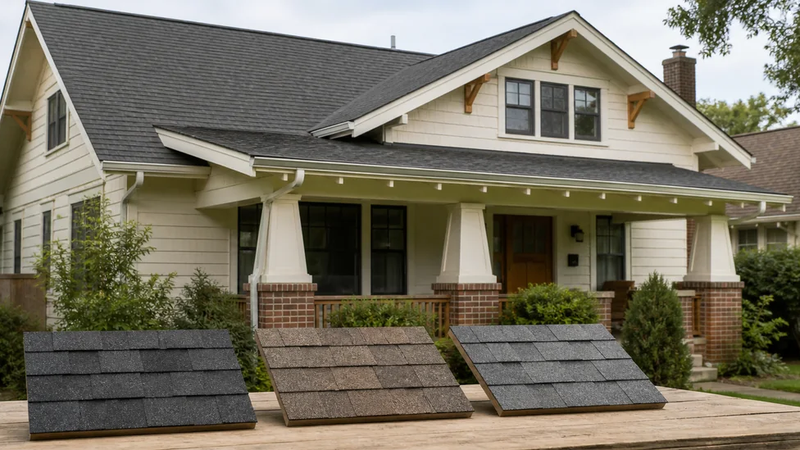
- Product and assembly: Shingle type, tested wind classification, underlayment, deck attachment, and local code requirements are separate pieces of performance.
ASTM D7158 calculates a classification by comparing measured uplift resistance with calculated wind force at a specified velocity. That laboratory classification helps select new materials; it does not directly measure an installed roof’s present condition.
Practical bottom line
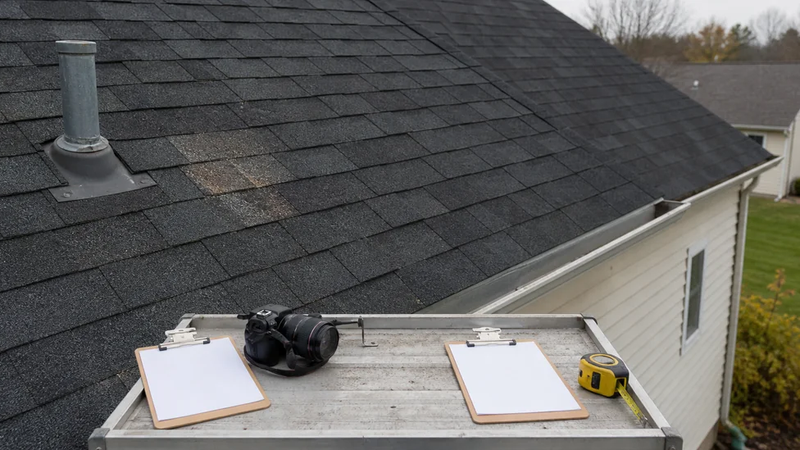
Do not use age by itself to declare a roof wind-safe or wind-damaged. From the ground, look for lifted or displaced tabs, missing shingles, curled edges, and prior repairs after high winds. Avoid walking on a brittle or storm-damaged roof.
A qualified roof inspection can evaluate attachment, sealing, material condition, vulnerable edges, and the deck where visible. The practical question is not simply “How old is it?” but “What condition is the roof in now, and how was it installed?”