On this page
The safest answer is a well-matched neutral
No single roof color is proven to increase every home’s value. For broad appeal, a restrained neutral—often medium-to-dark gray—is usually the safest starting point because it can coordinate with many siding, brick, and trim colors. The better choice, however, is the neutral that looks intentional on the specific house and fits nearby homes.
“Increase home value” should mean a price effect supported by buyers’ behavior, not simply a color that photographs well. Fannie Mae’s appraisal guidance says value conclusions must be objectively supported by facts and logic. Without local comparable sales showing a roof-color premium, a precise dollar increase would be speculation.
Color is not a stand-alone value guarantee
A compatible roof can strengthen curb appeal, but condition, installation quality, remaining service life, and the home’s overall exterior still shape the buyer’s impression. Treat color as one design decision, not an appraisal shortcut.
Why gray often works—and when it does not
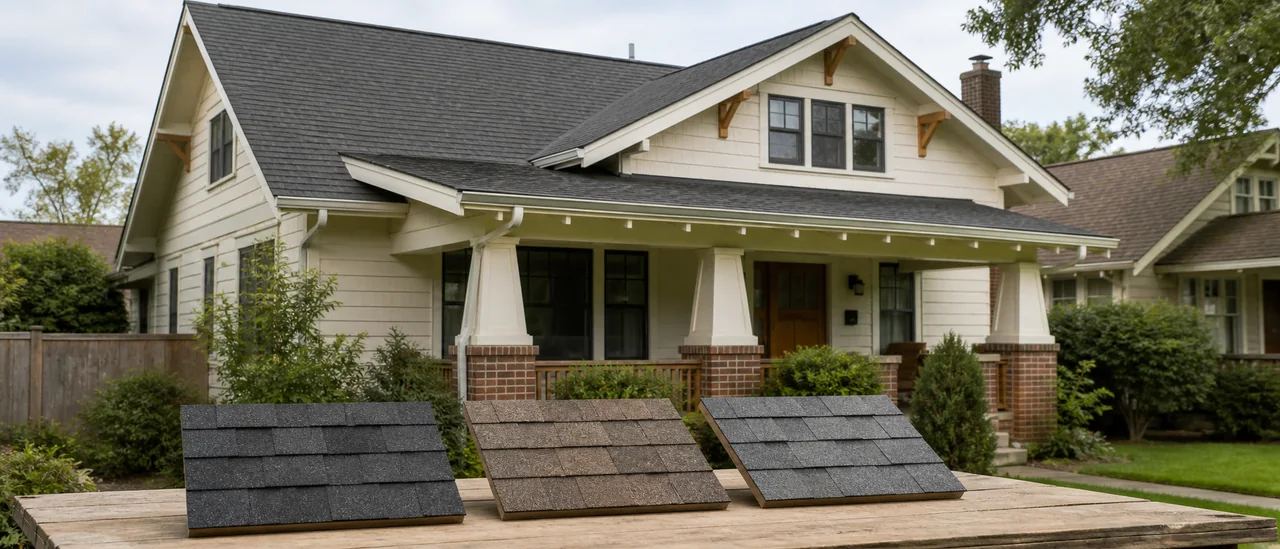
Gray recedes visually and avoids a strong clash with common masonry and painted exteriors. That makes it a practical default, not a universal winner. Warm brown, muted bronze, or weathered earth tones may look more coherent with tan stone, cream stucco, or warm brick. A deep black roof can create crisp contrast, but it may overwhelm a small house or conflict with a soft, low-contrast exterior.
The neighborhood also changes the answer. A roof that is dramatically lighter, darker, or more colorful than comparable homes may narrow its appeal. Before choosing, compare full-size samples outdoors against the siding, masonry, trim, and neighboring roofs. Check them in morning light, full sun, and shade; small swatches can hide undertones.
Climate adds a performance question
Color affects appearance, but it does not reliably identify thermal performance. The Cool Roof Rating Council notes that lighter products are generally more reflective, yet color alone does not determine solar reflectance. Some darker “cool color” materials use pigments that reflect near-infrared energy.
In a hot climate, a lighter or tested cool-roof color may add practical appeal by reducing cooling demand. The U.S. Department of Energy says savings also depend on climate, insulation, roof type, and HVAC efficiency. Cool roofs provide their greatest cooling savings in hot climates and can raise heating costs in colder climates.
When energy performance matters, compare rated solar reflectance and thermal emittance rather than relying on a color label.
Practical bottom line
Start with medium-to-dark gray, then keep it only if it complements the home’s fixed exterior materials and local setting. Choose another restrained color when it produces a more coherent exterior. The value-conscious decision is the best visual fit backed by local market reaction—not a nationally advertised “best” shade.
Related reading: Should I Replace My Roof Before Selling My House?