On this page
The direct answer
Yes—sharing an inspection report can trigger or strengthen disclosure obligations when it gives a seller or real estate professional knowledge of a material property condition. The important limitation is that disclosure law is jurisdiction-specific. The report’s delivery alone does not create one nationwide duty to distribute the report or accept every statement as proven fact.
Instead, the applicable law, the recipient’s role, the transaction, and the report’s actual findings control. A buyer sending a report to a seller is different from an inspector releasing a client’s report, and disclosing a known condition is not always the same as providing the entire document.
Why receiving the report can matter
Many disclosure rules focus on what a seller or licensee knows. North Carolina Real Estate Commission guidance tells brokers they need not provide inspection reports, but must disclose material facts within them. Pennsylvania’s disclosure rule separately requires a seller to disclose known material defects that are not readily observable.
Those are jurisdiction-specific examples, not a national formula. They show why receiving a report may preserve documented knowledge after an unsuccessful sale. Exempt transfers, property type, local forms, contract language, and the legal meaning of “material” can change the result.
Questions to resolve before sharing or responding
Identify these variables rather than treating the report as an all-or-nothing document:
- Who owns or controls the report? The inspection agreement may limit distribution or third-party reliance. ASHI’s ethics code tells its inspectors not to disclose inspection results or client information without client approval, with a narrow safety-hazard exception.
- Who received it? A seller, listing agent, buyer, buyer’s agent, and inspector have different roles and duties.
- What does it actually establish? Separate observed conditions from opinions, recommendations, access limitations, and items needing specialist evaluation.
- What does local law require? Confirm the required form, timing, exemptions, amendments, and whether facts, the report, or both must be delivered.
Do not edit a report to make a finding disappear. If later evaluation contradicts or clarifies it, preserve both records and describe the verified condition accurately under the applicable process.
What a visual report can confirm
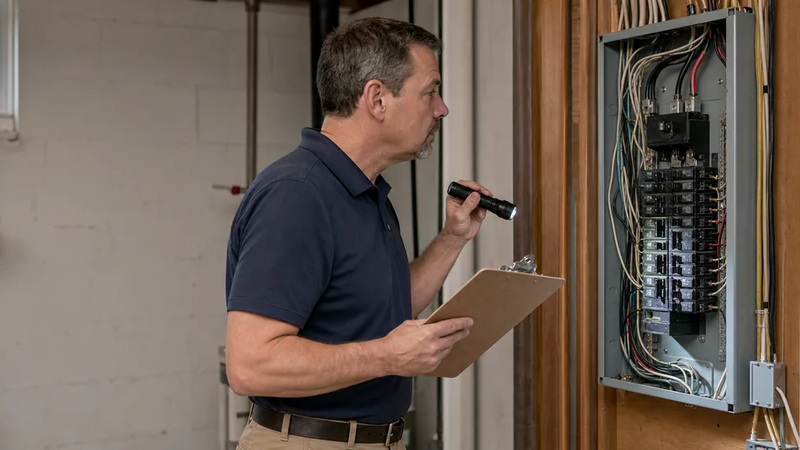
Under InterNACHI’s standard, a home inspection is a non-invasive visual examination of accessible areas. Its report communicates material defects observed during that inspection. It is not technically exhaustive and does not identify concealed or latent defects.
That means a report can document what was visible on the inspection date, but it may not establish cause, full extent, code compliance, or the correct repair. A qualified system specialist may be needed when those distinctions affect a required disclosure.
Practical bottom line
Sharing can matter because it creates documented knowledge, not because every report automatically becomes a mandatory attachment. Before sending or responding to one, check the inspection agreement, purchase contract, and current state or local disclosure rules. When a finding could materially affect the transaction, a licensed real estate professional or real estate attorney can clarify the required form and timing.