On this page
First, separate urgent findings from everything else
Mark any finding described as unsafe, actively leaking, unstable, or requiring immediate evaluation. Contact the inspector promptly if the report's urgency is unclear, and keep people away from the affected area until the risk is understood.
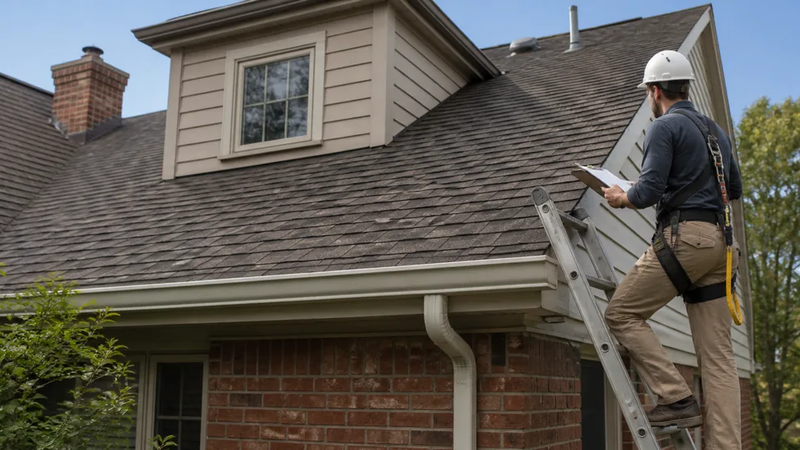
Do not climb onto the roof to settle the question yourself. A ground-level view, attic observations from safe access, report photographs, and professional follow-up are safer ways to resolve missing details. The U.S. Consumer Product Safety Commission warns that ladder falls can cause injuries ranging from bruises to death.
Use four questions for each finding
Read the finding, its photograph, and the inspector's recommendation together. Then ask:
- Is anyone at risk? Put an expressly unsafe condition or suspected structural instability first.
- Is water entering now? Active leakage, wet electrical equipment, or a sagging wet ceiling needs prompt action. Avoid wet electrical equipment and standing water.
- Can delay make the roof less weather-resistant? Open penetrations, displaced covering, failed flashing, or blocked drainage generally outrank cosmetic wear because exposure can continue.
- Is the evidence incomplete? Prioritize further evaluation when the report could not access an area, identify a cause, or determine the extent of a condition.
Escalate hazards, not just repair costs
Leave an area and seek urgent professional guidance if the report identifies a serious safety concern, suspected movement, or water near electrical equipment. A large estimate is not automatically the most urgent finding; consequence and ongoing exposure matter first.
Build a practical action list
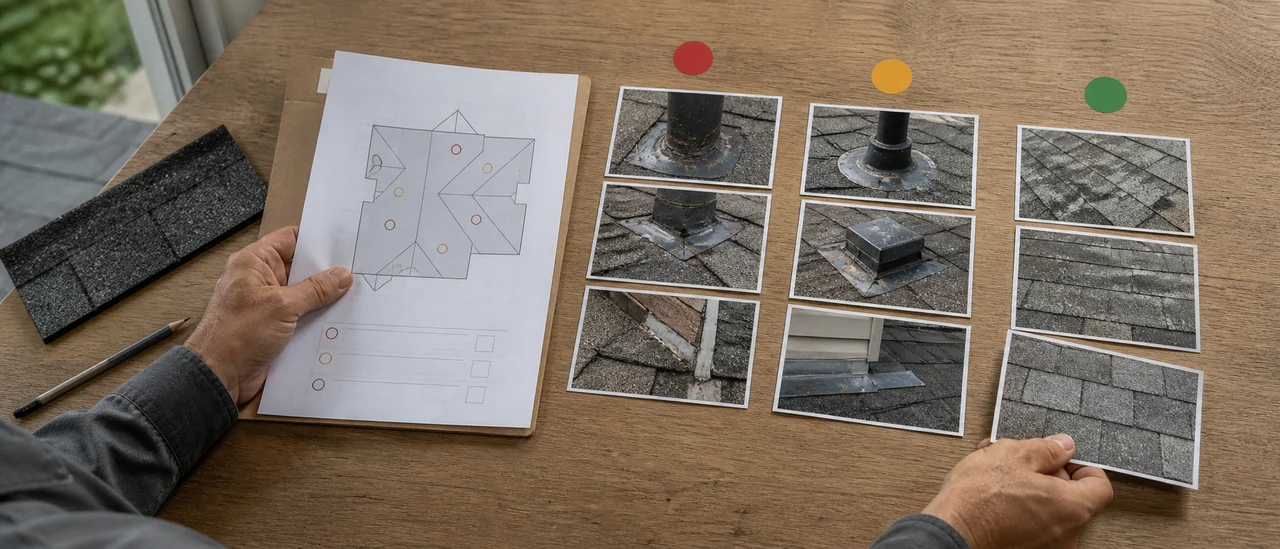
Assign each item one of three statuses: act now, schedule, or monitor. “Act now” covers safety risks, active water entry, and openings that leave the building exposed. “Schedule” fits a confirmed deficiency that is not actively worsening but still needs correction. “Monitor” should include a date or trigger, such as checking after heavy rain—not an indefinite promise to remember.
This approach matches the decision language in the American Society of Home Inspectors' Standard of Practice. Its reports identify components judged unsafe, not functioning properly, significantly deficient, or near the end of service life, then recommend correction, monitoring, or further evaluation. Those labels are useful, but the inspector's explanation determines what they mean for this roof.
Respect what the inspection could not confirm
A standard visual inspection covers readily accessible, visually observable components at one point in time. Under the ASHI standard, it is not technically exhaustive and need not determine concealed conditions, remaining life, structural strength, causes, repair methods, costs, or future failure.
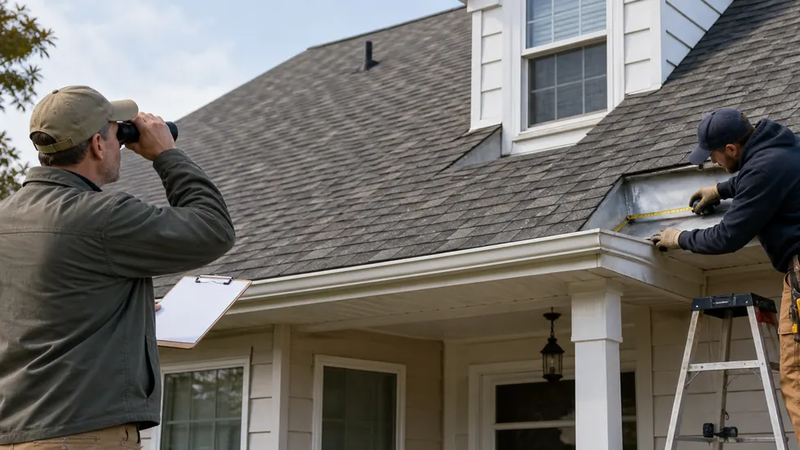
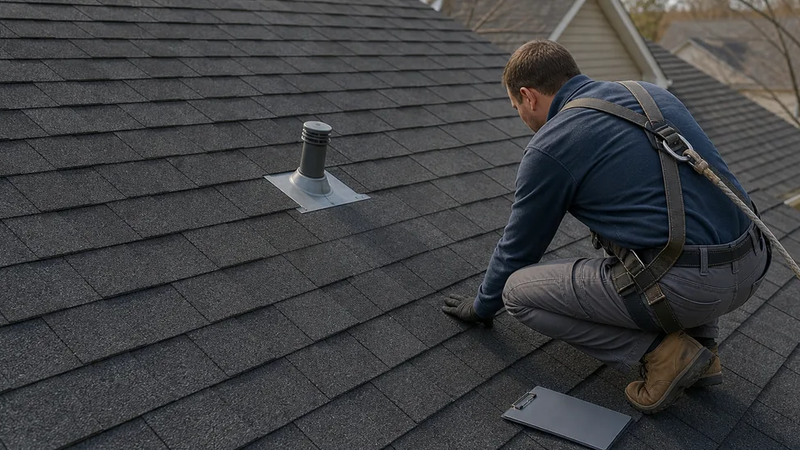
Review the report's scope, exclusions, access notes, and inspection method. A drone image, binocular view, or walk-on inspection may document visible surfaces differently, but none proves the condition of concealed underlayment or decking.
Bring in an appropriate roofing professional when correction details or concealed roof layers must be assessed. Suspected structural movement calls for a qualified structural evaluation. Give that professional the report and photographs, then ask for the finding, proposed correction, and timing in writing.