On this page
Begin with a safe view of the whole chimney
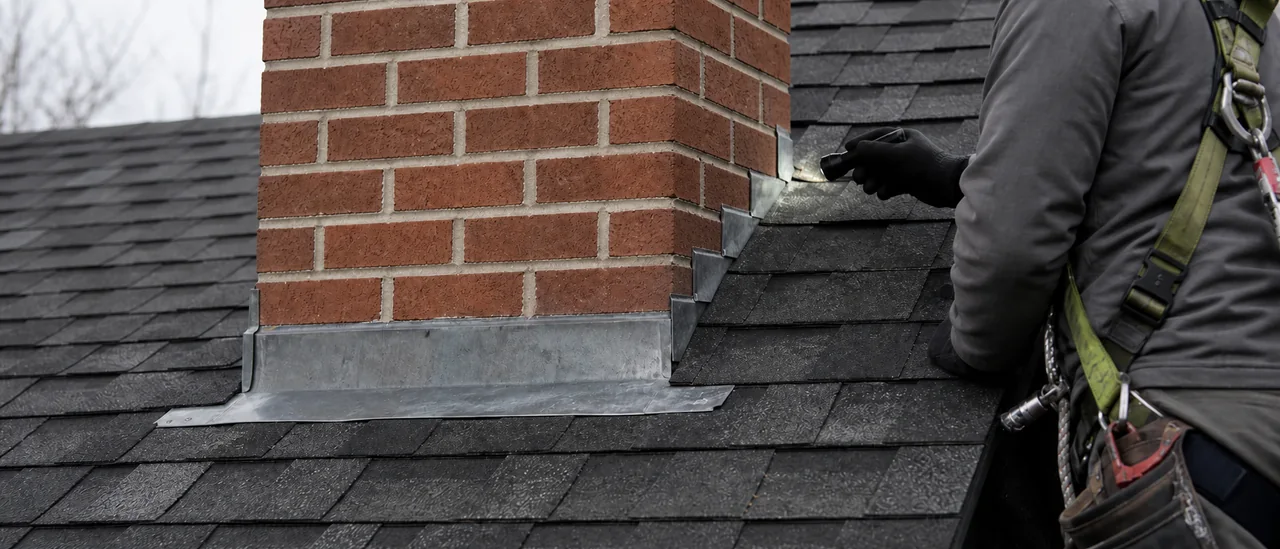
An inspector first selects a safe viewing method, then follows the chimney’s entire roof intersection. The initial pass identifies the downslope apron or base flashing, step flashing along both sides, upslope flashing, and counterflashing joined to the masonry.
These pieces work as an overlapping system. U.S. Department of Energy guidance describes base, step, and counterflashing as the three elements of chimney flashing. Step flashing is layered with asphalt shingles, while counterflashing is embedded in mortar joints and overlaps the lower pieces.
A roof walk is not always appropriate
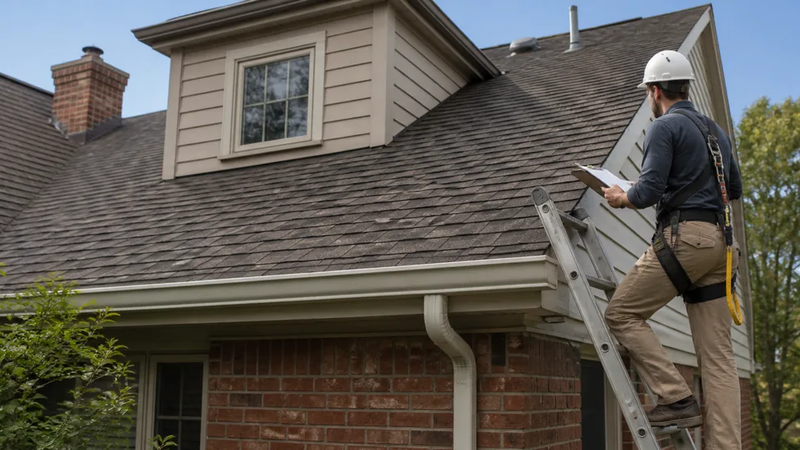
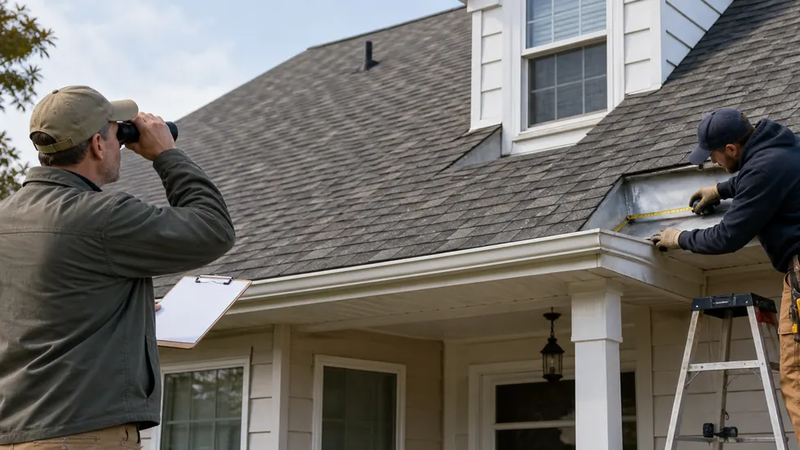
Steepness, moisture, ice, fragile roofing, or unsafe access can make walking the roof unreasonable. The inspector should use a practical alternative and record the viewing method and any obscured areas.
Trace the exposed joints and water path
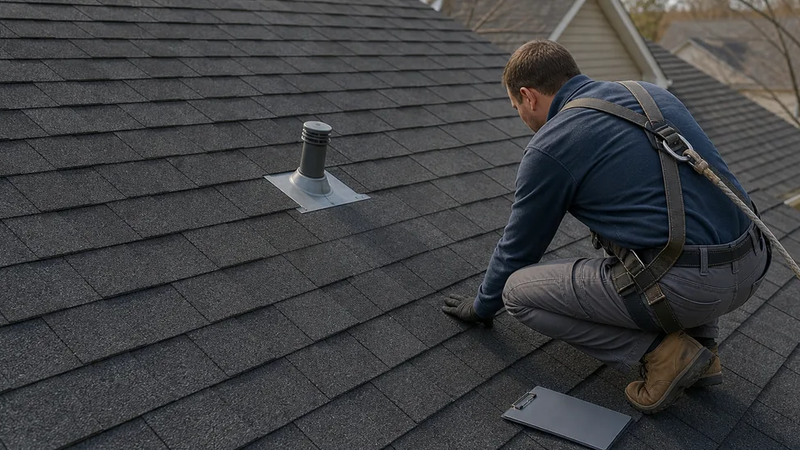
The inspector works around the perimeter and compares each visible layer with the direction water should drain. The examination usually includes:
- gaps, lifted edges, loose sections, bends, punctures, rust, or open seams;
- cracked mortar at counterflashing joints and metal pulling away from masonry;
- short, reversed, or poorly aligned overlaps that could direct water beneath roofing;
- heavy sealant, roofing cement, or patchwork that may conceal an earlier defect;
- damaged shingles beside the flashing or debris holding water at the upslope side; and
- staining, dampness, decay, or efflorescence on accessible roof decking, framing, ceilings, and chimney surfaces.
Photographs and notes should locate each observation precisely. A stain below the chimney is a moisture clue, not automatic proof that flashing is the source; water may travel before becoming visible, and the masonry, crown, roofing, or condensation may produce similar evidence.
Separate visible findings from hidden conditions
A visual inspection can confirm exposed corrosion, displacement, open joints, patching, and visible moisture evidence. It cannot confirm every concealed step-flashing lap, fastener, underlayment transition, or masonry embedment without lifting materials or opening the assembly.
Washington’s roof-inspection rule requires examination of visible flashing but permits an alternate method when roof traversal could be unsafe or damaging. Texas inspection standards likewise exclude buried, hidden, latent, or concealed conditions and do not require destructive testing that damages otherwise sound finishes.
Escalate when the evidence exceeds the visual scope
Further evaluation is appropriate when metal is missing or loose, joints are open, corrosion has perforated the flashing, patches are extensive, or accessible materials show active moisture. A qualified roofing or masonry professional can determine whether selective removal or targeted testing is warranted. Until then, the report should describe what was observed, where it appeared, how it was viewed, and what remained unconfirmed.