On this page
Begin with the visible roof edge
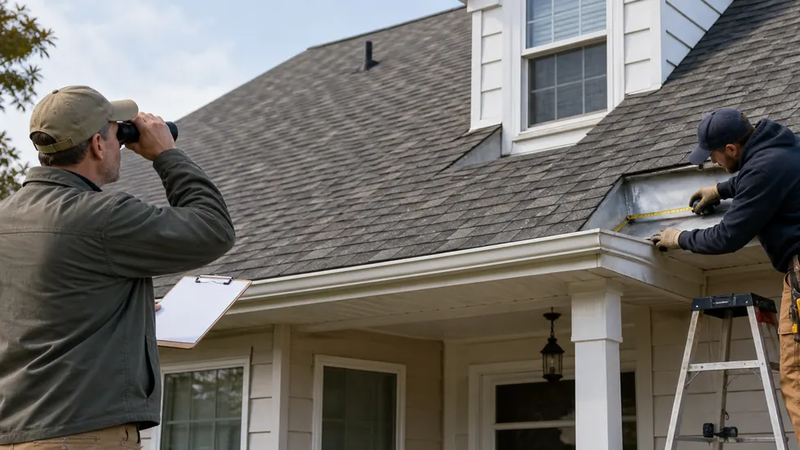
Inspectors first scan every accessible eave and rake from a safe vantage point. They trace the drip edge around the roof for gaps, abrupt terminations, or profile changes.
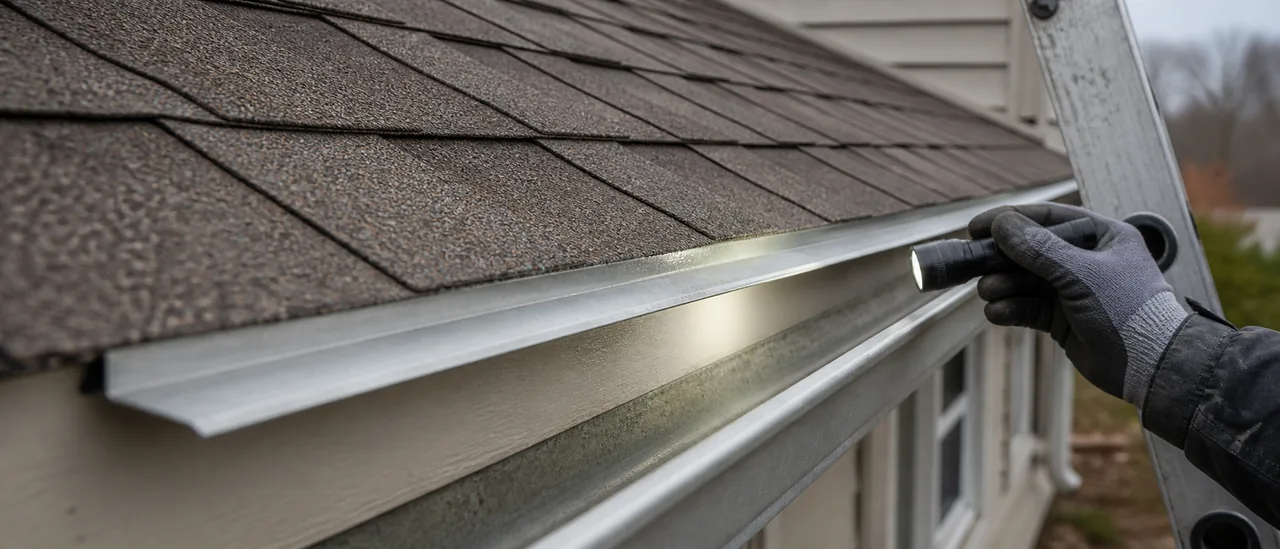
Drip edge is typically L-shaped metal flashing between the roof covering and fascia. Its exposed lower leg should direct runoff away from the fascia and, where gutters exist, into the gutter. The inspector records the viewing method because distance and angle affect what can be confirmed.
Roof access controls the inspection
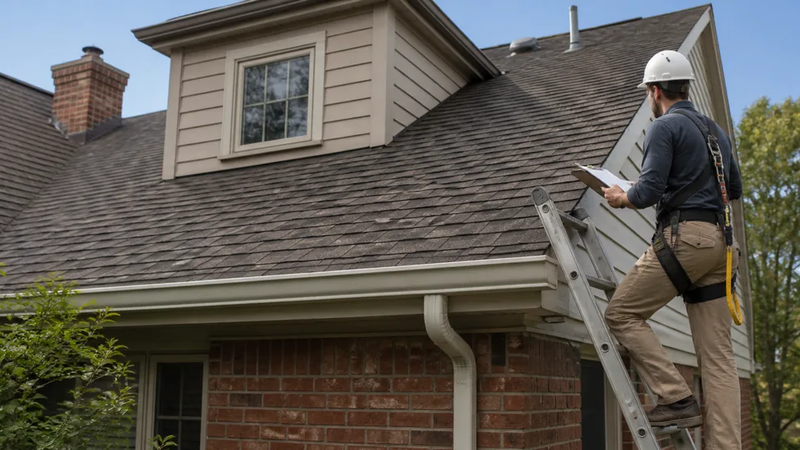
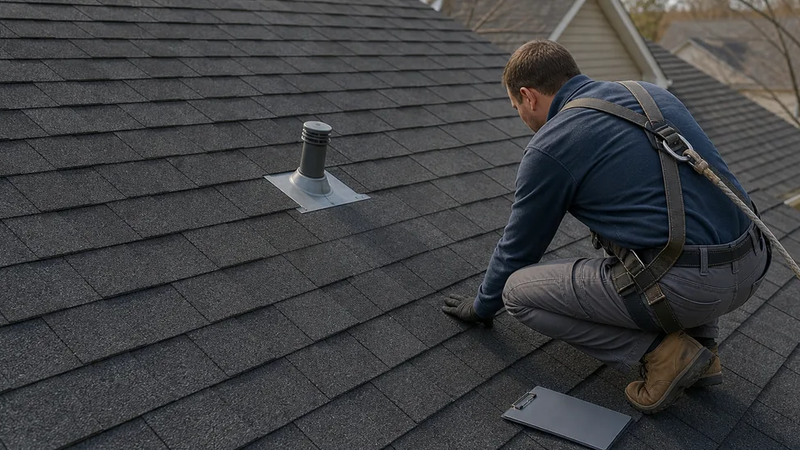
Do not climb onto a roof to repeat these checks. Inspectors may work from the ground or eaves and are not required to walk a roof. Ladder work requires stable footing; steep, wet, fragile, or icy surfaces can limit the examination.
Follow a consistent edge-by-edge check
At each visible section, the inspector examines how the metal relates to the shingles, fascia, and gutter. The check usually covers:
- Continuity: missing pieces, open joints, short overlaps, or exposed roof-edge wood.
- Condition: corrosion, holes, dents, buckling, lifted sections, loose edges, or displaced fasteners.
- Drainage path: a lower flange that ends behind the gutter, presses against the fascia, or appears to let water return toward wood.
- Installation details: visible joint laps, fastening, shingle overhang, and the relationship between flashing and underlayment.
- Nearby evidence: staining, peeling finishes, softened fascia, deteriorated sheathing edges, or moisture marks at accessible soffit and attic areas.
Installation details are compared with the roof-covering instructions and locally adopted code, not a universal measurement. Requirements vary by jurisdiction and roof system.
Separate observations from conclusions
A visual inspection can confirm exposed metal condition, apparent continuity, alignment, and visible water-routing problems. Staining or decay near an edge may justify concern, but it does not prove that drip edge caused the moisture.
Finished roofing normally conceals the upper flange, much of the fastening, and most underlayment laps. Without lifting materials or performing another intrusive procedure, an inspector cannot verify continuous fastening, hidden corrosion, the complete eave-and-rake layering sequence, or watertight performance. A standard inspection also does not certify code compliance or uncover every latent defect.
When closer evaluation is warranted
The report should identify the affected edge, observed condition, and access limitation. Missing sections, displaced metal, visible decay, recurring moisture evidence, or obscured details may warrant closer evaluation by a qualified roofing professional.
That evaluation can involve safe close access or selective exposure when justified. It should determine the assembly detail before repair, since surface appearance alone cannot establish what is happening beneath the shingles.