On this page
Start with a safe, complete view
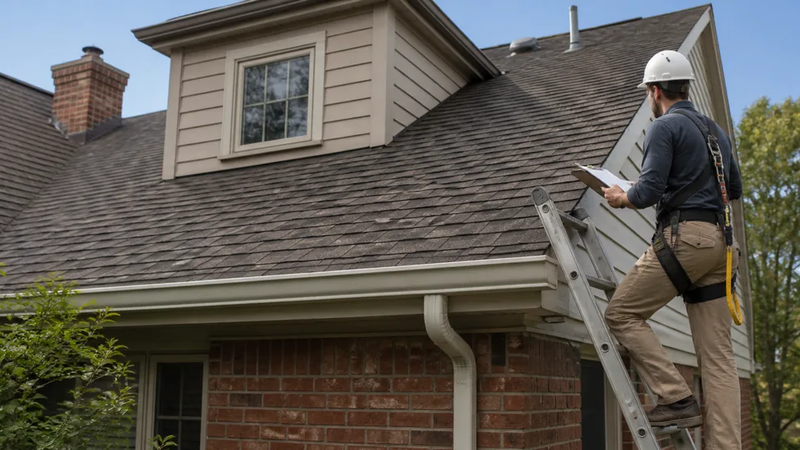
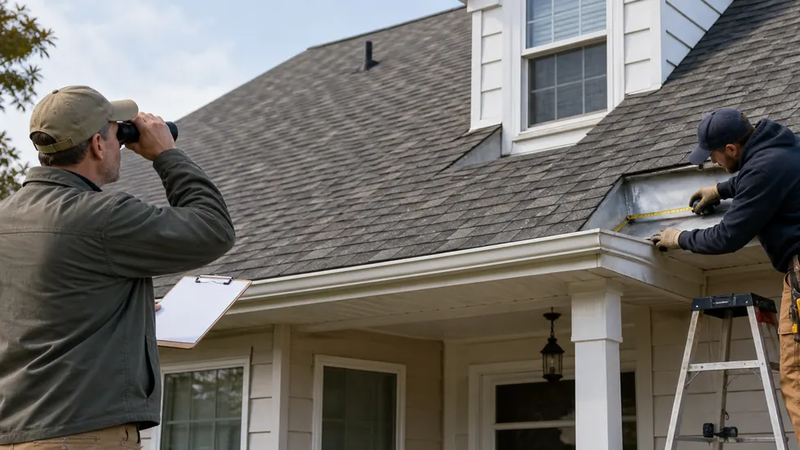
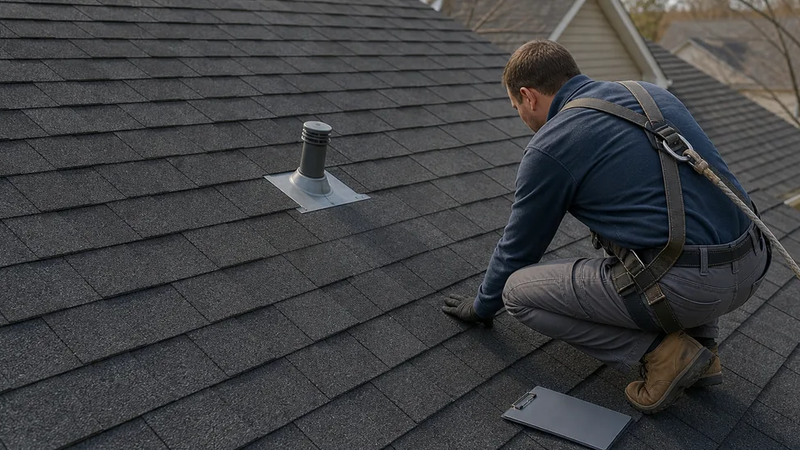
An inspector first identifies each visible plumbing vent and views its pipe boot, flashing, and nearby roof covering from a safe location. The vantage point depends on access, slope, weather, and surface condition.
Do not climb onto a wet, icy, steep, fragile, or otherwise unsafe roof for a closer look. OSHA’s guidance emphasizes securing ladders, maintaining three points of contact, and using appropriate fall-protection equipment.
Pipe boot and plumbing vent are different parts
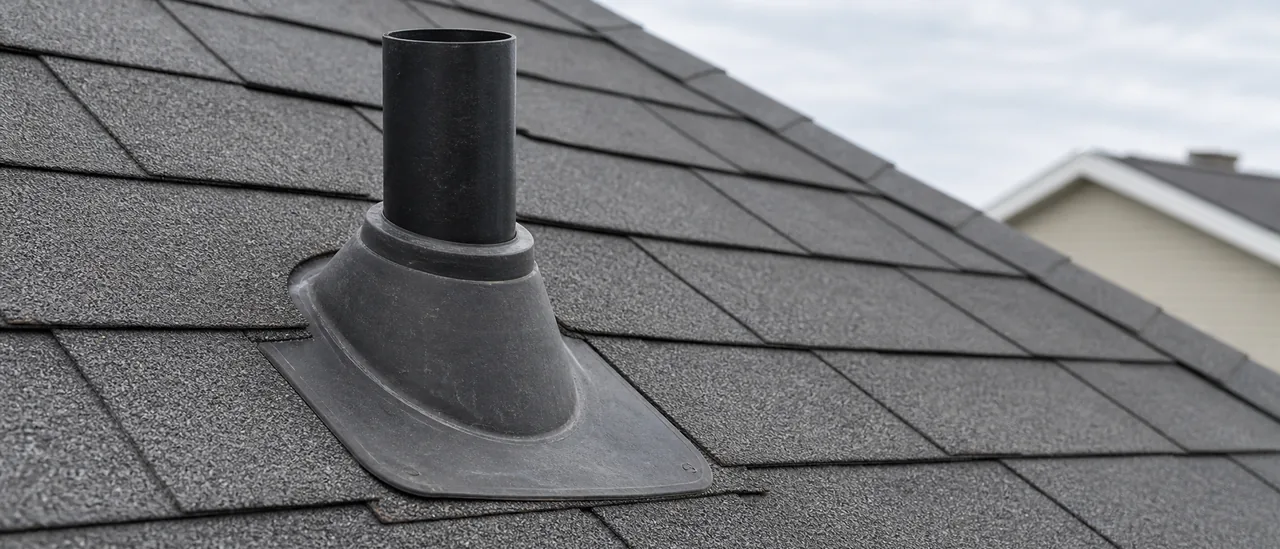
The plumbing vent is the pipe that carries drainage-system gases outdoors. The pipe boot is the flashing assembly that seals the roof penetration around that pipe.
Examine the penetration step by step
The inspector typically works through the visible details in this order:
- Check the vent opening. The pipe should be open rather than visibly crushed, capped, or blocked by accessible debris. The inspector also notes obvious damage, displacement, or an unusually short termination for follow-up under locally adopted rules.
- Look at the seal around the pipe. On an elastomeric boot, the collar is checked for visible splits, gaps, distortion, brittleness, or separation from the pipe. Metal or lead flashings are checked for open seams, holes, deformation, or separation.
- Trace the flashing edges. Inspectors look for lifted edges, exposed or backed-out fasteners, failed sealant, patching, and gaps where water could enter.
- Scan the surrounding roof. Cracked, displaced, or deteriorated roofing near the penetration can undermine an otherwise intact boot. Staining, soft-looking areas, biological growth, or previous repairs deserve closer evaluation.
- Compare from below when accessible. In the attic, the inspector looks near the vent penetration for dampness, staining, deteriorated sheathing, or daylight. The visible drain-waste-vent piping may also be checked for damage or disconnection.
Inspection requirements vary by jurisdiction. As one concrete example, Ohio’s home-inspector rule requires inspection of readily accessible flashing and roof penetrations, plus the interior drain, waste, and vent system. Code compliance still depends on the locally adopted code and the installation’s age.
Understand what sight alone cannot prove
A standard home inspection is visual and non-invasive. InterNACHI’s standard includes vents, flashing, and roof penetrations, but excludes water testing and confirmation of concealed fastening and installation.
That means a clean-looking boot does not prove that hidden flashing, underlayment, or deck details are correct. Likewise, an old ceiling stain does not confirm an active boot leak. Moisture readings, controlled testing, removal of roofing, or repair disassembly may be needed to locate an intermittent or concealed leak.
When closer evaluation is warranted
Recommend qualified roofing or plumbing evaluation when the boot is split or displaced, flashing is open, the pipe is damaged or blocked, moisture is active, sheathing appears deteriorated, or the source of staining remains uncertain. Prompt attention is also sensible when a vent penetration cannot be adequately viewed and there are interior moisture clues below it.