On this page
Start at the outlet, then follow the water path
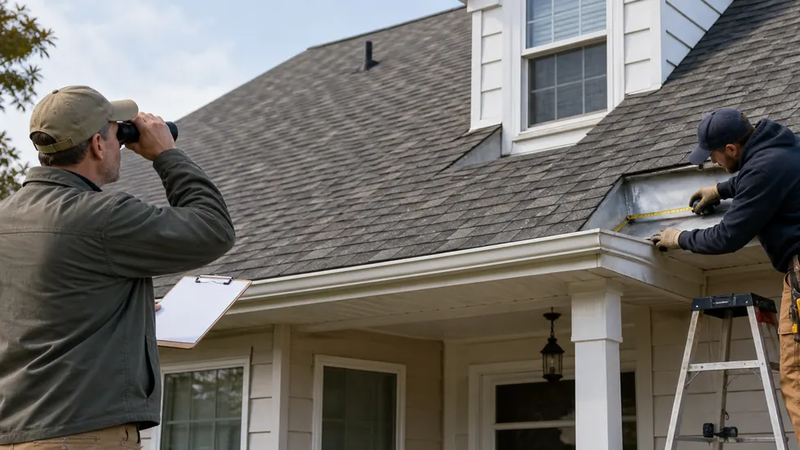
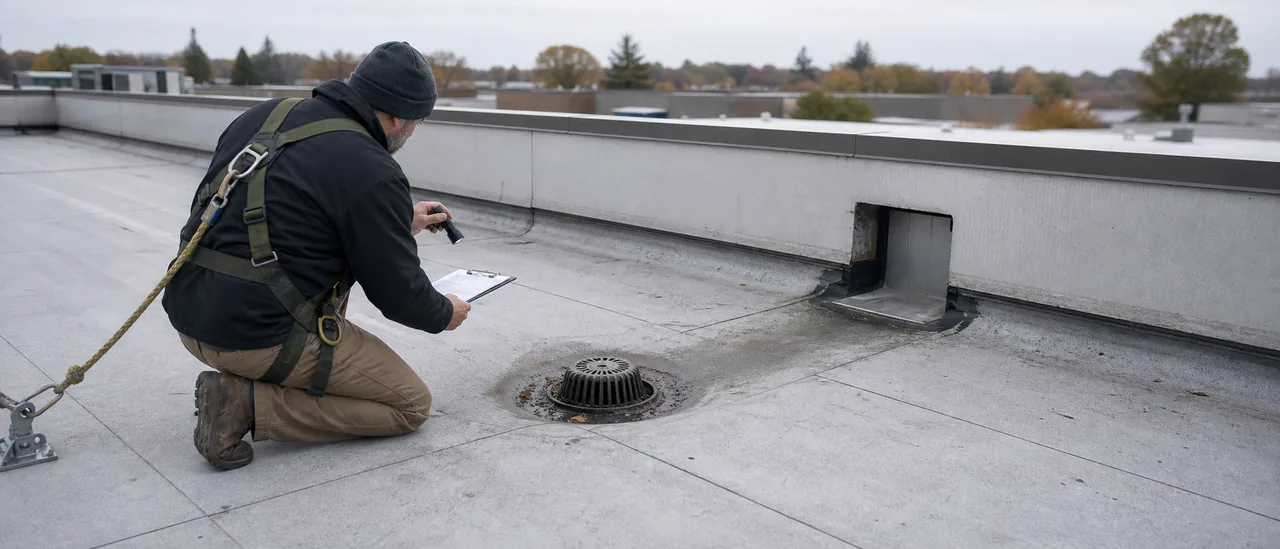
An inspector first locates each roof drain and scupper from a safe vantage point. A roof drain carries water into piping, while a scupper is an opening through a parapet or edge that lets water leave the roof.
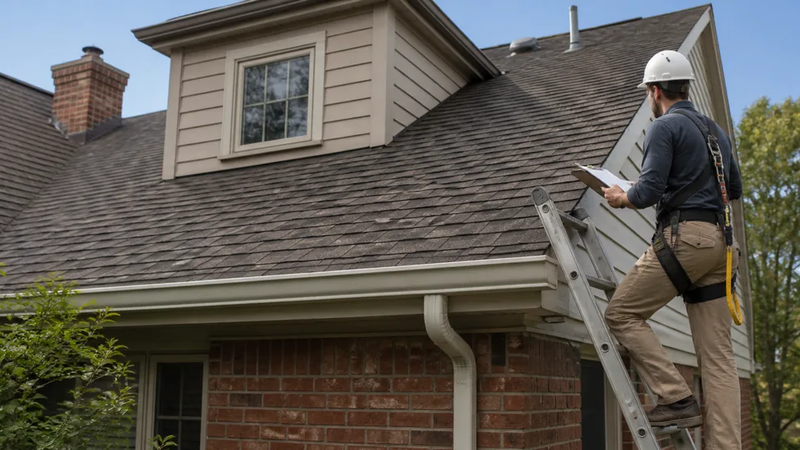
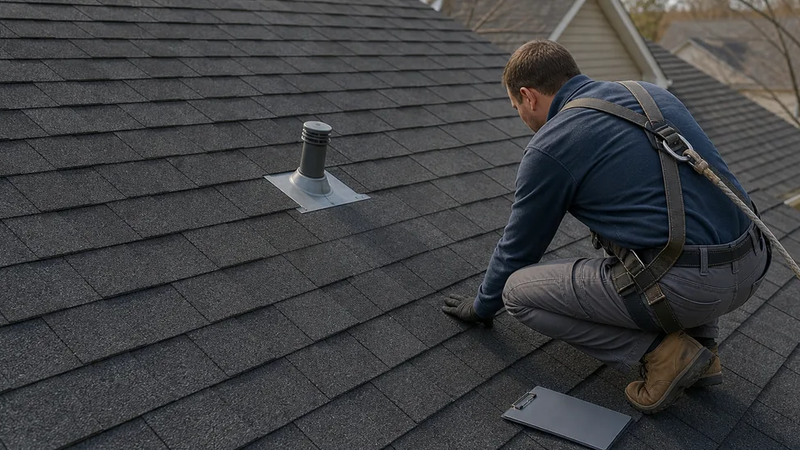
The shortest reliable process is to examine the opening, the roof immediately around it, and every visible part of its discharge path. Roof access may be limited when surfaces are steep, wet, fragile, snow-covered, or otherwise unsafe.
Check the opening and surrounding roof
At a drain, the inspector looks for debris, sediment, vegetation, a missing or damaged strainer, corrosion, loose parts, and visible deterioration where the drain meets the roof membrane. At a scupper, the same review includes its throat, lining, perimeter seams, and the exterior conductor head or downspout when present.
The surrounding surface provides important context. Inspectors look for:
- standing water, silt lines, staining, or vegetation that suggests slow drainage;
- membrane splits, open seams, punctures, blisters, or deteriorated sealant nearby;
- sagging or an apparent low area that holds water away from the outlet; and
- overflow openings that are blocked, altered, or at an unexpected height.
Philadelphia’s blue-roof guidance notes that sediment and debris around roof drains can cause clogging and slow discharge. A National Park Service safety checklist likewise calls for roof drains and scuppers to be unobstructed.
Do not clear a drain from an unsafe roof
Standing water can hide slippery surfaces, weak decking, sharp debris, or a sudden drop at an edge. Access and debris removal require appropriate fall protection and a person qualified for the conditions.
Trace what remains visible
The inspector follows exposed piping, conductor heads, downspouts, and discharge points where accessible. The review notes disconnected joints, crushing, corrosion, leakage marks, or discharge that appears obstructed. Interior ceilings or accessible spaces below may also be checked for staining or other visible moisture evidence.
Photos and notes should identify the outlet, nearby roof condition, observed obstruction or deterioration, and any area not seen. Comparing outlet elevations can reveal an apparent drainage problem, but confirming design capacity or concealed slope usually requires plans, measurements, or specialist evaluation.
Know what a visual inspection cannot prove
A standard visual inspection cannot confirm the condition of concealed piping, hidden membrane connections, or drainage performance during every storm. Unless the agreed scope says otherwise, observing an outlet is not the same as removing debris, performing a water test, or certifying the roof.
If ponding is extensive, an overflow is blocked, the deck appears deflected, or leakage evidence continues below, a qualified roofing professional should evaluate the assembly. A plumber or drainage specialist may be needed when the concern lies inside concealed piping.