On this page
Start with safe access and a location map
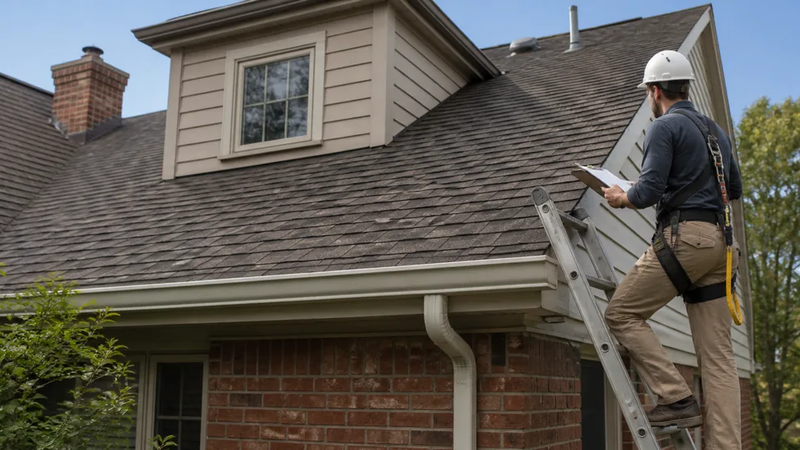
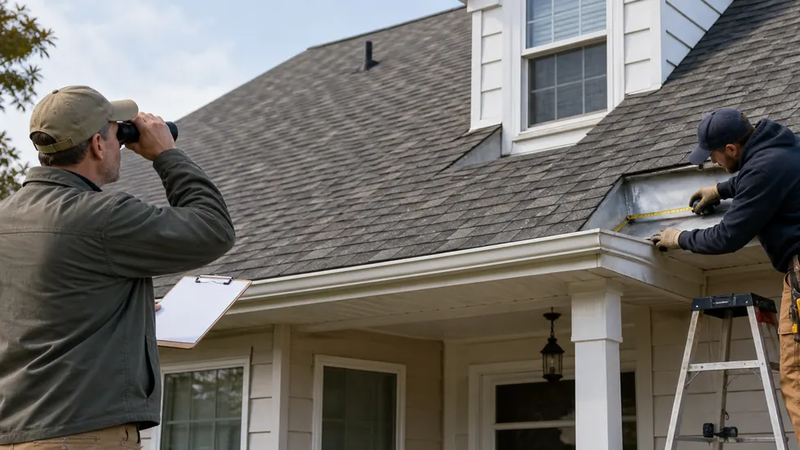
An inspector first chooses a safe viewing method, then traces every accessible place where flashing should manage water. Typical checkpoints include roof-wall intersections, chimneys, valleys, skylights, plumbing vents, other penetrations, and roof edges.
Roof flashing is the exposed metal or membrane detail found at joints, edges, and penetrations. Inspectors examine it together with the adjoining roof covering because defects can occur where those materials meet.
Do not turn an inspection into a fall
Walking the roof is not automatic. If the surface is steep, wet, icy, fragile, or otherwise unsafe, the inspector should use another practical vantage point and state that limitation in the report.
Follow the water-shedding path
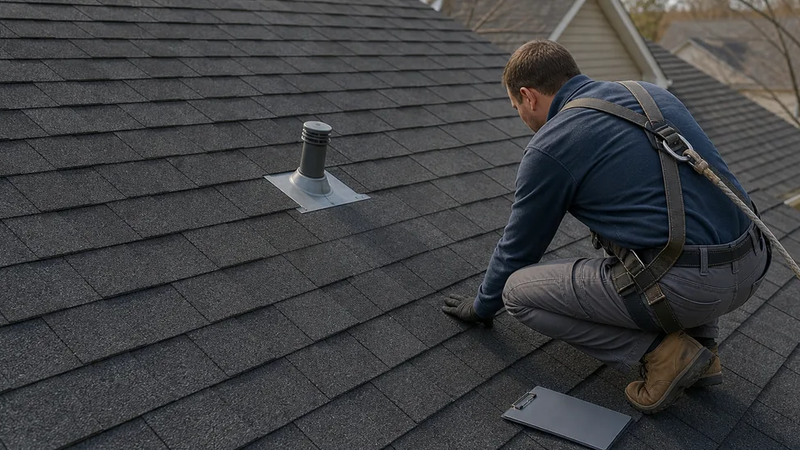
The examination usually moves downslope, following the path rain should take. At each location, the inspector looks for:
- missing, displaced, bent, punctured, or corroded flashing;
- open seams, failed laps, lifted edges, loose fasteners, or deteriorated sealant;
- flashing that stops short or directs runoff behind siding instead of outward;
- cracked or displaced roofing beside the flashing; and
- staining, rot, efflorescence, or prior patching on nearby exterior and accessible interior surfaces.
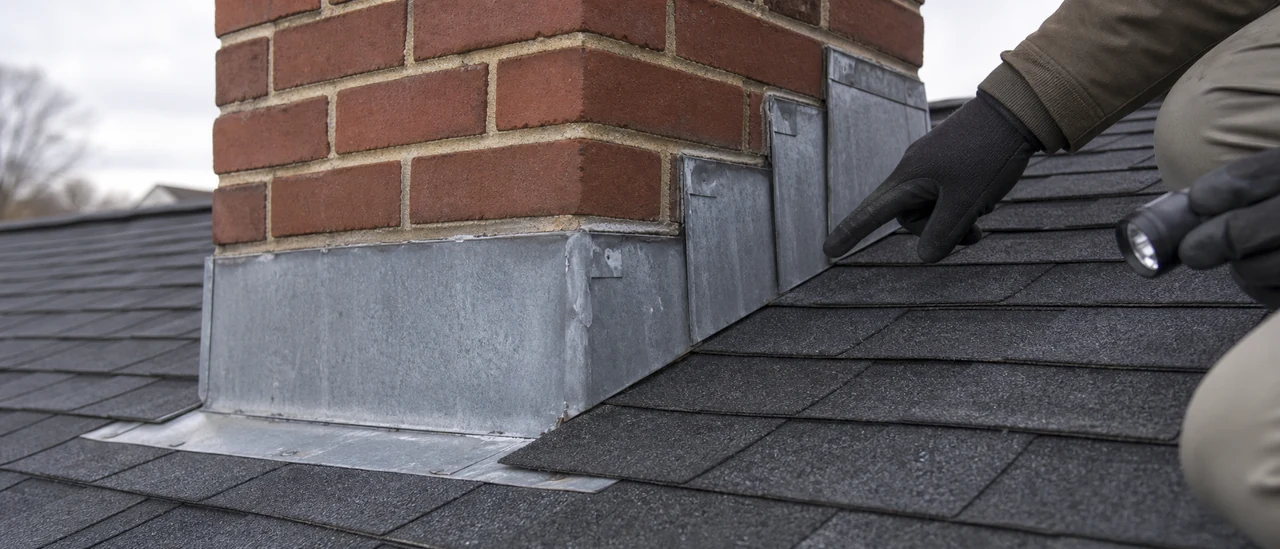
At a roof-wall junction, the inspector compares exposed flashing from the eave upward, noting gaps, distortion, repairs, and its visible relationship to siding and shingles. Around a pipe or chimney, the inspector checks the exposed base and counterflashing, their edges and seams, and the surrounding covering.
Photographs and notes identify the location, observed condition, and viewing method. The report should distinguish a visible defect from a suspected leak path; water can travel before appearing indoors.
Know what sight alone cannot confirm
Much of a flashing assembly is intentionally concealed beneath shingles, siding, masonry, or membrane. A visual inspection can confirm exposed condition and visible relationships, but not continuous hidden laps, concealed corrosion, fastening, or damage inside a closed wall.
Snow, debris, height, and limited attic access can reduce visibility. Inspectors generally do not dismantle sound finishes or use destructive testing during a standard inspection. They also should not label a detail code-compliant without checking the code adopted for that location and the applicable installation instructions.
When further evaluation is warranted
A roofing professional should evaluate inaccessible flashing when the inspector finds active moisture, significant corrosion, open joints, repeated patching, missing pieces, or a detail that sends water behind the exterior finish. Selective removal or water testing may be appropriate, but those are follow-up diagnostic steps—not proof supplied by the initial visual inspection.