On this page
Start inside, then walk the property
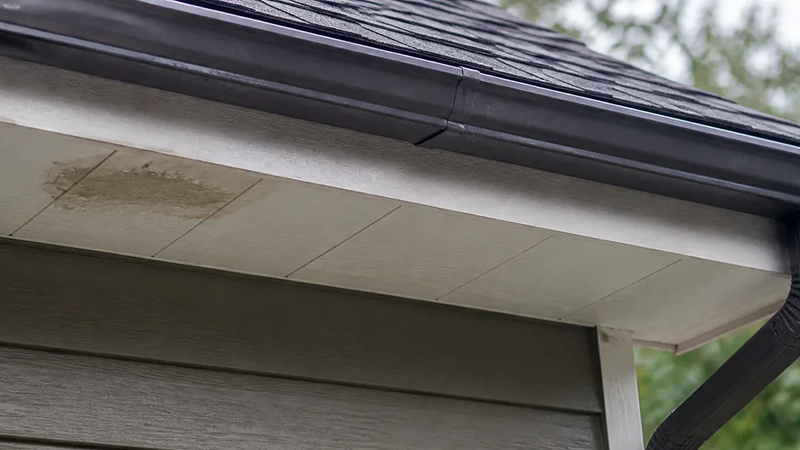
Once the storm has passed, check ceilings, walls, window areas, and safely accessible attic spaces for active drips, dampness, or daylight through an opening. Photograph what you find and move belongings away from incoming water. Do not enter an area with sagging material, broken glass, or nearby electrical hazards.
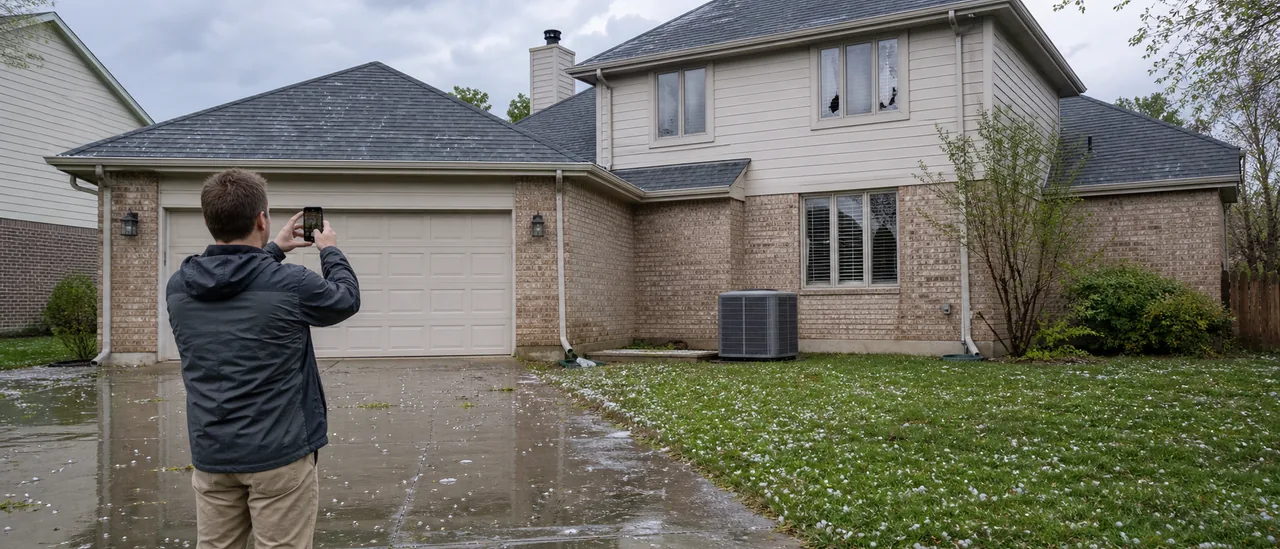
Next, walk around the house from the ground. Use binoculars or a camera zoom instead of climbing. Follow the same route on every side so one quiet corner does not escape notice.
Look for new, visible changes:
- Broken windows, skylights, screens, or damaged exterior cladding
- Dents, cracks, punctures, or displacement on gutters, downspouts, vents, and metal chimney parts
- Missing, cracked, or displaced roof-covering pieces visible from the ground
- Stripped plants, torn screens, or dents on exposed soft-metal vents
- Fresh debris below roof edges and water entering the building
National Weather Service-hosted post-storm guidance treats stripped plants and dents on patio covers, screens, or soft-aluminum vents as reasons to suspect possible roof damage. They are clues, not confirmation: a mark on one component does not prove damage to every other component.
Keep the check at ground level
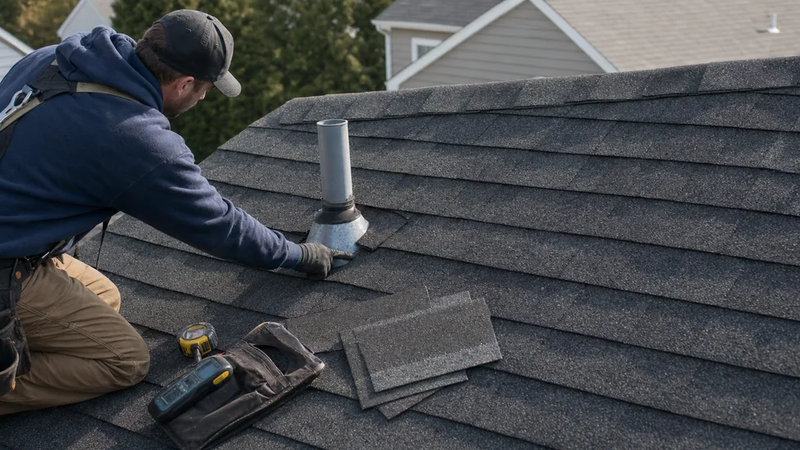
Do not walk the roof for a closer look. OSHA notes that roof surfaces may be steep, slippery, or deteriorated, while ladders and nearby power lines add separate hazards. Leave elevated examination to someone equipped and trained for it.
Separate weather evidence from property damage
Record the storm’s approximate time and photograph any hailstones only when it is safe. Place a ruler beside a stone rather than relying on a familiar-object comparison. Keep wide views and close-ups of visible property changes so their locations remain clear.
Three different kinds of evidence
Radar estimate: Radar algorithms estimate hail within a storm area. Observed hail: A measured stone or reliable ground report documents hail reaching a location. Confirmed damage: Physical evaluation connects a change on this house to hail and determines whether the component still functions. The first two do not establish the third.
NOAA’s National Severe Storms Laboratory says its algorithms produce estimates and researchers compare radar detections with public reports. That distinction matters because hail can vary across a neighborhood, and radar does not examine a particular roof, window, or vent.
Know when the check needs professional help
Arrange prompt help when water is entering, glass or a roof opening is exposed, or exterior material is loose. Keep away from fallen lines and unstable materials.
Even without an urgent opening, request a qualified evaluation when the ground check shows widespread impact marks, the roof cannot be seen clearly, or the cause and function of a mark remain uncertain. A professional can safely examine each roof slope and distinguish cosmetic marks, wear, and functional damage that a ground-level check cannot confirm.