On this page
Start with one action list
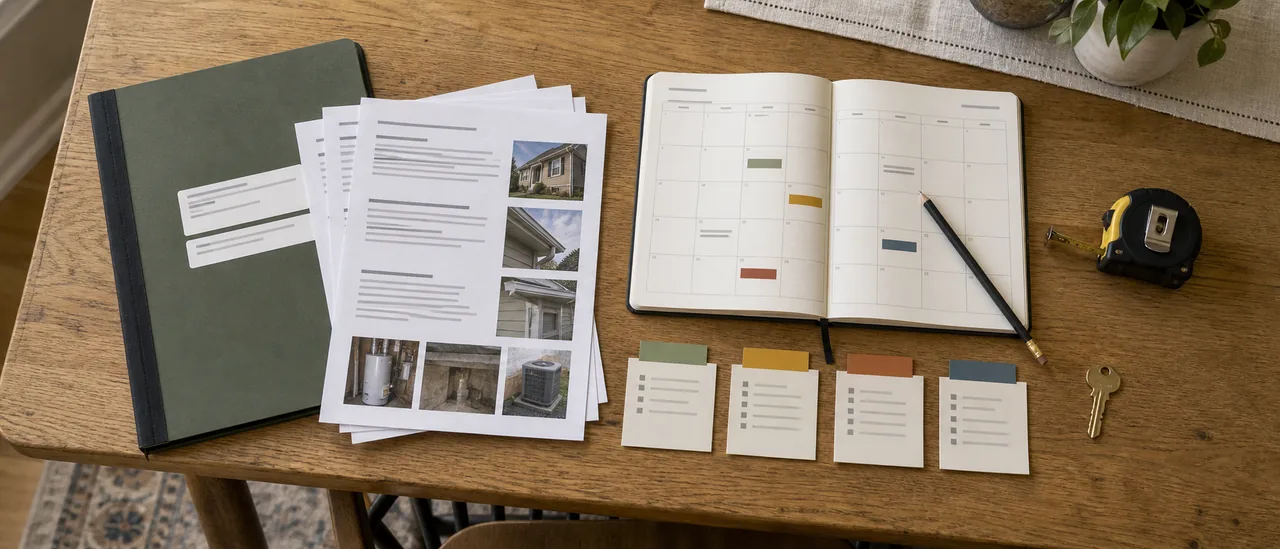
Read the entire inspection report, then copy every recommendation into one tracker. Assign each item a priority, responsible person, and due date. This produces a usable plan faster than working from scattered report pages.
Extract each finding, separate repairs from recurring care, resolve urgent or uncertain conditions first, and schedule everything else by season or interval. Keep the report photos and completed-work records with the plan.
Capture what the report actually says
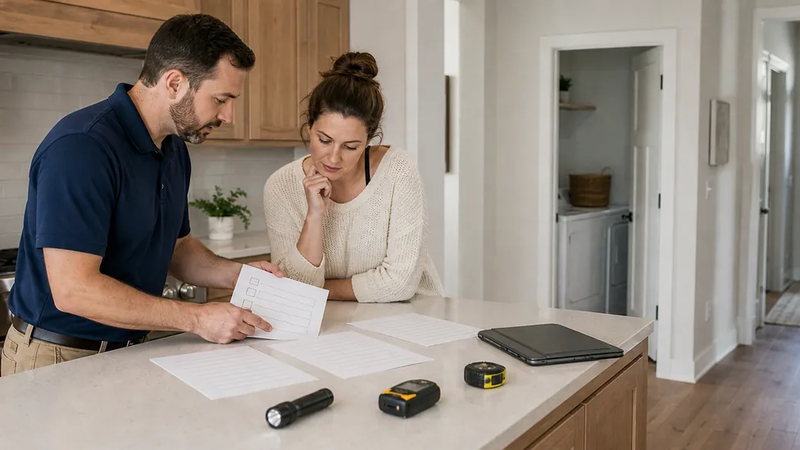
Create a row for each finding. Record the system, exact location, observed condition, inspector’s recommendation, and any access limitation. Add columns for priority, next action, owner, due date, estimated cost, and status.
Do not convert “monitor,” “repair,” and “have evaluated” into the same task. They describe different next steps. Ask the inspector to clarify unclear wording before assigning work.
Sort by consequence and uncertainty
Use four practical groups:
- Act promptly: reported safety concerns, active leaks, or conditions causing ongoing damage.
- Get more information: findings that need testing or a qualified system specialist.
- Plan and budget: non-urgent repairs or components approaching replacement.
- Maintain or monitor: recurring care and conditions that should be checked for change.
Priority should reflect what could happen if an item waits, not its position or color in the report. A simple cosmetic note may require no maintenance task at all.
Put tasks on a realistic calendar
Schedule prompt items first, followed by near-term work and seasonal tasks. For recurring care, use the manufacturer’s instructions and qualified specialist guidance rather than guessing an interval. For example, the Consumer Product Safety Commission recommends monthly smoke and carbon monoxide alarm tests, with battery replacement at least yearly unless the alarms have sealed 10-year batteries.
Group related work by system or season. A calendar reminder should name the component, location, action, and person responsible—not merely say “check house.”
Treat the report as a baseline, not a warranty
Under InterNACHI’s standard, a home inspection is a visual examination of accessible areas based on conditions observed that day. It is not technically exhaustive and does not identify concealed defects or predict future conditions.
Verify completion and keep the plan current
After work is completed, save the date, invoice, photos, warranty information, and any specialist findings. Update the task status and add the next recurring date. Revisit monitored conditions after severe weather, a system change, or any new symptom.
Do not investigate unsafe electrical, gas, structural, roof-access, or combustion concerns simply to complete the tracker. Use the appropriately qualified professional when diagnosis, hazardous access, permits, or specialized testing is required. The original inspector can explain observations and scope, but the relevant specialist may need to confirm the cause and repair.