On this page
Typical cost in 2026
As of August 2026, replacing a short, exposed section of corroded supply pipe may cost $150–$500. A difficult localized replacement can approach $2,000, while whole-house repiping generally runs $1,500–$15,000. Scope, access, and replacement material move the price most.
Supply pipes are the pressurized lines that deliver water to fixtures. These figures do not cover drainpipes, the buried service line to the street, water-damage restoration, or unrelated fixture and water-heater work.
| Planning scenario | 2026 budget | Illustrative scope |
|---|---|---|
| Low | $150–$500 | Short, exposed section with straightforward connections |
| Typical localized | $500–$2,000 | Concealed or obstructed section requiring access work |
| High | $1,500–$15,000 | Multiple branches or a whole-house supply repipe |
The bands overlap because a small but inaccessible repair can cost more than a larger open-basement run. They are national planning figures, not a diagnosis or guaranteed quote.
What the price includes
A localized estimate commonly covers the service visit, shutting off and draining the affected line, removing the damaged section, installing compatible pipe and fittings, restoring water, and checking the completed connections for leaks. A repipe quote should identify every fixture branch included and whether abandoned piping will be removed or left in place.
Wall or ceiling opening, drywall and paint repair, cabinet removal, insulation, water-damage cleanup, testing, permits, and inspection may be separate. Ask who handles each item. One current market guide notes that wall, ceiling, and floor restoration may require another contractor.
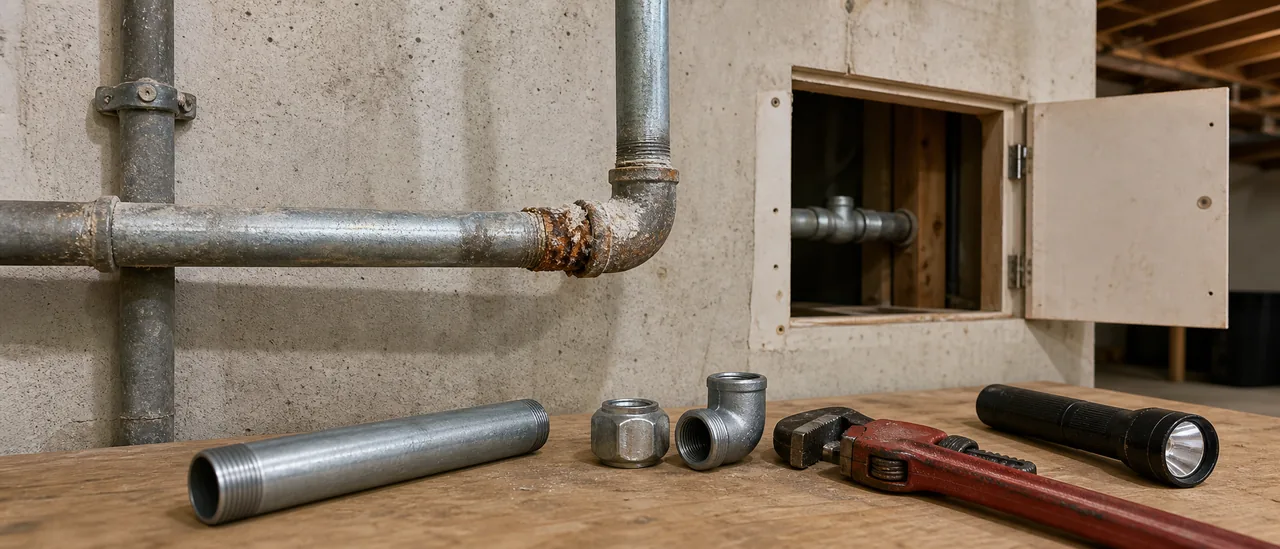
Corrosion repair usually means pipe replacement
Surface cleaning does not restore metal already lost from a pipe wall. The budget question is therefore how much piping and finish work the chosen repair will replace, not the price of removing discoloration.
What changes the cost most
Extent of replacement is the central variable. One failed fitting or short run can stay within a basic service call. Repeated leaks, widespread corrosion, restricted flow, or numerous affected branches may lead a plumber to price a partial or whole-house repipe instead.
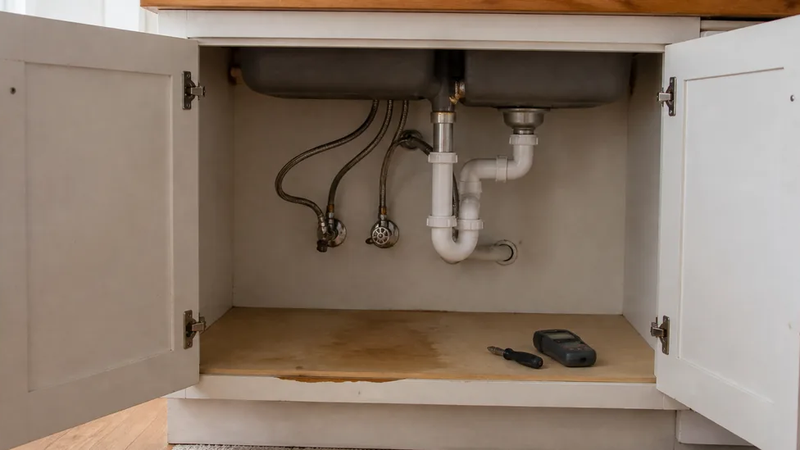
Access and restoration can outweigh pipe cost. Exposed basement or under-sink piping is comparatively direct. Pipe behind tile, cabinets, finished ceilings, wiring, or a slab requires more labor and may create a second repair scope.
Material and layout affect both parts and installation time. Current repiping data lists material-only prices of roughly $0.40–$2 per linear foot for PEX, $0.50–$1 for CPVC, and $2–$8 for copper. Pipe diameter, fixture count, number of floors, routing, and compatible transitions also change the bid.
Permits and region are property-specific. Portland’s July 2026 schedule, for example, lists $128 for the first residential floor and $52 for each additional floor when replacing in-building water-supply lines. That example illustrates variation; it is not a national fee. Labor rates and contractor availability also differ by market.
When to obtain specialist estimates
A home inspection can describe visible supply-pipe materials and conditions, but concealed piping is outside a visual inspection’s reach. Obtain an on-site plumbing evaluation when corrosion is widespread, leaks recur, water pressure has changed, or the affected length is uncertain.
For comparable bids, request the same written scope: pipe material and length, included fixture branches, access openings, permits, testing, finish restoration, cleanup, and exclusions. If the cause could involve water chemistry rather than one isolated connection, ask whether water testing or utility input is needed before selecting the replacement scope.